
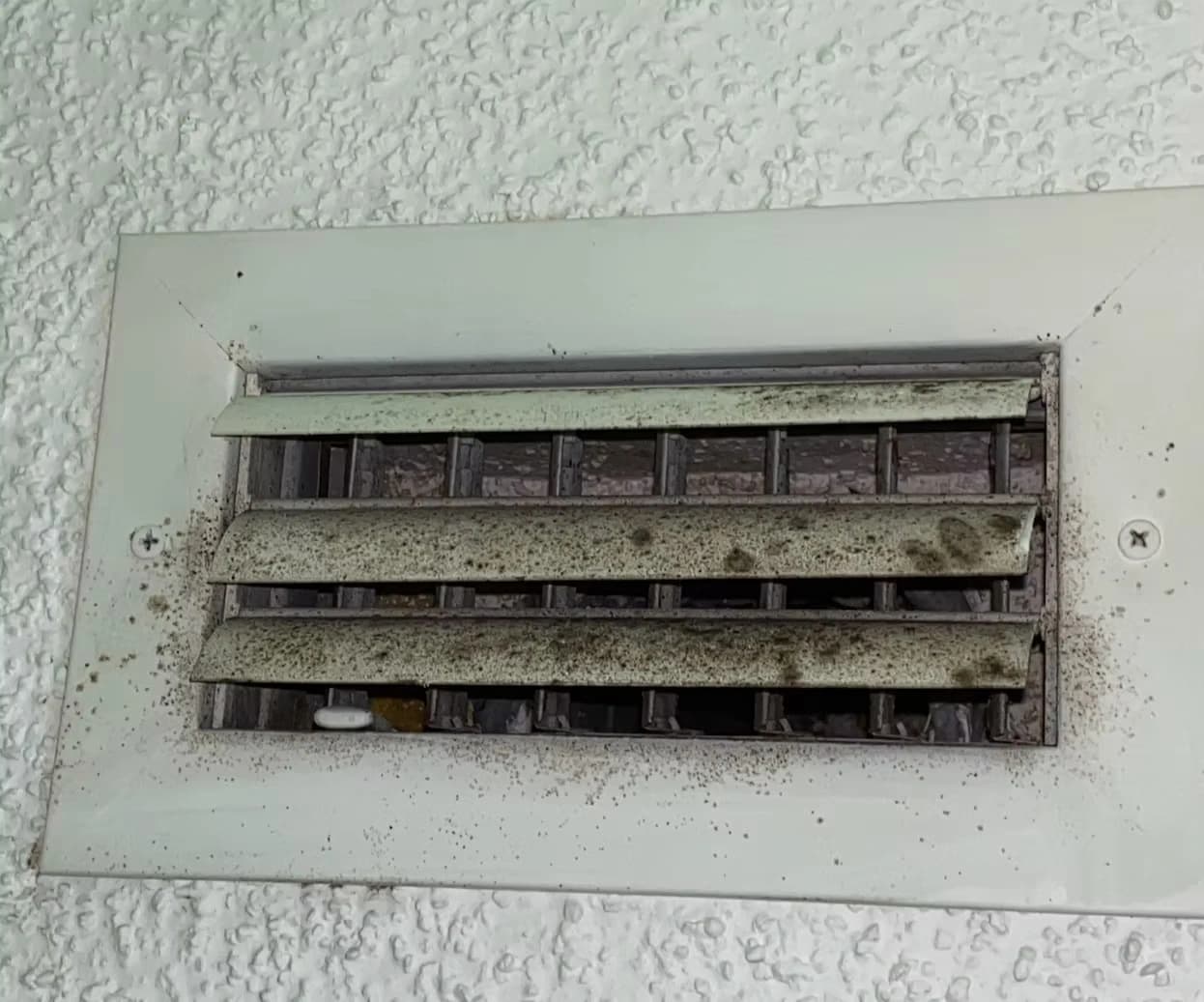
Most people find it in the same few places: the grout in a shower, the back wall of a closet, the underside of a bathroom windowsill. The name matters less than two questions. Is it sitting on the surface or growing into the material? Why is that spot staying damp?
How to tell mold from mildew
There is no lab line between them. What people call mildew is mold that stays flat on a damp surface. What people call mold has usually gone further, into the material or up off it. The table below is how the two words get used in practice, which makes it a rough guide rather than a test.
| What people call mildew | What people call mold | |
|---|---|---|
| Looks like | Flat patches or a thin film | Fuzzy or raised spots and blotches |
| Usual colors | Often white, gray or yellow | Black, green, gray, brown or white |
| Grows on | The surface of damp, hard things: grout, tile, sills, shower curtains, fabric | Into porous material: drywall, wood, insulation, carpet backing, ceiling board |
| Wipes off? | Usually, with detergent and water | Often leaves a stain and comes back while the material stays wet |
| What it tells you | The room is humid or the surface stays wet | Water is getting into the material or has been for a while |
The colors overlap. Early mold on painted drywall can look as flat as mildew on grout. Nobody can name a species by eye and you do not need to. The CDC says all molds should be treated the same when it comes to health risks and removal.
How it works
Where mildew sits and where mold grows
- What people call mildewFlat on the surface of damp, hard things: grout, tile, sills. It usually wipes off with detergent and water.
- What people call moldGrows into porous material: drywall, wood, insulation, carpet backing, ceiling board.
- A stain that comes backWiping lifts what is on the surface. Growth inside a material that stays wet comes back.
A spot that wipes off and stays gone was on the surface. One that returns means water is getting into the material.
Is mildew less harmful than mold?
Not in a way that changes what you should do about it. Both release spores. The CDC says mold can cause a stuffy nose, wheezing and red or itchy eyes or skin in people who are sensitive to it. What makes mold the bigger problem in a house is where it grows. Mildew on grout is a cleaning job. Mold that has rooted into drywall or wood usually means water has been getting in. Wiping the surface leaves the cause in place.
How to clean mildew and small mold spots
Scrub hard surfaces with detergent and water, then dry them completely. That is the EPA's advice for routine cleanup and it handles most mildew. Wear gloves, open a window and wear an N95 respirator. If you want something stronger, hydrogen peroxide works on hard surfaces at the household 3 percent strength.
You can do it yourself when:
- the patch is smaller than about 10 square feet, roughly 3 feet by 3 feet, which is the EPA's line for homeowner cleanup
- it is on tile, glass, sealed wood or another hard surface
- you know what made the spot wet and you have fixed it
Call a professional when the growth covers more than about 10 square feet, sits in drywall, carpet or ceiling board, keeps returning to the same spot or has reached the air conditioning system. Flood water and sewage also mean a professional job.
Bleach is not the upgrade people expect. The EPA does not recommend biocides such as chlorine bleach as a routine part of mold cleanup. The EPA also notes that dead mold is still allergenic, so killing it is not the same as removing it.
Why Florida homes grow so much mildew
Humidity does most of it. The EPA advises keeping indoor humidity below 60 percent, ideally between 30 and 50 percent. A Florida house can climb well above that when the air conditioning is off. Closets on outside walls, bathrooms without a working exhaust fan and rooms left shut with the thermostat set high stay damp enough for mildew almost all year.
Running the air conditioning and the bathroom fan takes care of most of it. So does leaving closet doors open on the dampest walls. How to prevent mold in a Florida home covers the rest of the list.
When the spot on the wall is not mildew
A spot that comes back to the same place after you clean it, low on an outside wall or at the base of a closet, is rarely just humidity. In a Florida concrete block home that pattern usually means water is coming through the wall or up from the slab. Other signs point the same way: paint bubbling near the floor, a swollen baseboard, a musty smell with no stain you can find or a patch that grows after heavy rain. What mold smells like helps if the smell is all you have.
A free mold inspection sorts it out. We walk the house, take moisture readings on the wall itself and tell you in writing whether you are looking at surface mildew or a wall that is taking on water. We hold Florida mold remediator license MRSR5565. When the water is coming from outside, we waterproof the foundation in the same project. If you are near Orlando or Tampa, see how the visit works for mold inspection in Orlando and mold inspection in Tampa.

Same spot, every time you clean it? Get a free inspection.
Available 24/7 · No obligation · Free estimates for homeowners