Mold Remediation
Crawl Space Mold Removal: Florida Guide (2026)
Florida crawl spaces sit in 80-90% humidity during rainy season. Mold establishes in 24-48 hours. Learn the signs, the removal process and what drives the cost.

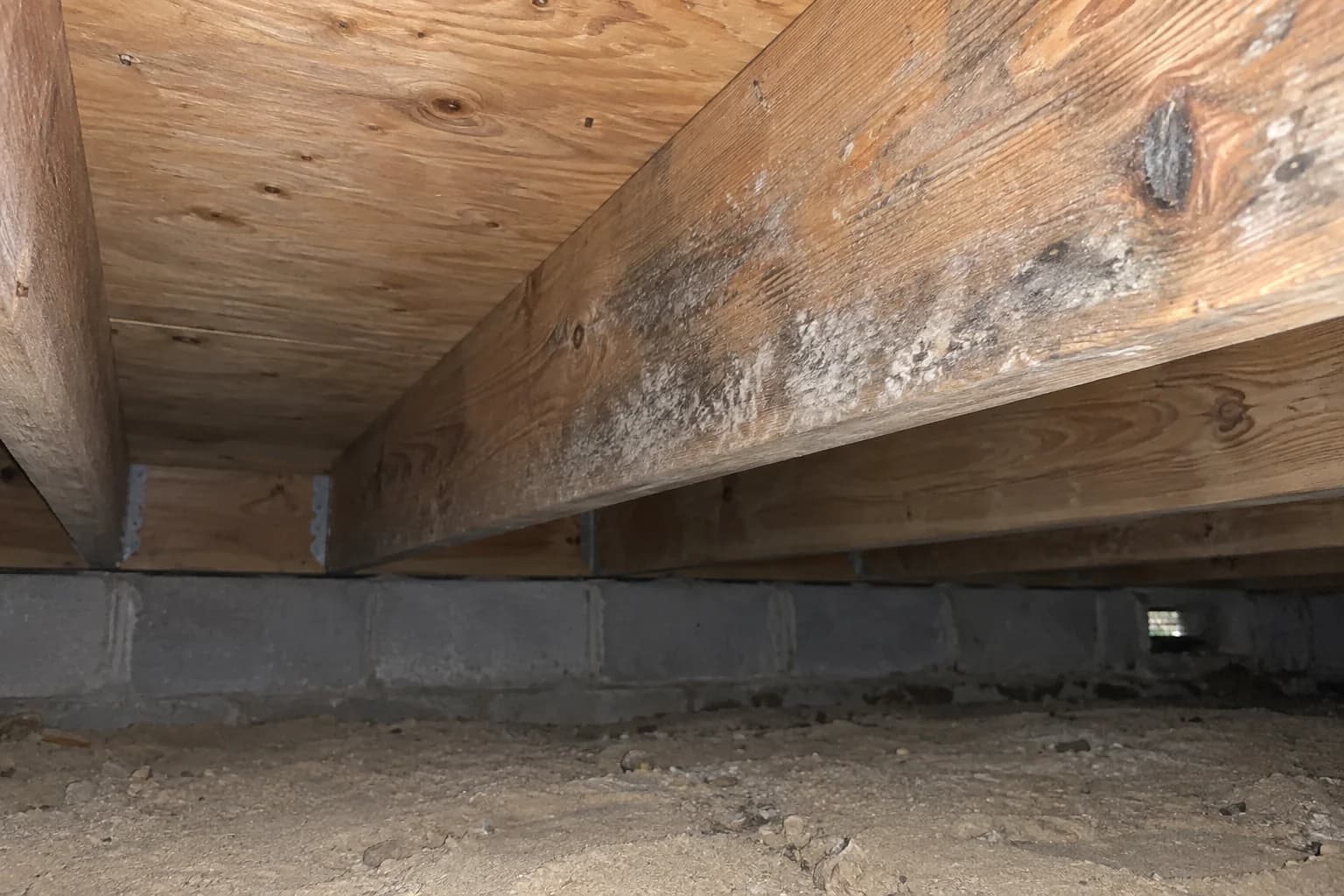
Florida homes with crawl spaces are a different problem than anywhere else in the country. The average relative humidity under a Florida home during rainy season sits between 80 and 90 percent. That's not a climate where mold might grow. That's a climate where mold will grow, and fast. Once moisture gets trapped in a crawl space, active mold colonies can establish within 24 to 48 hours.
Most homeowners don't find crawl space mold until it's been there for months. By then, it's in the floor joists, the insulation and the air circulating through the house.
This guide covers what causes it, how to spot it, what professional removal looks like, and what drives the price of a Florida remediation.
Table of Contents
- Why Florida Crawl Spaces Are Mold Hotspots
- Signs You Have Crawl Space Mold
- Health Risks of Crawl Space Mold
- What Causes Crawl Space Mold
- How Professional Mold Remediation Works
- DIY vs. Professional Removal
- Cost of Crawl Space Mold Remediation in Florida
- How to Prevent Mold From Coming Back
- FAQ
Why Florida Crawl Spaces Are Mold Hotspots
Crawl spaces sit directly above the ground. In Florida, that ground is often saturated with water for six months of the year. The rainy season runs from mid-May through mid-October, and during that stretch, Central and South Florida receive 60 to 70 percent of their annual rainfall in a compressed window.
Warm, wet air flows through crawl space vents, then contacts cool surfaces like floor joists and subfloor plywood. That temperature difference causes condensation. Wood soaked in condensation is exactly what mold needs to establish. Ground moisture also rises as vapor through exposed soil, and you can't clean your way out of that combination without addressing the source.
Homes built before 2005 are especially vulnerable. Older construction often relies on passive vents for crawl space airflow, a design strategy that backfires in humid climates. Humid outside air does not dry the crawl space. It saturates it.
If your home is in the Orlando, Tampa or Sarasota area and has a crawl space, mold is not a remote possibility. It's something worth checking regularly, whether that means a mold inspection in Orlando, mold inspection in Tampa or mold inspection in Sarasota.
Signs You Have Crawl Space Mold
Most crawl space mold goes undetected for a long time because homeowners rarely go under the house. The signs usually show up in the living space first.
Persistent musty smell. A crawl space sits below your floor. Air pressure differences pull air upward through gaps in the subfloor, around pipes and through HVAC systems. A damp, earthy odor that doesn't go away with cleaning is almost certainly coming from below.
Allergy symptoms that worsen at home. Mold spores travel through air. Worsening congestion, sneezing or respiratory issues that ease when people leave the house point toward airborne mold. Children and elderly adults with compromised immune systems tend to show symptoms first, so unexplained flare-ups in those household members are worth taking seriously.
Soft spots or bouncy floors. When mold colonizes floor joists and subfloor plywood long enough, it breaks down the wood fibers. Floors that flex or feel soft underfoot are a late-stage sign. At that point, remediation also includes structural repair.
HVAC running harder than usual. Mold in the crawl space often migrates into duct systems. A clogged or contaminated filter causes the system to work harder and circulate spores throughout the home. Climbing utility bills without a clear explanation are worth investigating here.
Visible growth on floor joists or insulation. Black, green or white fuzzy growth on wood surfaces or hanging insulation is mold. If you've seen it when looking under your house, the problem is already established and inspection alone won't be enough.
Health Risks of Crawl Space Mold
Crawl space mold is not just a structural concern. The health consequences depend on the species, the exposure level and the person's sensitivity.
Common species found in Florida crawl spaces include Cladosporium, Penicillium, Aspergillus and, in more severe cases, Stachybotrys chartarum (often called black mold). All of them produce spores that circulate through indoor air.
Short-term exposure typically produces nasal congestion, coughing, throat irritation and eye and skin irritation. For most healthy adults, symptoms clear once exposure stops.
Longer exposure is where things get more serious. People with asthma, chronic sinus conditions or compromised immune systems can see significant respiratory deterioration. Stachybotrys produces mycotoxins linked to neurological effects, not just respiratory ones. Children and elderly residents tend to show symptoms before other household members do, which is worth knowing if you're trying to figure out the source of a health problem.
Mold caught at a moderate stage is a manageable remediation job. Mold that's been growing for two or three years becomes a structural and health problem at the same time, and the cost reflects that.
What Causes Crawl Space Mold
Ground moisture evaporation. Bare soil in a crawl space constantly releases moisture vapor. Without a proper vapor barrier, that moisture has nowhere to go except up into the framing.
Water intrusion through the foundation. Rainwater that pools against the foundation can work through mortar joints, cracks and the interface between the footer and wall. Once inside, it has no drainage path and sits until it evaporates, feeding mold growth on every surface it contacts.
Condensation from humid outside air. Poorly ventilated or passively vented crawl spaces in Florida pull in humid air that condenses on cooler structural surfaces. This is the same mechanism described in the section above, and it's one of the most common causes we see.
Plumbing leaks. A slow drip from a supply line or drain pipe inside the crawl space can create a concentrated moisture source. These leaks often go unnoticed for months.
HVAC condensate. Air conditioning units produce condensate water. If the condensate drain line terminates inside the crawl space or backs up, it creates a standing water problem under the house.
Run through all five of those and the pattern is the same: water getting somewhere it shouldn't and staying there long enough to do damage.
How Professional Mold Remediation Works
The steps below reflect the full process used by licensed mold remediators in Florida. Timelines vary based on affected area, moisture levels and required dry-out time.
Step 1: Inspection and Moisture Mapping
A licensed remediator inspects the crawl space with moisture meters and sometimes thermal imaging cameras to map where water intrusion is occurring and how far the mold has spread. This determines scope and cost.
The inspection should go beyond just looking at visible mold. The source of moisture must be identified or remediation will fail within months.
Step 2: Containment
Before any work begins, the affected area is contained with polyethylene sheeting and negative air pressure equipment. This prevents mold spores disturbed during removal from spreading into the living space.
Skipping this step is one of the biggest mistakes made by unlicensed operators. Removal without containment actively worsens air quality in the home during the process.
Step 3: Material Removal
Compromised insulation is bagged and removed. Severely affected wood that can't be treated is cut out and replaced. Any standing water is extracted.
Step 4: HEPA Vacuuming and Antifungal Treatment
All surfaces in the affected area are HEPA vacuumed to capture loose spores. Then antifungal agents are applied to wood surfaces to kill remaining mold at the root.
Step 5: HVAC Fogging
This is where most remediation companies stop. Bullfrog's process includes replacing the HVAC filter and fogging antifungal vapor through the duct system to kill spores that have traveled into the air handling equipment. Mold in a crawl space rarely stays there. It moves into ducts, and if the duct system isn't treated, the spores circulate back into living spaces after the remediation is complete.
Most crawl space contractors don't offer this step. It requires understanding of both mold biology and HVAC systems.
Step 6: Post-Remediation Verification
A final inspection confirms that moisture readings are within acceptable range and that visible mold has been fully cleared. Clearance testing by a third-party industrial hygienist can be arranged if required for insurance documentation.
Step 7: Prevention
This is the part most remediation companies leave to someone else. Because Bullfrog also does foundation waterproofing and crawl space vapor barriers, the water source that caused the mold can be addressed in the same project, under the same warranty, without coordinating a second contractor.
DIY vs. Professional Removal
Homeowners see bleach and respirator masks at the hardware store and think the problem is solvable over a weekend. For very small affected areas, that's sometimes true. But in Florida, where the underlying cause is almost always moisture intrusion rather than an isolated surface issue, DIY almost always means the mold comes back.
There's also a regulatory consideration. Under Florida Statute 468, mold remediation involving more than 10 square feet requires a licensed mold remediator. Unlicensed companies and individuals doing significant remediation work are operating illegally.
| Factor | DIY | Licensed Professional |
|---|---|---|
| Cost upfront | Materials only | Quoted on scope after an inspection |
| Addresses moisture source | Rarely | Yes, if contractor also waterproofs |
| Legal compliance | Not for significant mold | Yes, with licensed remediator |
| HVAC treatment | No | Yes (with qualified contractors) |
| Containment during removal | Usually skipped | Required |
| Warranty on work | None | Varies by contractor |
| Risk of spreading spores | High without proper containment | Low with proper containment |
| Long-term outcome | High recurrence rate | Durable if source is fixed |
For minor surface mold on non-porous materials in a dry area, a DIY clean with appropriate protective gear is reasonable. For anything involving porous materials like wood or insulation, any mold spread over multiple structural elements, or any active moisture intrusion, call a licensed remediator.
Cost of Crawl Space Mold Remediation in Florida
Any figure you read online is a guess about a crawl space nobody has been inside. Two jobs that look alike from the access hatch can price a long way apart, because the scope is decided by what the inspection finds.
How scope changes the job:
- A small patch limited to one area, with dry framing around it, is the smallest scope.
- Growth across several joists or sections, or insulation that has to come out, widens it.
- Structural wood that has to be treated or replaced, along with the floor repair that follows, is the largest.
Factors that affect cost:
- Square footage of affected area
- Whether insulation must be removed and replaced
- Whether any structural wood requires replacement
- Accessibility of the crawl space (very low clearance adds labor time)
- Whether HVAC system is affected
- Whether a vapor barrier or waterproofing is needed to prevent recurrence
Insurance coverage in Florida:
Florida homeowner policies typically cap mold coverage at $10,000. Whether your policy covers crawl space mold depends on the cause. Sudden water damage from a burst pipe is usually covered. Gradual moisture buildup from ground water or condensation often is not.
Foundation waterproofing work is rarely covered by insurance regardless of cause.
Bullfrog works with homeowners to document the source of water intrusion and helps navigate the insurance process where claims apply.
How Bullfrog quotes: a free on-site inspection for homeowners and property owners (renters should ask their landlord to book it), with moisture readings and written findings. You get a written estimate before any work starts.
The cost of waiting:
Mold caught at a moderate stage is a remediation job. Mold that has progressed to structural wood damage becomes a remediation job plus floor repair, and that is a much larger scope. The biology doesn't pause while you're getting competing quotes.
How to Prevent Mold From Coming Back
Removing existing mold without addressing the moisture source is expensive maintenance, not a fix. These are the prevention measures that actually work in Florida's climate.
Install a vapor barrier. A properly installed crawl space vapor barrier covers the soil floor and often the walls, cutting off ground moisture evaporation. This is one of the most cost-effective mold prevention steps for a Florida home. A 6-mil or thicker reinforced polyethylene barrier, properly sealed at the seams and termination points, brings crawl space humidity down sharply. For older pier-and-beam homes, a full crawl space encapsulation seals the vents and adds humidity control on top of the barrier.
Waterproof the foundation. If water is getting in through the foundation walls, a vapor barrier buys time but doesn't stop the intrusion. Foundation waterproofing seals the foundation against water entry and, with a lifetime warranty, means you're not dealing with this problem again. The two services together address the full moisture equation.
Check and maintain your drainage. Water that pools against the foundation during rain events needs a clear path away from the house. French drains, grading corrections and extended downspouts all direct water away from the foundation before it has a chance to intrude.
Service your HVAC regularly. A clogged filter slows airflow and causes condensate to back up. Replace filters on schedule, check condensate drain lines and confirm there's no standing water collecting under or near the air handler.
Schedule annual crawl space inspections. Most homeowners never go under their houses. A licensed inspector checking moisture levels, vapor barrier condition and visible mold once per year catches problems while they're small. For properties near wetlands or in flood-prone areas of Central Florida, twice a year is a better interval.
Respond to water events immediately. After a significant storm or any water intrusion event, contact a water damage mitigation team within hours, not days. Mold can establish in 24 to 48 hours. Rapid extraction and drying prevents remediation from being necessary in the first place.
FAQ
How much does crawl space mold remediation cost in Florida?
It depends on scope, and scope is set by what an inspection finds. The main drivers are the size of the affected area, whether insulation has to come out, whether any structural wood needs replacing, how much clearance the crawl space has, whether the HVAC system is involved and whether the moisture source needs fixing too. Bullfrog quotes after a free on-site inspection and gives you a written estimate before any work starts. Florida homeowner policies often cap mold coverage at $10,000, but coverage depends on the cause of moisture.
What causes mold in a crawl space?
The primary causes are ground moisture evaporation through bare soil, water intrusion through the foundation, condensation from humid outside air, plumbing leaks inside the crawl space and HVAC condensate drainage problems. In Florida, high annual humidity and a six-month rainy season make crawl spaces particularly prone to chronic moisture problems. Any one of these causes is enough to produce mold within days if moisture levels stay elevated.
How do you know if you have mold in your crawl space?
The most common signs are a persistent musty smell in the home, worsening allergy or respiratory symptoms that ease when you leave the house, soft or bouncy spots in the floor, an HVAC system that's running harder than usual and visible fuzzy or discolored growth on joists or insulation when the space is visually inspected. Because crawl spaces are rarely visited, mold often progresses significantly before any signs appear in the living area.
Can crawl space mold make you sick?
Yes. Mold spores travel from the crawl space into living areas through gaps in the subfloor and through HVAC systems. Common species like Cladosporium, Aspergillus and Penicillium cause respiratory irritation, nasal congestion and eye and throat irritation. Stachybotrys chartarum (black mold) produces mycotoxins linked to more serious respiratory and neurological effects. People with asthma, allergies or weakened immune systems are more sensitive to mold exposure. Prolonged exposure at higher levels increases health risk across all household members.
Can I remove crawl space mold myself?
Florida law (Statute 468) requires a licensed mold remediator for any mold remediation involving more than 10 square feet. Beyond the legal requirement, DIY removal without proper containment actively spreads spores into the living space during removal. Without identifying and fixing the moisture source, the mold returns. For very small, isolated patches on non-porous surfaces, careful DIY treatment is reasonable. For anything involving wood, insulation or an area larger than a single square foot, a licensed remediator is the appropriate choice.
How do you prevent mold from coming back in a crawl space?
The most effective prevention combines fixing the moisture source with physical barriers. A properly installed vapor barrier stops ground moisture from evaporating into the crawl space. Foundation waterproofing stops water from entering through the walls. Proper drainage directs rainwater away from the foundation. Annual inspections catch new moisture problems before mold establishes. Prompt response to any water intrusion event, including professional dry-out within 24 to 48 hours, prevents mold from getting started after storms or leaks.
Does homeowner's insurance cover crawl space mold in Florida?
Most Florida homeowner policies include a mold sublimit of $10,000. Whether the mold is covered depends on the cause. Water damage from a sudden event like a burst pipe is typically covered. Mold that developed from gradual moisture buildup or ground water intrusion is often excluded. Foundation waterproofing is rarely covered regardless of cause. Bullfrog helps clients document the source of water intrusion and works with them through the claims process where applicable.
How long does crawl space mold remediation take?
A straightforward remediation on a moderate-size affected area typically takes one to three days of active work. Projects requiring significant insulation removal, structural wood treatment or extended dry-out time can run three to five days. Post-remediation drying is often required before final clearance, which can add additional time. Adding a vapor barrier or foundation waterproofing to the same project extends the timeline but eliminates a separate mobilization and the associated scheduling delay.
Get a Free Crawl Space Inspection
Left alone, crawl space mold gets worse. Florida's humidity and the biology of mold growth work together on the same timeline: every month you wait is a larger affected area and a higher remediation bill.
Bullfrog Foundation Waterproofing & Mold Remediation holds Florida Mold Remediator License MRSR5565. We handle mold remediation in Orlando, mold remediation in Tampa and mold remediation in Sarasota. We handle mold remediation, foundation waterproofing and water damage mitigation under one roof, with one warranty. We're available 24 hours for water damage emergencies.
Call 888-603-6653 or request a free estimate online. We'll get under your house, tell you exactly what we see, and give you a straight answer on what it takes to fix it.

Protect your Florida home
We find the source of water intrusion and handle waterproofing and mold remediation. Start with a free on-site estimate.
Free on-site estimates are for homeowners and property owners. Renting or buying? See your options.
More from Bullfrog Waterproofing
Mold Remediation
How to Prevent Mold After a Flood in Florida
Mold can start within 24 to 48 hours of a Florida flood. What you do in the first two days decides whether you get mold at all. Here is the playbook.
· 8 min read
Read article
Mold Remediation
Is Black Mold Dangerous? What Florida Homeowners Should Know
Black mold gets talked about like a death sentence. The real risk is more grounded, and in Florida humidity it is common. Here is what the science says.
· 8 min read
Read article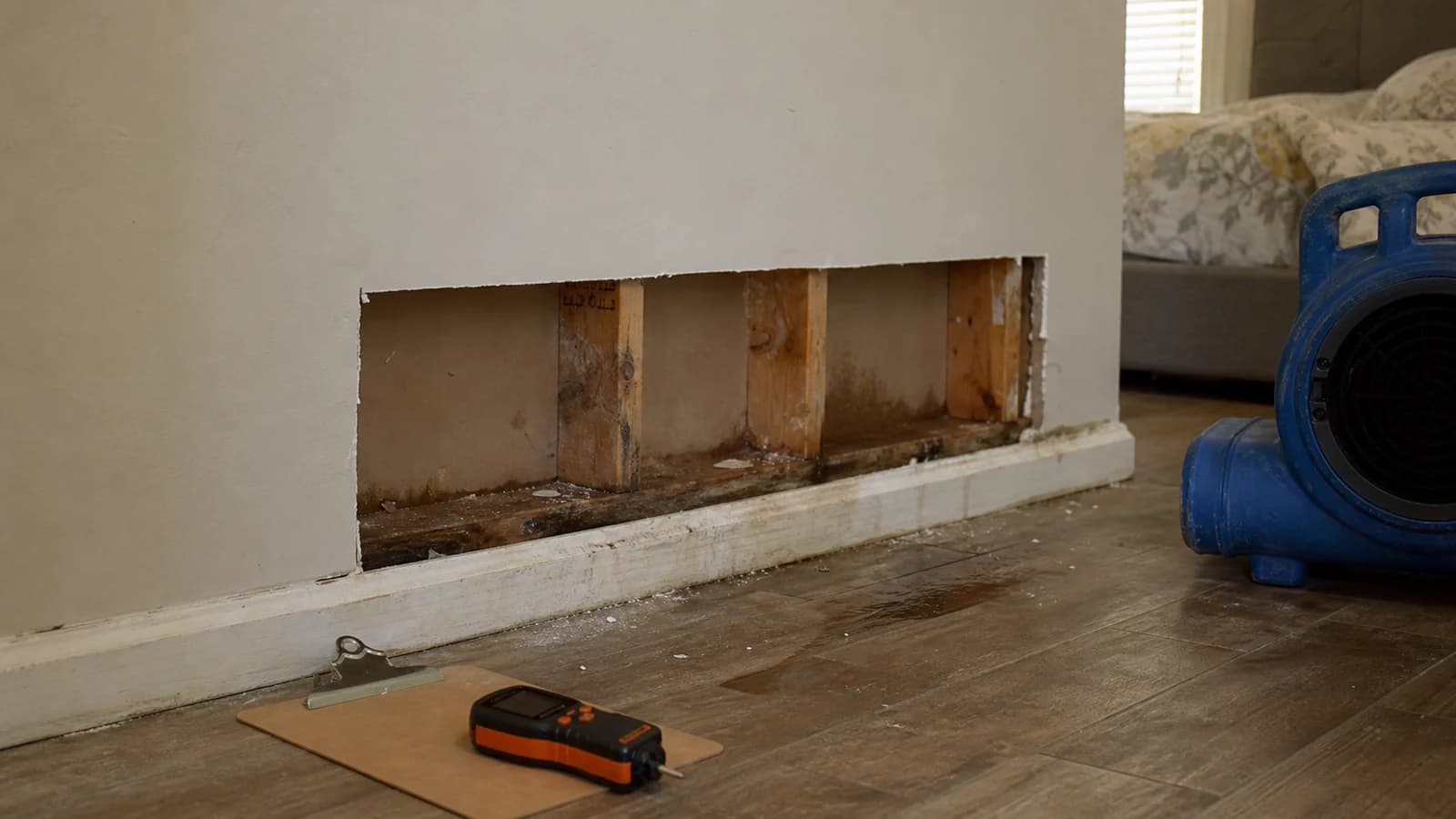
Mold Remediation
Does Homeowners Insurance Cover Mold in Florida?
Whether your Florida policy pays for mold comes down to what caused it. Here is how coverage works, what gets denied and how to protect your claim.
· 9 min read
Read article