Mold Remediation
Mold After a Florida Storm: What to Check, What to Skip and When to Call
Mold grows within 24 to 48 hours of water intrusion. After a Florida storm, here is what to check and when the situation needs a licensed remediator.
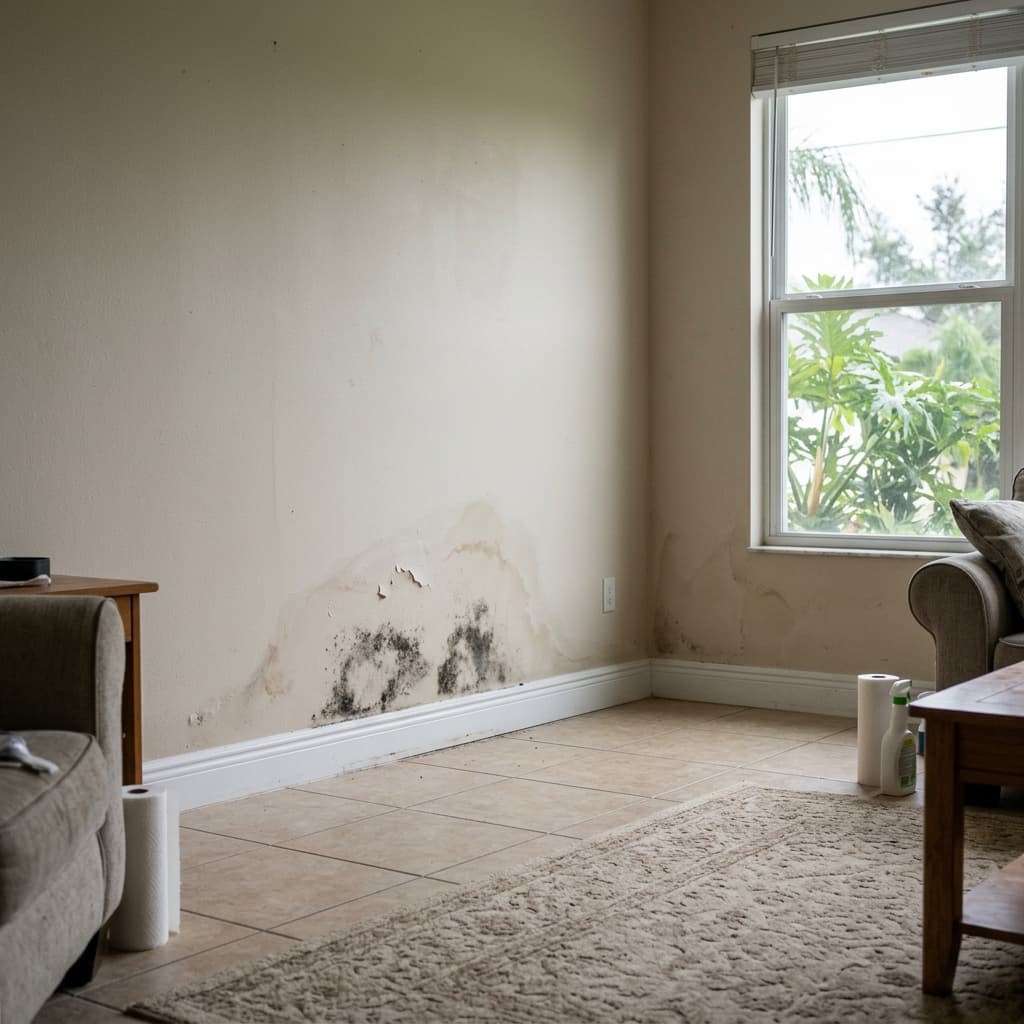
The 24 to 48 hours after water enters your home are the window that matters most.
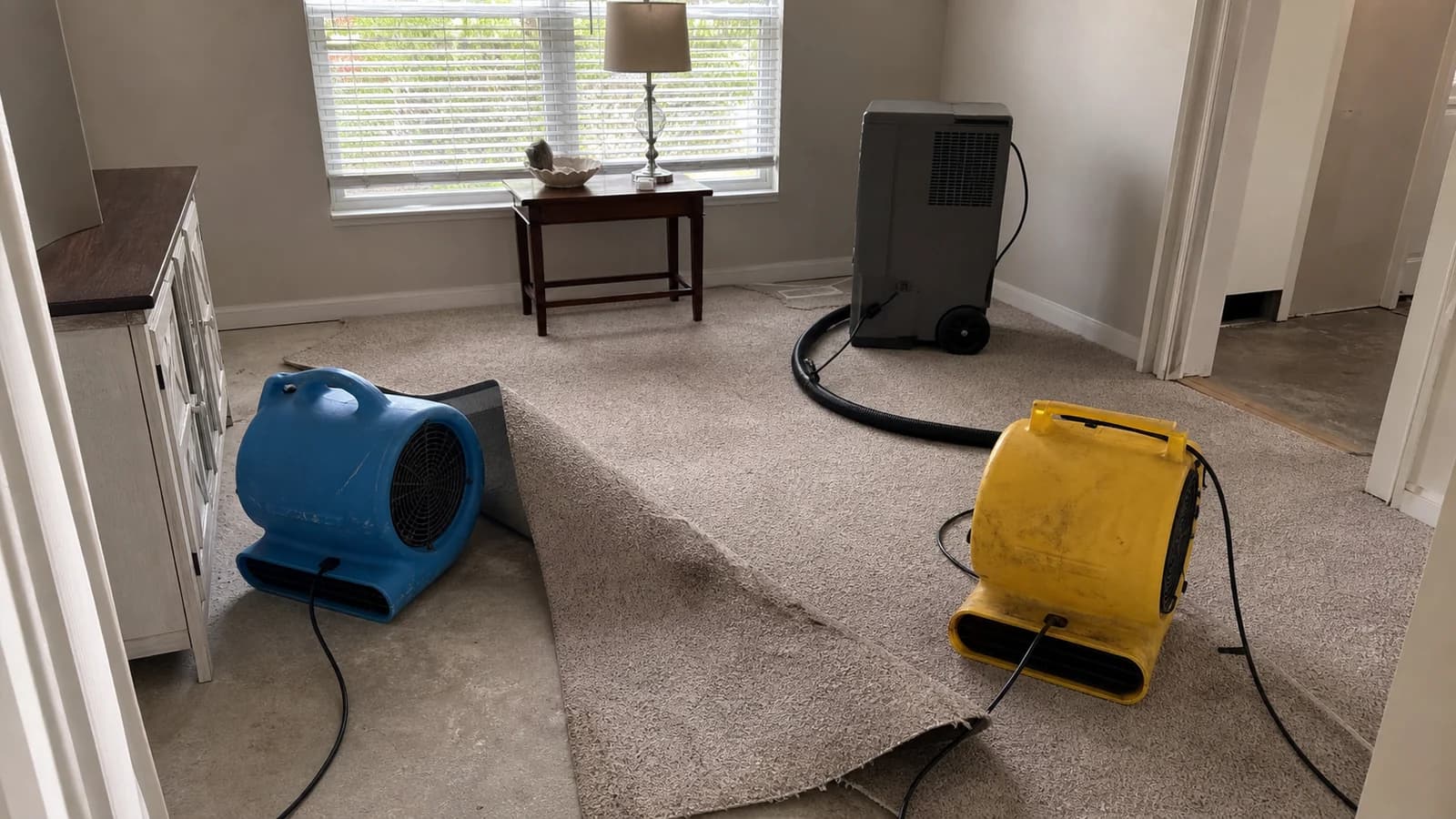
In Florida's heat and humidity, mold can establish on wet drywall, wood framing and insulation within that timeframe. Most homeowners don't realize a problem is developing because the growth starts behind surfaces, not on them. By the time visible mold appears, it has usually been there for weeks.
After a storm, that window closes fast. Hurricane Ian dropped 10 to 15 inches of rain on Sarasota County in September 2022. Hurricane Milton crossed the I-4 corridor in October 2024 and brought tornadoes and flooding to communities in Orange County. Hurricane Helene hit the Tampa Bay area in September 2024 with storm surge exceeding ten feet in some coastal sections. Thousands of homes in each of those storm zones had water intrusion that wasn't fully dried out in time. Secondary mold from those events is still being found today in properties that looked fine in the weeks right after the storm.
Here's what to check, what common mistakes to avoid and when the job is bigger than a homeowner should handle alone.
What to check after a storm
Visible signs on surfaces
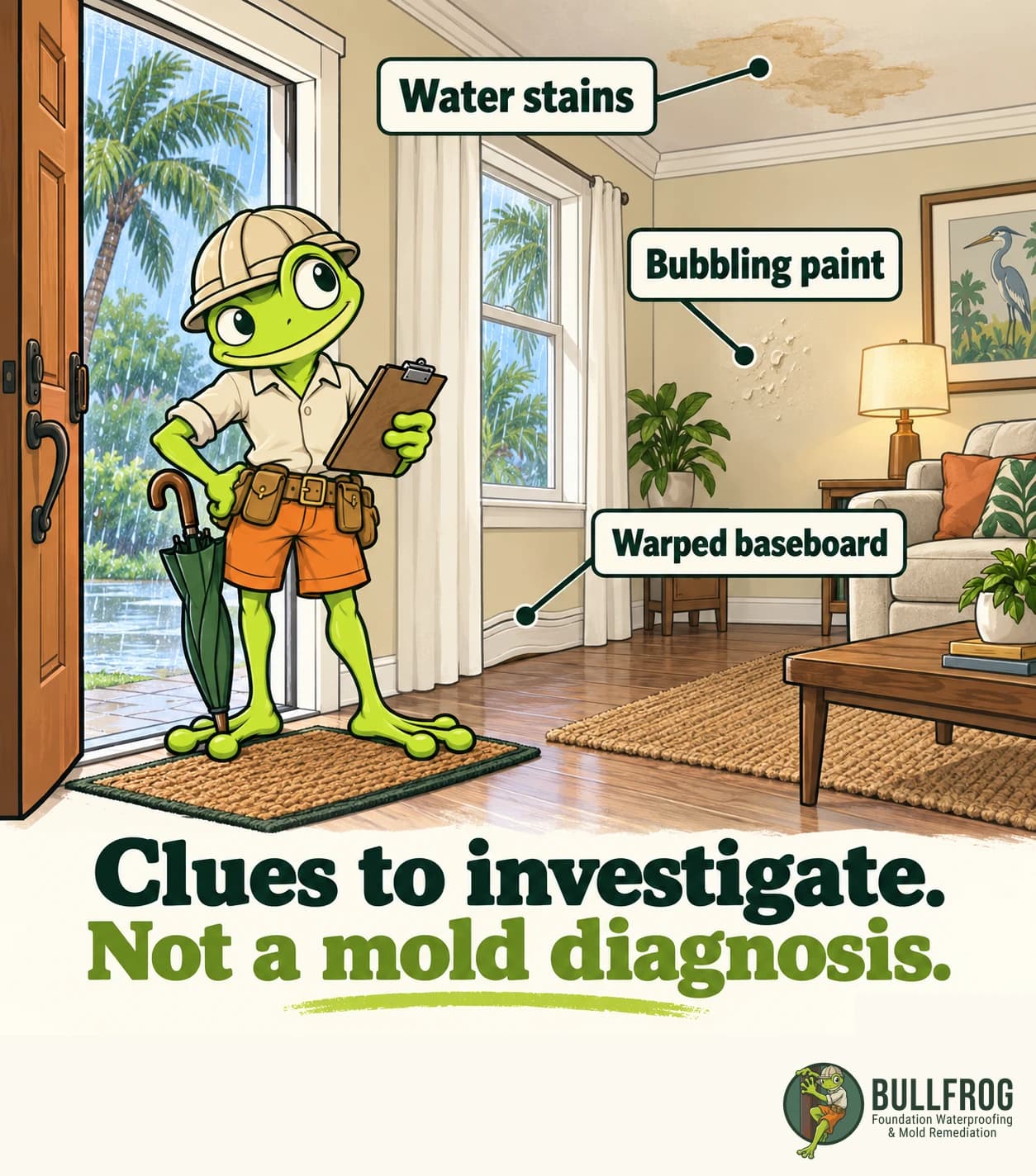
Start with the obvious places. Bubbling or peeling paint on walls or ceilings means moisture is trapped behind the surface. Warped baseboards and door frames that no longer close properly indicate framing lumber has absorbed water and started to swell. Discoloration on drywall, ranging from yellow-brown water staining to black or green spotting, points to active or recent mold growth.
In Florida's concrete block homes, check the lower sections of interior walls, particularly in rooms that are at or near ground level. Block walls absorb moisture through their exterior face and the mortar joints, and the inside of those walls can be wet even when the surface looks dry.
Smell before you see it
Mold produces musty, earthy odors before it produces visible growth. If a room smells wrong after a storm and the smell doesn't clear after the home dries out, mold is very likely growing somewhere in that space. The source may be behind drywall, under flooring, in the ceiling cavity above a water stain or inside the HVAC system.
Smell is unreliable for locating mold precisely, but it is reliable for indicating that mold is present. A persistent musty smell in a specific room after a storm event is a reason to investigate further, not to wait and see.
The HVAC system
This is the step most homeowners skip. When mold is growing anywhere in a home that has been running its air conditioning, spores have been circulating through the duct system. Surface cleanup removes the visible colony. It does not remove spores from the ducts.
If the HVAC system was running while any part of the home was wet after a storm, the air handler, return ducts and supply registers should be inspected. Mold in the duct system means spores are being distributed to every room in the house every time the system runs. Mold in AC vents covers why Florida systems are so prone to it.
The crawl space
Water that enters through the foundation or from ground flooding goes down. It ends up in the crawl space if the home has one. Crawl space mold after a storm often goes undiscovered for months because homeowners don't go under the house.
The signs in the living space include: soft or springy floors, musty odor that seems worse near floor level, and HVAC performance issues that started after the storm. If any of those are present after a storm event and the crawl space hasn't been checked, schedule an inspection. Florida's crawl space environment combined with storm flooding is a reliable formula for mold in the floor joists.
Behind walls using moisture readings
A moisture meter is the most practical tool for checking whether walls that look dry are actually dry. Readings above 19 percent in wood or above 16 percent in drywall indicate the material is still wet enough to support mold growth. A wall that reads wet ten days after a storm and has been in a closed, air-conditioned space has almost certainly started developing mold.
Professional inspectors use moisture meters and sometimes borescope cameras to assess conditions inside walls without opening them unnecessarily. That information shapes the remediation scope and prevents cutting into walls that turn out to be dry while missing the ones that aren't.
What homeowners get wrong after a storm
Bleach on porous surfaces
Bleach kills surface organisms on non-porous materials like tile and glass. On porous materials like drywall and wood, bleach kills what is on the surface but does not penetrate deep enough to reach the root structure. The surface looks clean. The mold is still growing from inside the material. Florida homeowners attempting to clean mold from drywall with bleach typically see the growth return within two to four weeks.
The EPA's guidance is clear on this: bleach should not be used on porous surfaces for mold remediation. The material needs to be removed.
Painting over staining
Encapsulating stains with paint or primer is not remediation. It covers the visual evidence while the mold underneath continues to grow. If a future buyer, home inspector or adjuster samples the wall, they'll find active mold under the paint. Mold that is painted over in Florida's climate will usually push through the paint within a season or two.
Waiting too long to act
The 24 to 48 hour window is real, and most storm-related mold situations fall outside it by the time the homeowner acts. That doesn't mean remediation isn't possible or effective after that window closes, but it does mean the problem is already established and delay makes it worse.
Mold that has been growing for two weeks involves a different scope than mold that has been growing for three days. Two weeks of growth in Florida's heat can colonize multiple square feet of framing. After two months, the same colony may have spread through the entire section of wall or floor assembly. Waiting for the mold to become obvious on the surface means waiting for it to reach late-stage growth.
DIY remediation on large areas or inside walls
The EPA recommends professional remediation for any mold-affected area larger than ten square feet, for mold inside HVAC systems, for mold inside walls or ceilings and for situations where anyone in the household has asthma, a compromised immune system or documented mold sensitivities.
Attempting to remove mold from a large area without proper containment moves spores into previously unaffected areas. Improper containment during cleanup can turn a contained problem into a whole-house problem faster than leaving it alone.
When to call a licensed mold remediator
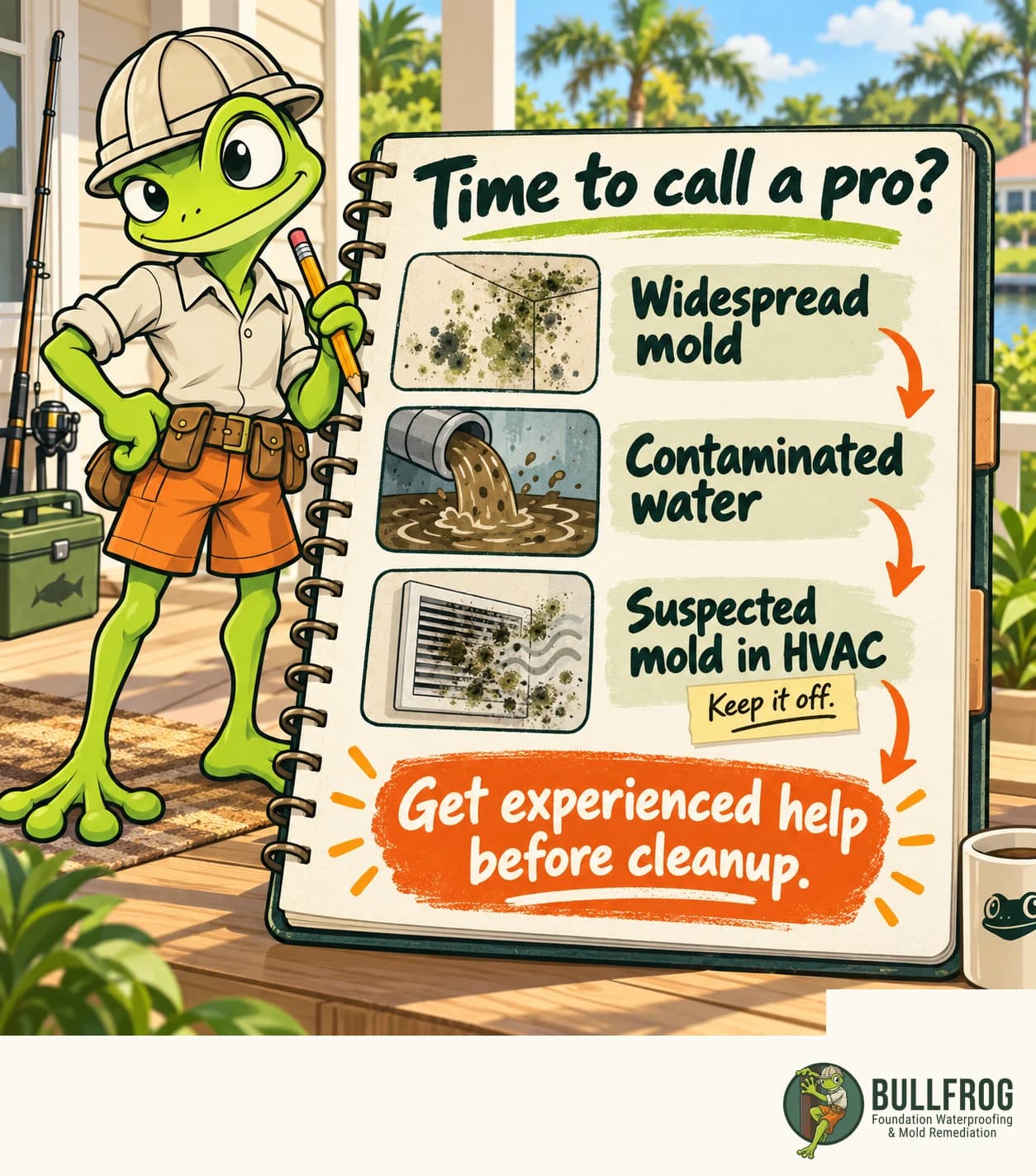
Call a professional when:
The affected area is larger than ten square feet. This is the EPA threshold, and it exists because larger areas require containment, negative air pressure and proper disposal that homeowners cannot replicate with hardware store supplies.
Mold is inside HVAC ducts or the air handler. Duct contamination requires fogging with antifungal vapor and filter replacement, not just surface cleaning.
The mold is inside walls or under flooring. Opening a wall without proper containment spreads the problem.
Water intrusion came from ground flooding, storm surge or a rising water table. These sources often deliver contaminants beyond moisture, which affects how remediation and disposal need to be handled.
Anyone in the home is experiencing worsening respiratory symptoms, persistent congestion or allergy symptoms that improve when they leave and return when they come back. Symptoms like these indicate ongoing exposure that makes prompt remediation a health issue, not just a property issue.
The home was in the path of a named storm and has any of the warning signs described above, including smell, surface staining, soft floors or HVAC performance changes.
What licensed remediation looks like
A proper mold remediation job after storm flooding involves several steps. The inspection comes first, including air quality testing for spore counts and moisture readings throughout the affected area. Containment goes up before any material is removed, using poly barriers and negative air pressure to prevent spores from spreading during the work.
Affected material comes out completely. There is no effective approach that leaves contaminated drywall, insulation or wood in place and treats it in place. Materials are removed, surfaces are treated with antifungal solution and the HVAC system is fogged to address airborne spores in the duct system.
Post-remediation clearance testing confirms that spore counts have returned to normal outdoor levels before the project closes out. That clearance documentation matters for insurance claims and for future property disclosures.
Florida Mold Remediator License MRSR5565 is the credential required to legally perform this work in the state. If a contractor doesn't hold that license, they're not licensed to remediate mold in Florida, regardless of what they call the service.
What about insurance after a storm
Florida homeowners policies generally cover mold remediation when the mold resulted from a covered peril, such as wind-driven water intrusion covered under the wind portion of the policy. Ground flooding and storm surge are typically excluded from standard homeowners coverage and require separate flood insurance.
Document everything before cleanup begins. Photograph the water staining, mold growth and affected materials from multiple angles. Photograph the moisture readings on your meter if you have one. Write down the timeline: when the storm hit, when you noticed the problem and what conditions looked like at each point. This documentation supports a claim and protects you if the insurer questions when the damage occurred.
If you're in the Orlando, Tampa or Sarasota area and your home took water in a storm, a free inspection will tell you whether mold is developing and what the scope is before you decide how to proceed. Call 888-603-MOLD or request an assessment online. We hold Florida Mold Remediator License MRSR5565 and handle mold remediation and waterproofing in one project. For location-specific information, see our Orlando mold remediation, Tampa mold remediation and Sarasota mold remediation pages.
Protect your Florida home
We find the source of water intrusion and handle waterproofing and mold remediation. Start with a free on-site estimate.
Free on-site estimates are for homeowners and property owners. Renting or buying? See your options.
More from Bullfrog Waterproofing
Mold Remediation
How to Prevent Mold After a Flood in Florida
Mold can start within 24 to 48 hours of a Florida flood. What you do in the first two days decides whether you get mold at all. Here is the playbook.
· 8 min read
Read article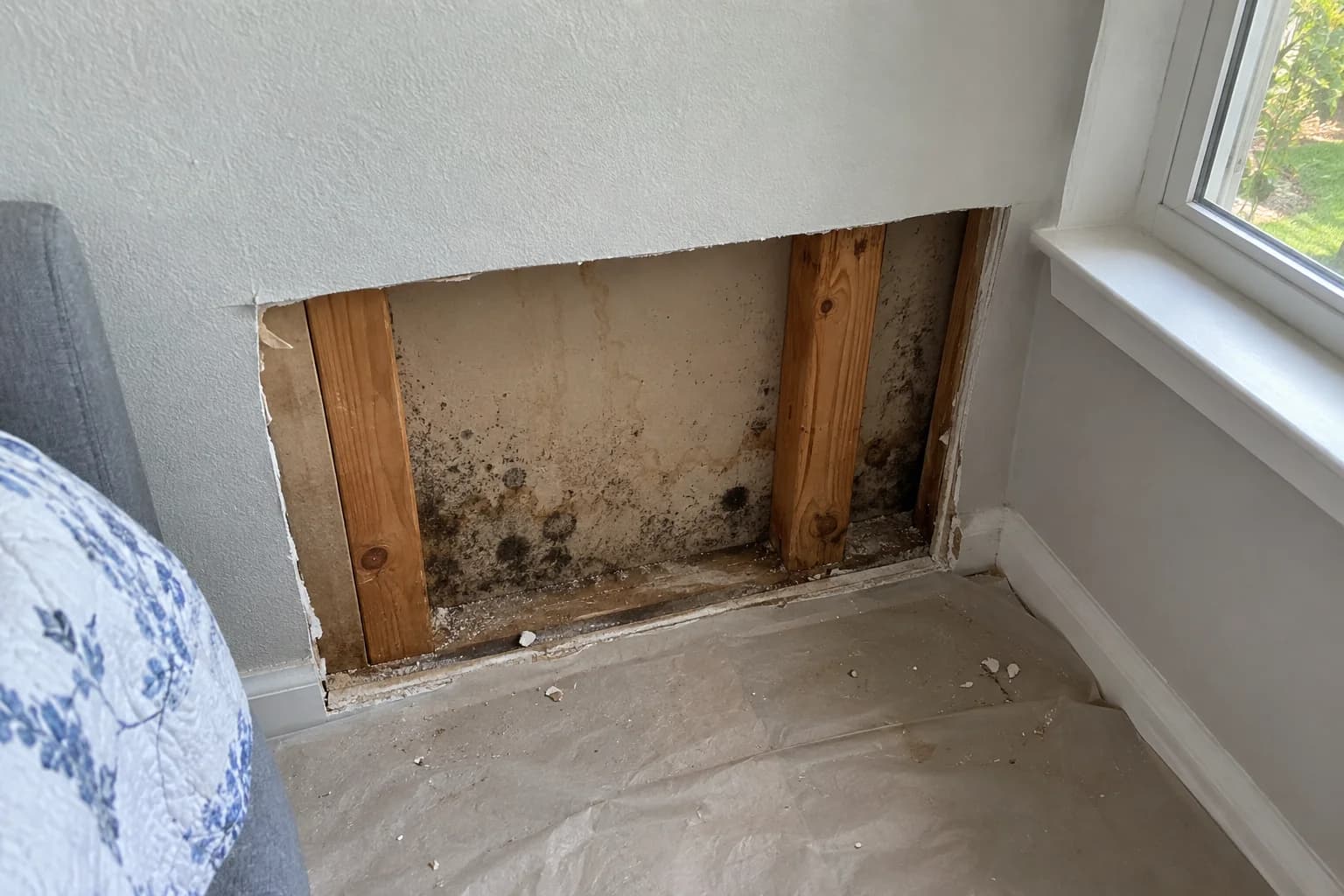
Mold Remediation
Is Black Mold Dangerous? What Florida Homeowners Should Know
Black mold gets talked about like a death sentence. The real risk is more grounded, and in Florida humidity it is common. Here is what the science says.
· 8 min read
Read article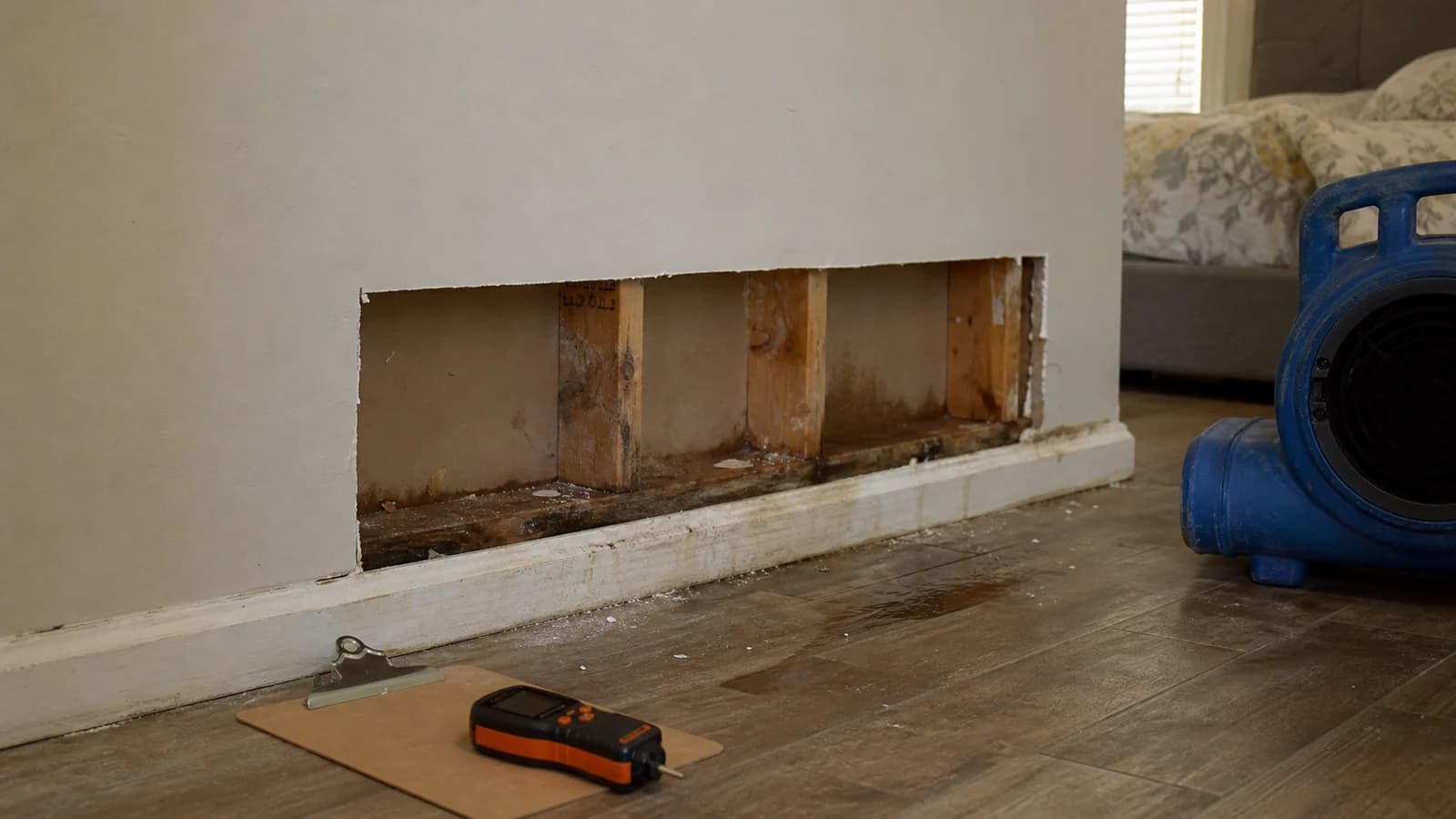
Mold Remediation
Does Homeowners Insurance Cover Mold in Florida?
Whether your Florida policy pays for mold comes down to what caused it. Here is how coverage works, what gets denied and how to protect your claim.
· 9 min read
Read article