Basement Waterproofing
Florida basements flood. Act before yours does.
A Florida basement isn't like a basement anywhere else. The ground stays saturated for six months of the year. Skip the waterproofing and water intrusion is a matter of when, not if.
Available 24/7 · No obligation · Free estimates for homeowners
Trusted, Licensed, and Certified



Why Florida basements flood
High water table year-round
Central Florida's water table sits just a few feet below the surface before rainy season even starts. A basement sits directly in that zone. When the water table rises, it pushes against every inch of your foundation walls and floor at once.
Six months of rainy season
Florida's rainy season runs May through October, which accounts for 60 to 70% of annual rainfall. The ground saturates fast and stays wet. A basement without a waterproofing system is under sustained hydrostatic pressure for half the year.
Mold within 48 hours
Florida's heat and humidity speed up mold growth. Once water enters a basement through a crack, a mortar joint, or the floor slab, mold can establish within 48 hours. A slow seep that goes undetected for weeks results in extensive colonisation inside your walls, long before it shows in the room.
How we waterproof a Florida basement
No single product solves a Florida basement. Effective waterproofing uses all three recognised methods: Type A barrier coatings, Type B structural crack sealing, and Type C interior drainage. Hydrostatic pressure, vapor transmission, and existing wall cracks all need addressing at once.
- 1
Full assessment and moisture mapping
We inspect every wall, the floor slab, and all penetrations. That means mapping active entry points, measuring moisture levels, and checking for mold already present behind the walls. The results tell us which combination of Type A, B, and C methods your basement needs, and whether mold remediation should come first.
- 2
Crack injection and wall sealing (Type B)
Existing cracks and failed mortar joints are injected with polyurethane or epoxy foam to seal the entry point structurally. Wall surfaces get a penetrating waterproof coating to block moisture vapor through the block or concrete. This brings the installation to Florida Building Code R406 standards.
- 3
Interior drainage channel (Type C)
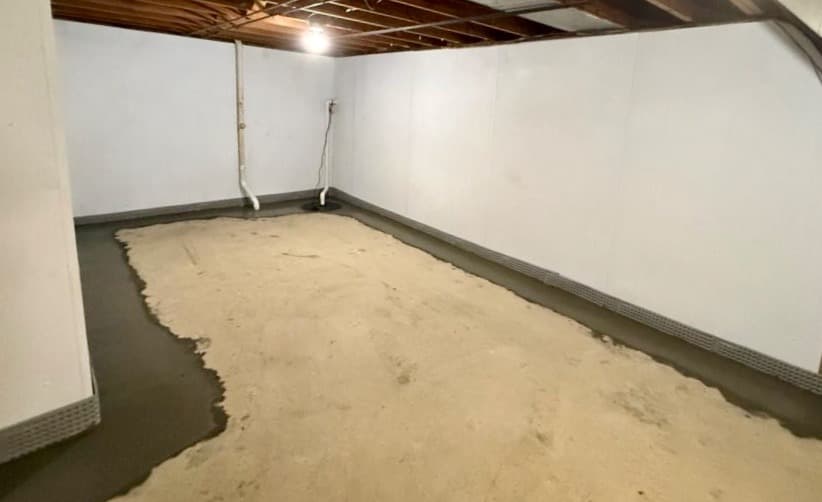
A drainage channel goes in along the perimeter wall-floor joint, which is where most Florida basements take on water. It collects seepage and routes it to the sump pit before it pools on the floor or wicks into the walls.
- 4
Sump pump with battery backup
Collected water routes to a sump pit and is pumped out automatically. In Florida's rainy season, a sump pump runs often. We install properly sized units with battery backup so the system keeps running through storm-related power outages, which is when you need it.
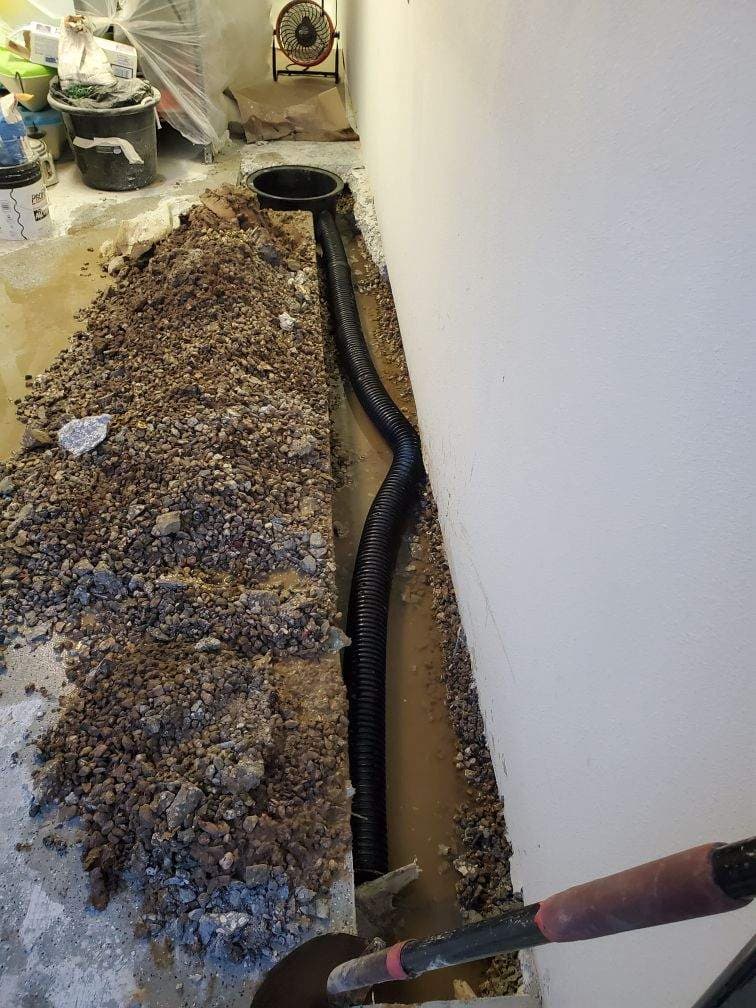
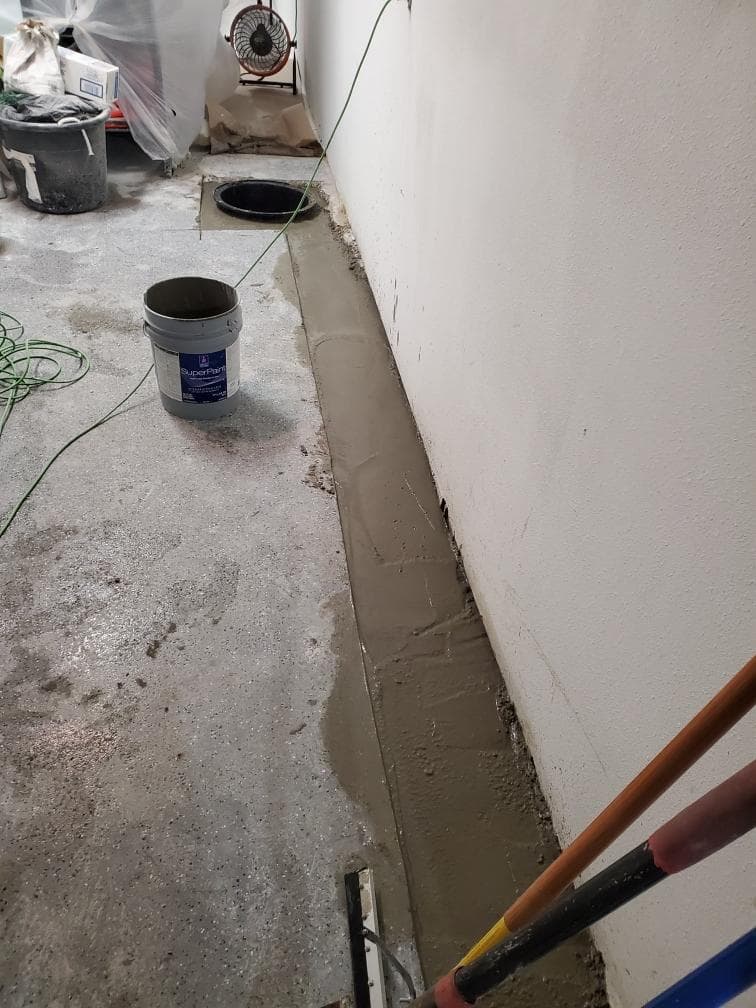

We stop the intrusion and address any damage the water has caused.
Many waterproofing contractors can install a drainage system. But few are licensed and equipped to address any mold that may have already developed. We can also put back small sections of drywall, and we quote that once the wall is open. Why not save yourself the trouble of having to deal with and organize multiple contractors?
Bullfrog does it all. We are licensed mold remediators (#MRSR5565) who also install basement waterproofing systems. If mold is discovered at any step of the process, we deal with it without you having to juggle separate companies. Simplify things with one scope and one warranty.
Why homeowners choose Bullfrog
200+
Jobs completed
Lifetime
Warranty on waterproofing
Licensed
#MRSR5565
5-star
Google & Angi Rated
24/7
Emergency response
Free
On-site estimates
Common questions
Does Florida have basements?
What is the building code for waterproofing in Florida?
What are the three types of basement waterproofing?
Will insurance pay for basement waterproofing?
Can you fix a wet basement from the inside?
Does Bullfrog offer financing?
“These guys don't sleep! They were working round the clock til they finished the job in our basement. Very impressed with their work ethic and quality of work.”
Elizabeth Brown
Google review