
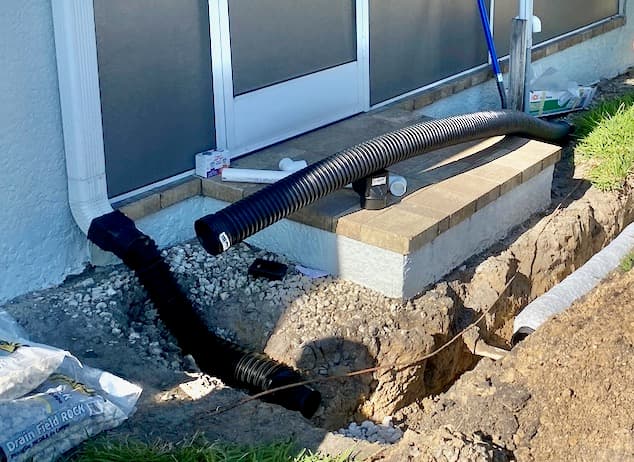
French Drain Installation
Redirect water before it reaches the wall.
Florida gets 54 inches of rain a year. Sandy soil doesn't absorb it fast enough. Pooling water builds pressure against your foundation. A French drain intercepts it first and routes it away before the damage starts.
Available 24/7 · No obligation · Free estimates for homeowners
Trusted, Licensed, and Certified








Why Florida homes pool water differently
54 inches of rain per year
Florida averages more annual rainfall than Seattle. During rainy season (June through September), afternoon thunderstorms dump 5 to 8 inches per month. The ground saturates fast and stays wet.
Sandy soil doesn't drain
Florida's sandy soil pools water at the surface rather than absorbing it. Water with nowhere to go runs toward your foundation and builds pressure against the wall over hours and days.
High water table year-round
Central Florida's water table sits close to the surface even before rain falls. Seasonal rain pushes it higher. Saturated soil exerts hydrostatic pressure against foundation walls, the main cause of water intrusion in Florida homes.
How a French drain works
A French drain is a gravel-filled trench containing a perforated pipe. It collects groundwater and surface water along its path and channels it away from your foundation to a safe exit point: a dry well, a storm drain or low lying area at property edge.
- 1
Site assessment
We map the water flow on your property: where it enters, where it pools, and where it needs to go. The drain route is planned to intercept water before it reaches the foundation wall.
- 2
Trench and pipe installation
We dig the trench at the correct gradient, lay a bed of clean gravel, and install perforated pipe wrapped in filter fabric to prevent sediment from clogging the system over time.
- 3
Gravel backfill
The trench is backfilled with washed gravel and covered with filter fabric before the topsoil goes back. This keeps soil out of the drain channel while allowing water to enter freely.
- 4
Catch basins and downspout tie-ins
Where needed, we add surface catch basins and connect gutter downspouts directly into the drainage line. Roof runoff is often the largest volume contributor to foundation pooling. Connecting it to the drain solves that at the source.
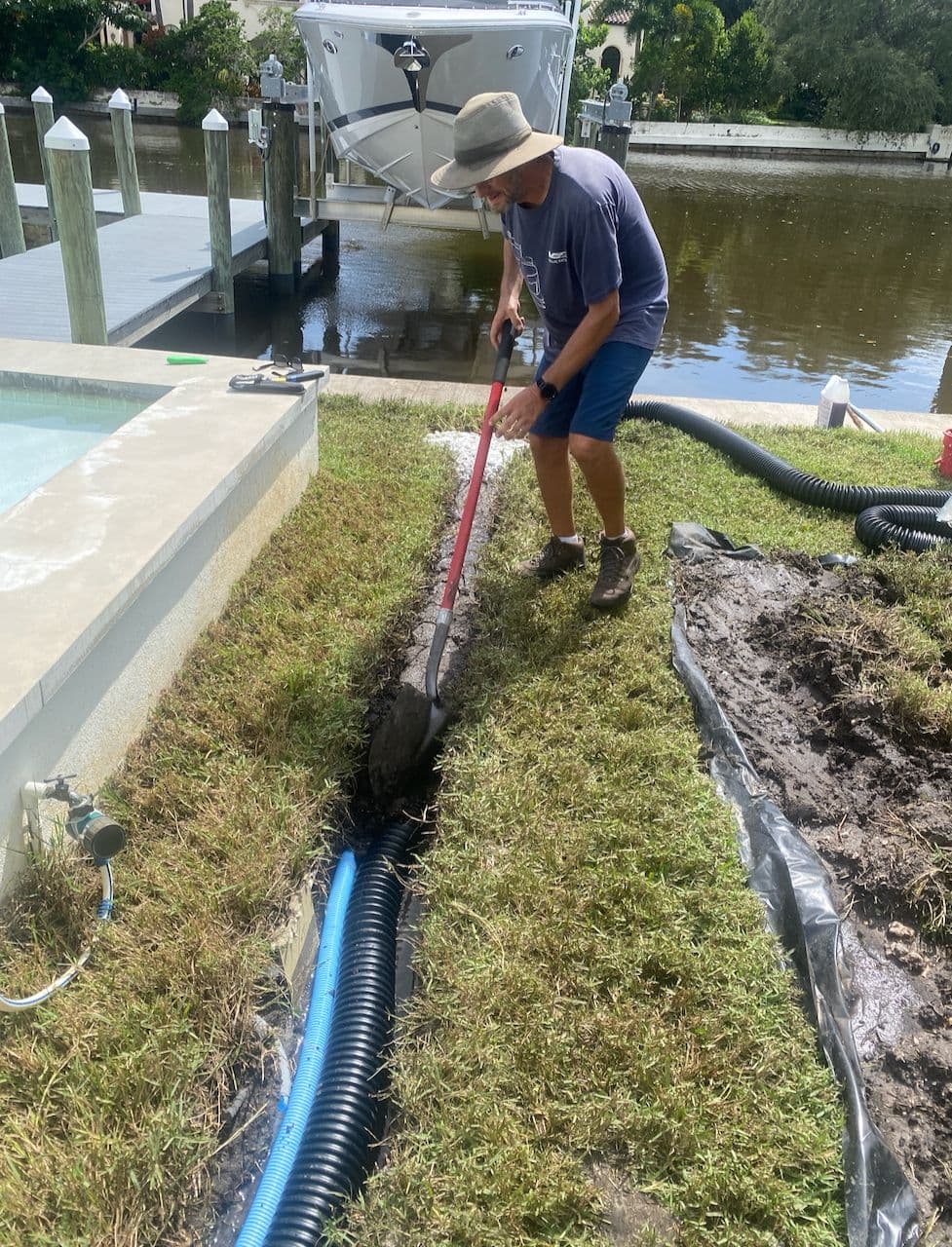

A French drain stops pooling. It doesn't seal the wall.
Drainage specialists install French drains. That's the whole job. The drain routes surface water away, reduces pooling and lowers hydrostatic pressure. What it doesn't do is seal the cracks, mortar gaps or slab joints that water is already pushing through. If those entry points exist, water will still get in during heavy rain.
Bullfrog installs French drains as part of a foundation protection system. The drain handles the volume. The waterproofing seals the entry points. Used together, they cover both sides of the problem. One contractor, one warranty.
Why homeowners choose Bullfrog
200+
Jobs completed
Lifetime
Warranty on waterproofing
Licensed
#MRSR5565
5-star
Google & Angi Rated
24/7
Emergency response
Free
On-site estimates
Common questions
Do French drains work in Florida?
What are the downsides of a French drain?
Do I need a permit to install a French drain in Florida?
How long does a French drain last?
Does Bullfrog offer financing?
“We've been struggling with water intrusion in our house for seven years, and had multiple experts look at the issue. It wasn't until we contacted Bullfrog that we got to fix the real problem. These guys were professional, personable, and took the time to get the job done right. They even double-checked another contractor's work to verify that everything was done correctly. A+ work!”
Minorou
Google review