Crawl Space
Crawl Space Vapor Barrier: Florida Guide (2026)
Up to 40% of your indoor air comes from your crawl space. In Florida, that means moisture, mold risk, and termite pressure without a proper vapor barrier.

Up to 40% of the air in your living space comes directly from your crawl space. In Florida, where crawl space humidity runs above 70% year-round without intervention, that stat matters more than most homeowners realize. An unprotected crawl space actively degrades the air your family breathes, softens the floor joists above it and gives subterranean termites exactly the damp-wood conditions they need. Most homeowners think of it as a storage area. It's actually one of the bigger factors in indoor air quality, structural integrity and pest pressure in a Florida home.
This guide covers everything Florida homeowners need to know about crawl space vapor barriers: what they are, what thickness actually matters in our climate, what drives the cost and when a basic barrier is enough versus when you need full encapsulation.
What is a crawl space vapor barrier?
A crawl space vapor barrier is a sheet of polyethylene plastic laid over the dirt floor of your crawl space. Its job is simple: stop ground moisture from evaporating into the air space above it.
The moisture stays in the ground after installation. The barrier doesn't dry out your soil. What it does is intercept that evaporation before it rises into the crawl space atmosphere, where it would otherwise condense on wood framing, create conditions for mold and attract pests.
In a vented crawl space, the barrier handles ground moisture. In a fully encapsulated space, you seal the vents and add a dehumidifier, which turns the crawl space into a controlled environment rather than a space that breathes in whatever the outdoor air happens to be doing.
Why Florida homes need one more than most
Most vapor barrier guides are written for homes in the Midwest or Northeast, where the concern is seasonal. You protect against spring thaw or a humid July.
Florida does not work that way.
Ground moisture in Central Florida's sandy, porous soil evaporates upward 12 months a year. The flat topography means water tables are high. The rainy season runs from mid-May through mid-October and accounts for 60 to 70% of the state's annual rainfall. When a major storm drops 4 inches in an afternoon, some of that water ends up in your crawl space.
Without a barrier, crawl space humidity in Florida climbs above 70% and stays there. At that humidity level, three things happen reliably: mold grows on wood surfaces, the wood itself absorbs moisture and begins to soften, and insects move in.
The moisture-termite connection
Florida has the highest subterranean termite pressure in the country. Subterranean termites need moisture to survive. A crawl space running at 70% humidity provides both the moisture they need and the food source, your floor joists, within reach. Bringing crawl space humidity down to 50% or below with a properly installed barrier is one of the most direct termite deterrents available for a Florida home.
Radon in Central Florida
Central Florida sits on phosphate-rich soil that produces radon gas naturally. Radon enters homes through soil contact points, and an open crawl space floor is a direct pathway. The EPA recommends action when indoor radon levels exceed 4 pCi/L. A sealed, encapsulated crawl space significantly reduces radon entry compared to an open or partially covered space. If you're buying or selling in the Orlando, Tampa or Sarasota area, radon testing is worth doing.
Standing water after storms
Florida's flat terrain and high water table mean crawl spaces can collect standing water after major rain events. A vapor barrier alone won't clear standing water. That requires drainage provisions and sometimes a sump pump in the crawl space. A complete encapsulation system with drainage addresses this as part of the same project.
Vapor barrier vs full encapsulation: what's the difference?
These two terms get used interchangeably, but they describe different levels of moisture control with different results in Florida's climate.
| Feature | Partial Vapor Barrier | Full Encapsulation |
|---|---|---|
| Ground coverage | Yes | Yes |
| Foundation wall coverage | No | Yes, to the rim joist |
| Vent sealing | No | Yes |
| Dehumidifier | No | Yes |
| Humidity control | Partial | Year-round |
| Best for Florida | Limited cases | Recommended |
Partial vapor barrier: floor only
A partial barrier covers the crawl space floor with polyethylene sheeting, taped at seams, with edges running up the foundation wall and secured. Vents stay open. This is the minimum solution, and it works reasonably well in climates where outdoor humidity is low enough that vented air is actually drier than the crawl space.
In Florida, outdoor humidity is rarely below 50%. Opening crawl space vents to "let the space breathe" brings in air that is often more humid than what's already inside. The stack effect draws heat upward through the house, pulling air up from the crawl space, which pulls humid outdoor air through the vented space and into your living area.
A partial barrier in Florida is better than nothing. But it leaves the vent pathway open. You're blocking ground moisture while humid outdoor air still flows freely through the vents.
Full encapsulation: recommended for Florida
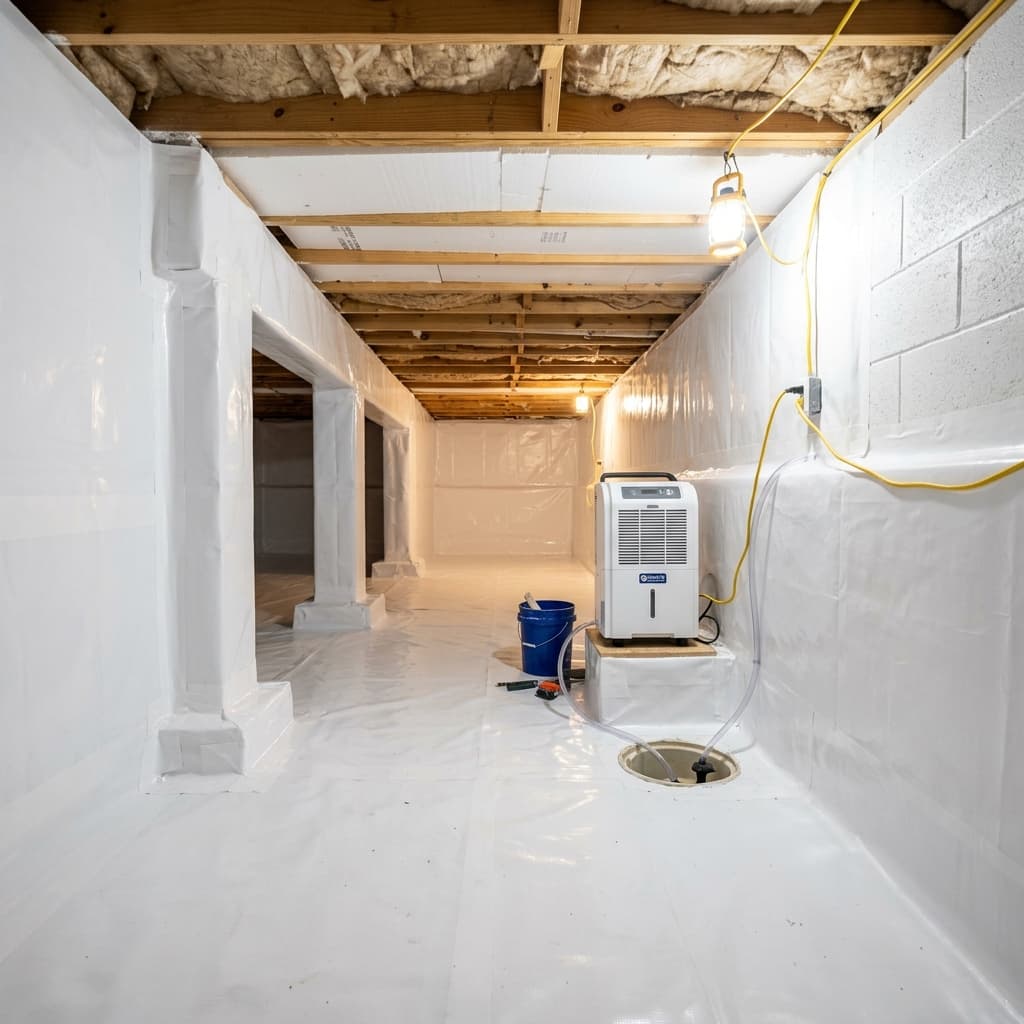
Full encapsulation addresses both sides of the problem. The floor gets a 12-mil or heavier barrier. The foundation walls get covered to the rim joist. Vents get sealed. A dehumidifier runs continuously to keep crawl space air below 50% humidity year-round.
The crawl space becomes a semi-conditioned space: not heated or cooled directly, but with controlled humidity and stable temperatures. Wood moisture content drops to safe levels. Mold conditions are removed. The moisture termites need is eliminated.
A dehumidifier in an encapsulated crawl space uses 200 to 500 watts depending on the unit. That's less than a standard kitchen refrigerator.
Vapor barrier thickness guide for Florida
Polyethylene vapor barriers are rated in mils, which are thousandths of an inch. Thickness determines how the material holds up under real conditions. Florida's heat, root pressure and pest activity make thickness worth understanding, not just accepting whatever a contractor brings.
6-mil barrier: not recommended for Florida
Six-mil polyethylene meets the minimum cited in most building codes. In practice, 6-mil tears when a technician crawls across it during a routine inspection, punctures on rocks and roots and degrades faster under sustained Florida heat. A 6-mil barrier installed in a Florida crawl space may need replacement in 5 to 10 years. At that service interval, the lower upfront cost stops being a savings.
12-mil barrier: Bullfrog's Florida standard
Twelve-mil industrial-grade polyethylene is the practical starting point for Florida crawl spaces. At 12 mil, the barrier resists puncture from minor debris, holds up under normal maintenance foot traffic and maintains effectiveness for 20 to 25 years in Florida conditions. Bullfrog uses 12-mil as the standard installation for residential crawl spaces.
20-mil barrier: high-demand applications
Twenty-mil polyethylene is used in commercial applications and in residential crawl spaces with unusually high foot traffic, severe moisture pressure or known root intrusion. For most Florida homes, 20 mil is more than what's needed. We specify it when a crawl space has a history of barrier failure or when the assessment identifies conditions that would stress a standard barrier.
Thickness also matters for seams. Any barrier narrower than the crawl space width requires overlapping seams. Thicker material holds seams more reliably and resists separation as the polyethylene expands and contracts through Florida's temperature swings.
What does a crawl space vapor barrier cost in Florida?
Cost depends on crawl space size, access difficulty, clearance height and what the inspection reveals before work begins. Any figure published online is a guess about a space nobody has seen, so the useful thing to know is what each scope includes.
Partial vapor barrier
This is the smaller scope. It covers material and labor for 6 to 12-mil polyethylene on the floor, with seams taped and edges secured up the foundation wall. Low-clearance crawl spaces under 18 inches cost more per square foot because labor time increases significantly when a technician can't move efficiently. Access point size and location also affect labor time.
Full encapsulation
Full encapsulation includes the floor barrier at 12 to 20 mil based on assessment, wall coverage, vent sealing, a dehumidifier and drainage provisions if the site requires them. It is the larger scope. Bigger homes, homes with drainage problems that need a sump system, or homes with existing moisture damage that requires remediation before encapsulation cost more.
What drives your specific cost:
- Crawl space square footage (the primary cost driver)
- Clearance height: low clearance means more labor hours per square foot
- Access point size and location
- Existing moisture damage that needs addressing before encapsulation
- Drainage needs: sump pit and pump when water accumulates
- Dehumidifier capacity, sized to the space volume and moisture conditions found on site
On dehumidifier sizing: a unit that's too small runs constantly without actually controlling humidity. One that's too large costs more upfront than necessary. Sizing to the specific crawl space volume and moisture load matters more than following a general formula. Whatever the scope, get a written quote after an on-site inspection and before any work starts.
DIY vs professional installation
Small crawl spaces, say under 500 square feet with good access and minimal moisture damage, are technically within reach for a capable DIY homeowner. You buy the polyethylene sheeting, tape and mechanical fasteners, spend a Saturday in the crawl space and save on labor.
The problems start when the crawl space has low clearance (under 18 inches), when the inspection reveals existing mold on the joists, when drainage is needed or when sealing the vents correctly requires framing work. At that point, a DIY barrier that's improperly sealed or poorly fitted does not deliver the moisture control you're after. For full encapsulation, professional installation is the right call.
If you're uncertain whether your crawl space qualifies for DIY, the safer move is to have it assessed first. We offer free crawl space assessments across the Orlando, Tampa and Sarasota service areas, including a mold inspection in Tampa when the crawl space is already showing growth. Call 888-603-6653.
How professional vapor barrier installation works
This is what a professional crawl space vapor barrier installation looks like from start to finish.
Step 1: Crawl space inspection
Before any material goes in, the technician crawls the full space and assesses: current moisture levels, any existing mold on joists or subfloor, drainage issues, vent condition, access points and clearance. This inspection determines whether a partial barrier is sufficient or whether full encapsulation and drainage provisions are needed. It also identifies any mold remediation that must happen before the barrier goes down.
Step 2: Site preparation
Any standing water is removed. Debris, old insulation that has fallen from the joists and any deteriorated material is cleared out. If mold is present on the wood framing, it is treated before the barrier is installed. Installing a vapor barrier over active mold traps the problem underneath it.
Step 3: Old vapor barrier removal (when applicable)
If a previous barrier is in place, it comes out. Old 6-mil barriers that are torn, bunched or covered in mold are not a foundation for a new installation. The crawl space floor needs to be clean and dry before new polyethylene goes down.
Step 4: Drainage installation (when needed)
If the inspection identified drainage issues or standing water risk, a French drain perimeter channel or sump pit is installed before the barrier. Water management comes before moisture management.
Step 5: Barrier installation
The polyethylene sheeting is laid across the crawl space floor in overlapping runs. Seams overlap by at least 12 inches and are taped with moisture-barrier tape. The edges run up the foundation walls to the rim joist and are mechanically fastened. For full encapsulation, the foundation walls themselves get covered in barrier material from the rim joist to the footing.
Step 6: Vent sealing (encapsulation only)
Existing crawl space vents are sealed from the inside with rigid foam board and spray foam. This closes the pathway for humid outdoor air that a vented crawl space draws in continuously.
Step 7: Dehumidifier installation (encapsulation only)
A dehumidifier sized to the crawl space volume is installed and connected to a condensate drain. The unit runs continuously and keeps crawl space humidity below 50% year-round. The target humidity is typically set at 45 to 50%.
Step 8: Final inspection
The technician checks all seams, fasteners and sealed penetrations, confirms the dehumidifier is operating correctly and documents the installation. Bullfrog provides written documentation of the completed work, which matters for insurance claims, home sales and warranty records.
Signs you need a vapor barrier or replacement
If your crawl space currently has no vapor barrier, or has one that's past its useful life, here's what to look for from inside the house.
Musty smell from floor vents or near floor level. The stack effect draws crawl space air up into the living area. A musty smell at floor level almost always traces back to the crawl space.
Soft or spongy spots in wood flooring. Subfloor decking that has been absorbing moisture long enough begins to lose structural integrity. Soft spots underfoot after a storm can mean the subfloor has been wet long enough for rot or mold to start on the underside.
Higher energy bills. A poorly sealed crawl space loses conditioned air to the outside and draws unconditioned outside air in. The HVAC runs harder to compensate. If your energy costs have risen without a clear explanation, the crawl space is worth checking.
Mold in the living space without an obvious source. When mold shows up in the home and you haven't found where it's coming from, the crawl space is the most common undiagnosed source. Mold in the crawl space generates spores that move into the living area through the stack effect. Bullfrog's mold remediation service addresses both the mold and the moisture source that caused it.
A home inspection flagging moisture or mold in the crawl space. Address this before closing or immediately after purchase. Untreated crawl space moisture in Florida compounds quickly, especially heading into rainy season.
You're listing the home for sale. A clean, dry, encapsulated crawl space is a selling point. An open, damp one gives buyers negotiating leverage and can cause appraisal reductions.
How long does a crawl space vapor barrier last?
A 12-mil polyethylene barrier installed correctly lasts 20 to 25 years in Florida conditions. That assumes proper installation with taped seams, secured edges and no punctures from debris left under the material.
A 6-mil barrier under the same conditions may need replacement in 5 to 10 years, particularly if the crawl space is accessed regularly for HVAC work or plumbing.
Full encapsulation systems last the life of the installation when maintained. The dehumidifier needs annual service (filter cleaning, coil check, drain line flush). The barrier itself should be visually inspected every 2 to 3 years, which a technician does during any routine HVAC or plumbing access.
Signs your existing barrier needs replacement:
- Visible tears, holes or sections that have pulled away from the wall
- Mold growing on the top surface of the barrier
- Musty smell returning to the living area after the barrier was previously installed
- Condensation on floor surfaces above the crawl space during humid months
- Pooled water sitting on top of the barrier after rain events
Frequently Asked Questions
Do I need a vapor barrier in my Florida crawl space?
Yes. Florida's year-round ground moisture, sustained heat and high ambient humidity make vapor barriers necessary, not optional. An unprotected crawl space in Florida will develop mold, elevated wood moisture and pest activity over time. The question for most Florida homeowners is whether a partial floor barrier is sufficient or whether full encapsulation is the right investment. For homes in the Orlando, Tampa and Sarasota areas, full encapsulation produces better long-term results because it addresses both ground moisture and the humid outdoor air that vented crawl spaces draw in continuously.
How much does a crawl space vapor barrier cost in Florida?
It depends on scope and on the space itself. A partial vapor barrier covers the floor only and is the smaller job. Full encapsulation, which includes the barrier, wall coverage, vent sealing and a dehumidifier, is the larger one, and its price moves with the size of the space, access difficulty and whether drainage provisions are needed. Low-clearance crawl spaces cost more per square foot because labor time increases. A fair quote comes in writing after an on-site inspection.
What thickness vapor barrier do I need for my crawl space in Florida?
Twelve-mil polyethylene is the practical minimum for Florida crawl spaces. Six-mil meets code but deteriorates faster under Florida's heat and tends to tear during routine maintenance access. Twelve-mil lasts 20 to 25 years under Florida conditions. Twenty-mil is used in crawl spaces with severe moisture pressure, high foot traffic or a history of barrier failure.
Does a crawl space vapor barrier really work?
Yes, when installed correctly. A properly installed 12-mil barrier with taped seams and secured edges measurably reduces crawl space humidity, lowers wood moisture content in floor joists and reduces mold risk. Full encapsulation with a dehumidifier keeps crawl space humidity below 50% year-round, which eliminates the conditions mold needs to grow. The key word is "correctly." A barrier with unsealed seams, gaps at the walls or moisture damage underneath it will not deliver full results.
Can I install a crawl space vapor barrier myself?
For small crawl spaces under 500 square feet with good clearance and no existing moisture damage, a DIY installation is technically feasible. You need polyethylene sheeting at 12 mil or heavier, moisture-barrier tape, mechanical fasteners and a few hours. The cases where DIY falls short: low clearance under 18 inches, existing mold on the joists (which requires professional remediation first), drainage problems, and full encapsulation work that involves sealing vents and installing a dehumidifier. If any of those apply, a professional assessment is the right starting point.
How long does a crawl space vapor barrier last in Florida?
A 12-mil barrier installed correctly lasts 20 to 25 years in Florida conditions. Six-mil barriers typically need replacement in 5 to 10 years. Full encapsulation systems last the life of the installation when the dehumidifier is serviced annually and the barrier is inspected every 2 to 3 years.
Does crawl space encapsulation increase home value?
Yes, and the effect is measurable. Appraisers account for crawl space condition as part of the foundation and structural assessment. A documented encapsulation with a clean inspection report reduces the likelihood of price reductions during the buyer's inspection period. In Florida's real estate market, where moisture and mold concerns are common buyer objections, an encapsulated crawl space gives you a clean answer when the inspector comes through.
Get a free crawl space assessment
Bullfrog Foundation Waterproofing & Mold Remediation serves the Orlando, Tampa Bay and Sarasota areas. We inspect crawl spaces, install vapor barriers and full encapsulation systems, and handle any mold remediation the inspection turns up before the barrier goes down, including mold remediation in Tampa.
If your crawl space has never been inspected, or if you're seeing any of the signs above, call us before the rainy season starts.
Call 888-603-6653 for a free crawl space assessment. We'll tell you exactly what your crawl space needs and what it will cost.
Licensed Mold Remediator MRSR5565. EPA-certified mold removal. 200+ completed jobs across Florida. 5-star rated on Google.
Protect your Florida home
We find the source of water intrusion and handle waterproofing and mold remediation. Start with a free on-site estimate.
Free on-site estimates are for homeowners and property owners. Renting or buying? See your options.
More from Bullfrog Waterproofing
Crawl Space
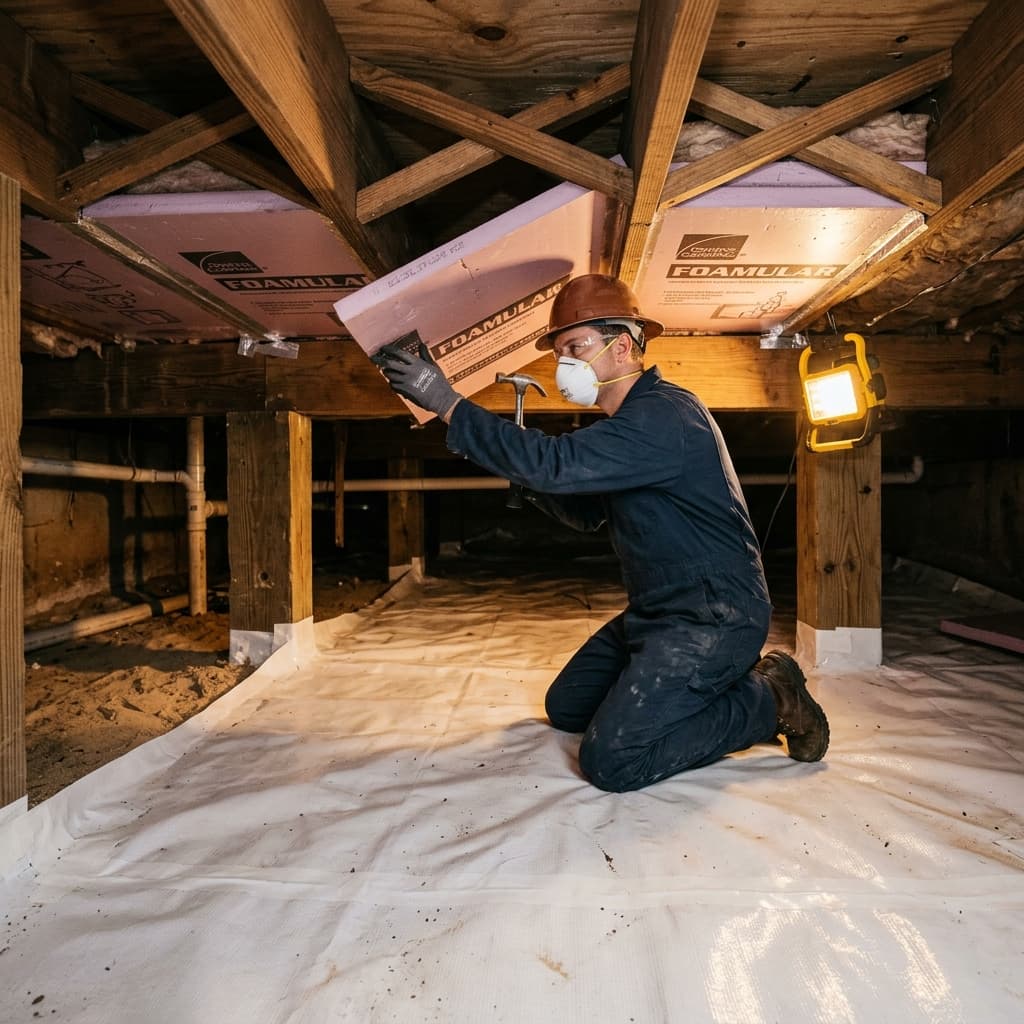
Crawl Space Insulation: Florida Guide (2026)
Crawl space insulation guides are for cold climates. Florida is different. Here is what drives the cost and which type actually works in Florida's high humidity.
· 13 min read
Read article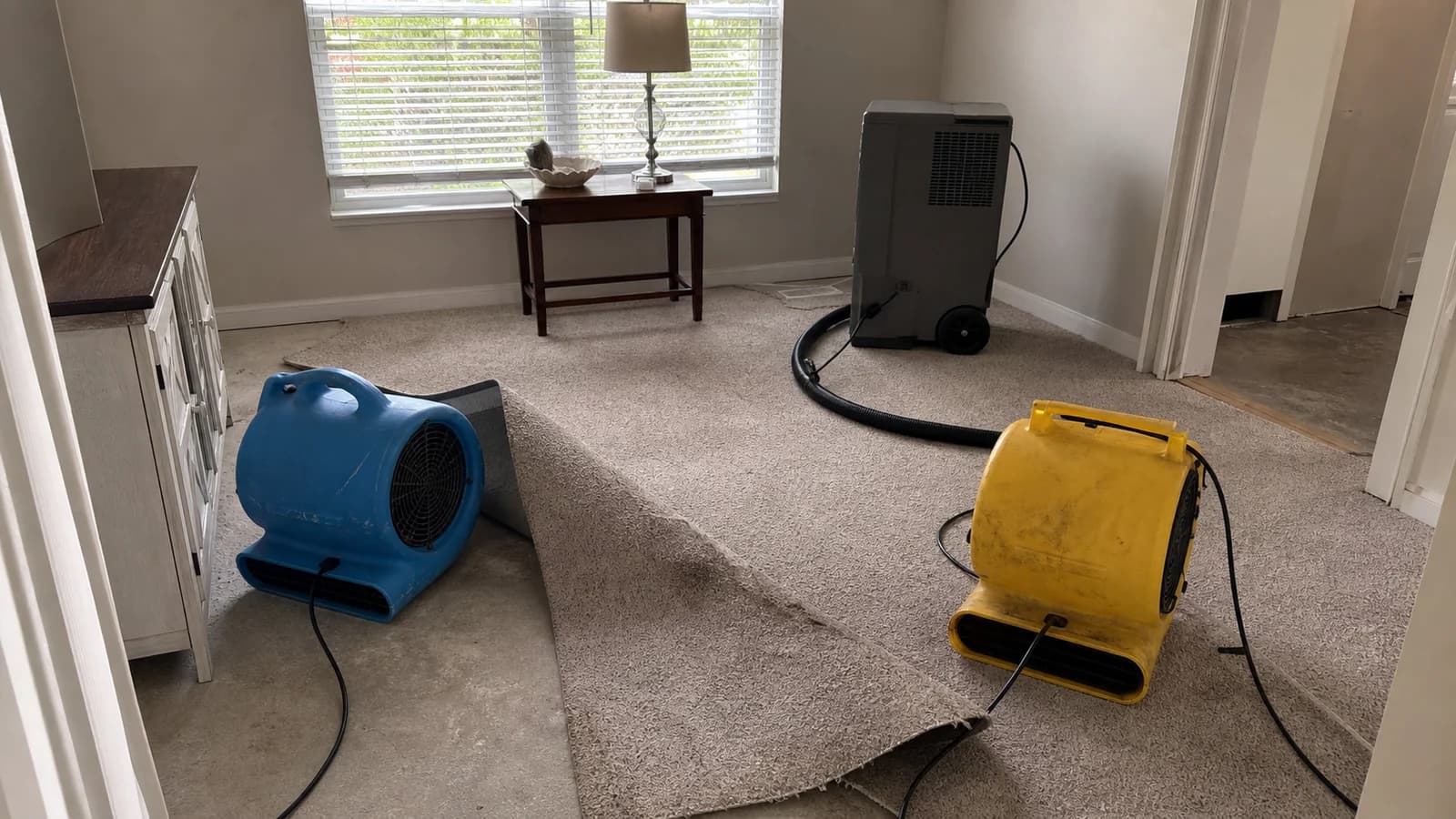
Mold Remediation
How to Prevent Mold After a Flood in Florida
Mold can start within 24 to 48 hours of a Florida flood. What you do in the first two days decides whether you get mold at all. Here is the playbook.
· 8 min read
Read article
Mold Remediation
Is Black Mold Dangerous? What Florida Homeowners Should Know
Black mold gets talked about like a death sentence. The real risk is more grounded, and in Florida humidity it is common. Here is what the science says.
· 8 min read
Read article