Mold Remediation Orlando
Orlando's Mold Problem
Starts in the Foundation
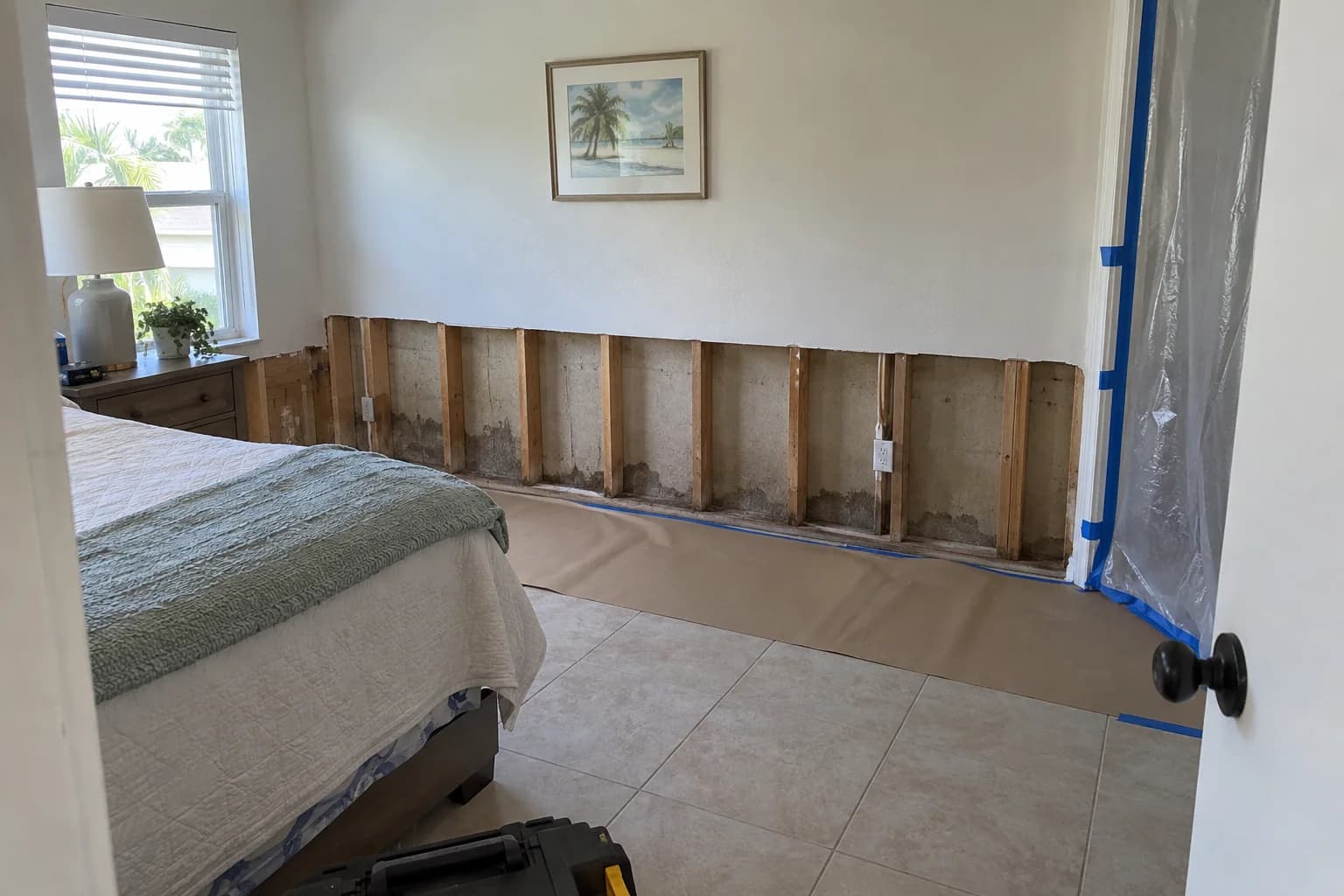
Mold in an Orlando home usually traces back to two things: humidity that never really lets up, and water that got in and was never fully dried. After a wet season that drops around 50 inches of rain, or a slab that wicked up flood water during Hurricane Ian in 2022, mold can be established behind the drywall long before anyone smells it. We contain it, remove it, treat the HVAC and seal the water source in one project.
Available 24/7 · No obligation · Free estimates for homeowners
Trusted, Licensed, and Certified



What is mold remediation?
Mold remediation, which some companies call mold mitigation, is the process of removing mold and fixing the moisture that caused it. A licensed remediator contains the area, removes mold-damaged materials like drywall and insulation, treats the surfaces, and dries the structure so the mold cannot return. In Florida it requires a state license.
Why mold spreads fast in Orlando homes
Mold does not need a flood in Orlando, it just needs a few warm humid days and this is one of the most humid metros in the country. Average humidity sits around 74% and climbs past 90% through the summer, so the moment water gets into a wall or an air handler sweats onto a duct, mold has what it needs. In that humidity, mold can appear within 24 to 48 hours of moisture getting in.
What makes Orlando specific is the housing. Most homes here are concrete block on a slab, built from the 1960s through the 1990s. Block holds moisture against the inside of the wall, and central air systems push spores through the duct work into every room. After Hurricane Ian flooded west Orange County in 2022, the mold calls did not come during the storm, they came weeks later, once the trapped moisture in those block walls had time to feed. That is why we treat the HVAC and the wall cavity, not just the surface you can see.
Mold Remediation Orlando FL
What Makes Orlando's Mold Problem Different
The Wet Season Never Really Stops
Orange County gets more than 50 inches of rain a year, most of it falling in afternoon storms between June and September. In neighborhoods like Dr. Phillips, Metro West and Windermere, the terrain sits low and the water table can reach as close as two to five feet below grade. Sand Lake Road and Apopka-Vineland Road flood because the ground cannot absorb the volume fast enough. That same water pressure presses against the foundation walls of every home around them.
Two Named Storms Left Orlando Playing Catch-Up
Hurricane Ian (September 2022) brought heavy rainfall across Orange County and left moisture behind walls in thousands of homes that homeowners did not find for months. Hurricane Milton (October 2024) moved directly across the I-4 corridor, spawning tornadoes in Orange County and flooding Dr. Phillips and Metro West again. Homes that were not fully dried out after either storm are still developing secondary mold growth. Florida's year-round heat and humidity mean that once water gets in, mold can begin growing within 24 to 48 hours. There is no cold season that slows it down. When the next system moves in, our Orlando storm watch shows the rainfall picture as it develops.
Older Homes, a Broken Insurance Market
The ranch homes throughout Ocoee, the original Metro West subdivisions and the older sections of Winter Garden went up in the 1970s and 1980s. Most are concrete block on a slab and nothing inside the wall carries away water that gets through the block. Florida's insurance crisis is now pushing Orange County homeowners into Citizens Insurance or out of coverage entirely. A documented mold claim can trigger non-renewal. For homeowners in these older neighborhoods, fixing the water source before a claim is filed protects both the house and the policy.
Why Orlando homes grow mold
There is no basement to inspect in an Orlando house, just slab and wall space where moisture sits out of sight. Air conditioners run hard for most of the year and sweat inside the ductwork, feeding mold from the inside. In the Metro West and Dr. Phillips corridors, the heavier clay soil holds water against the foundation instead of letting it drain.
Our Process
Six Steps to a Mold-Free Home in Orlando
Inspection and Moisture Mapping
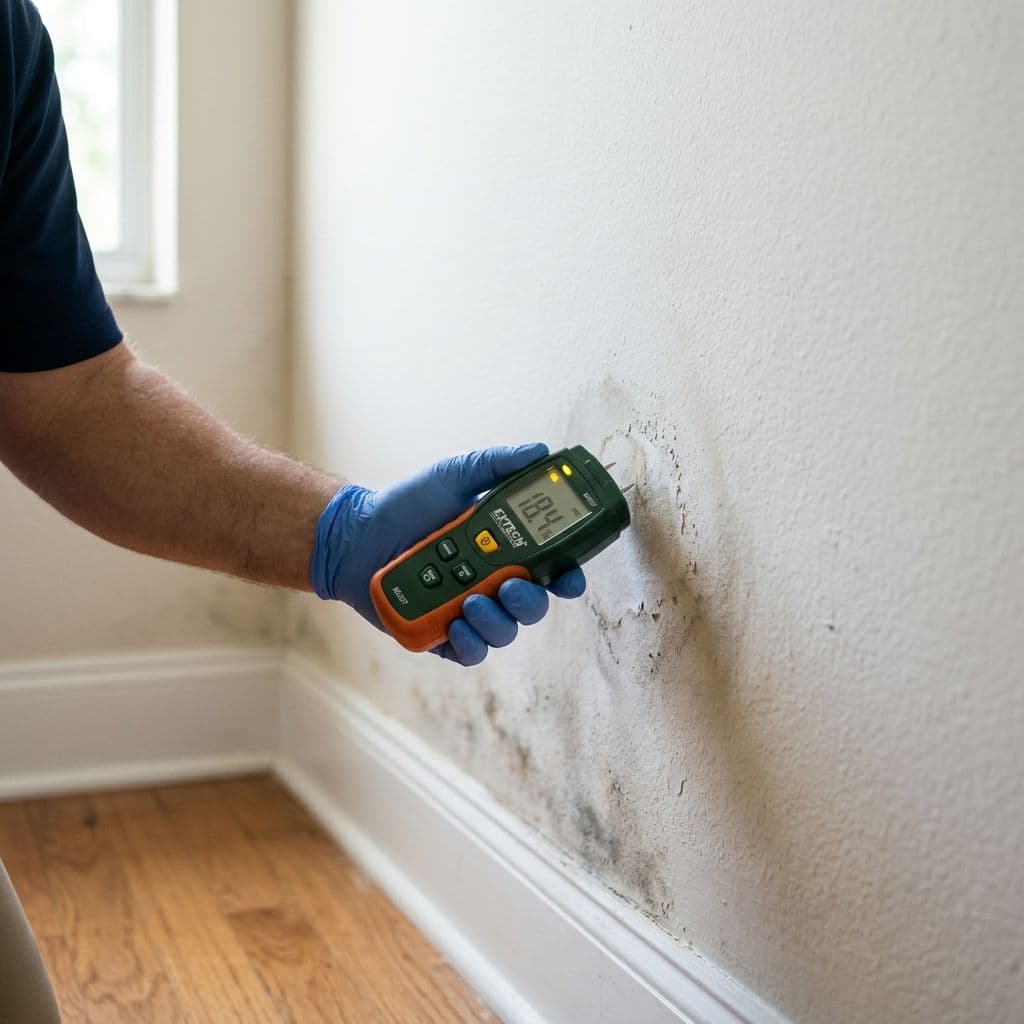
We start with a full visual inspection and moisture meter readings. If a job needs air sampling or lab results, a licensed mold assessor does that as a separate paid service. In Orlando's CBS homes, we check behind wall cavities, along the perimeter of slab edges and, in the few older homes built over a crawl space, underneath the floor, where water most commonly enters concrete block construction. We open and read the block wall cavities where Central Florida homes hold the moisture the surface hides. You get a written report of what we find before any work begins.Containment
Before any removal starts, we seal off the affected area with negative air pressure barriers. This keeps spores from spreading to clean areas of your home while work is in progress. Containment is not optional. Skipping it turns a contained problem into a whole-house problem.Removal and Surface Treatment
We remove all mold-affected material, then treat exposed surfaces with EPA-approved fungicidal solution. Mold that keeps coming back is almost always a moisture source nobody closed. We do not spray over mold or encapsulate without removing it. Everything that is contaminated comes out.HVAC and Duct Treatment
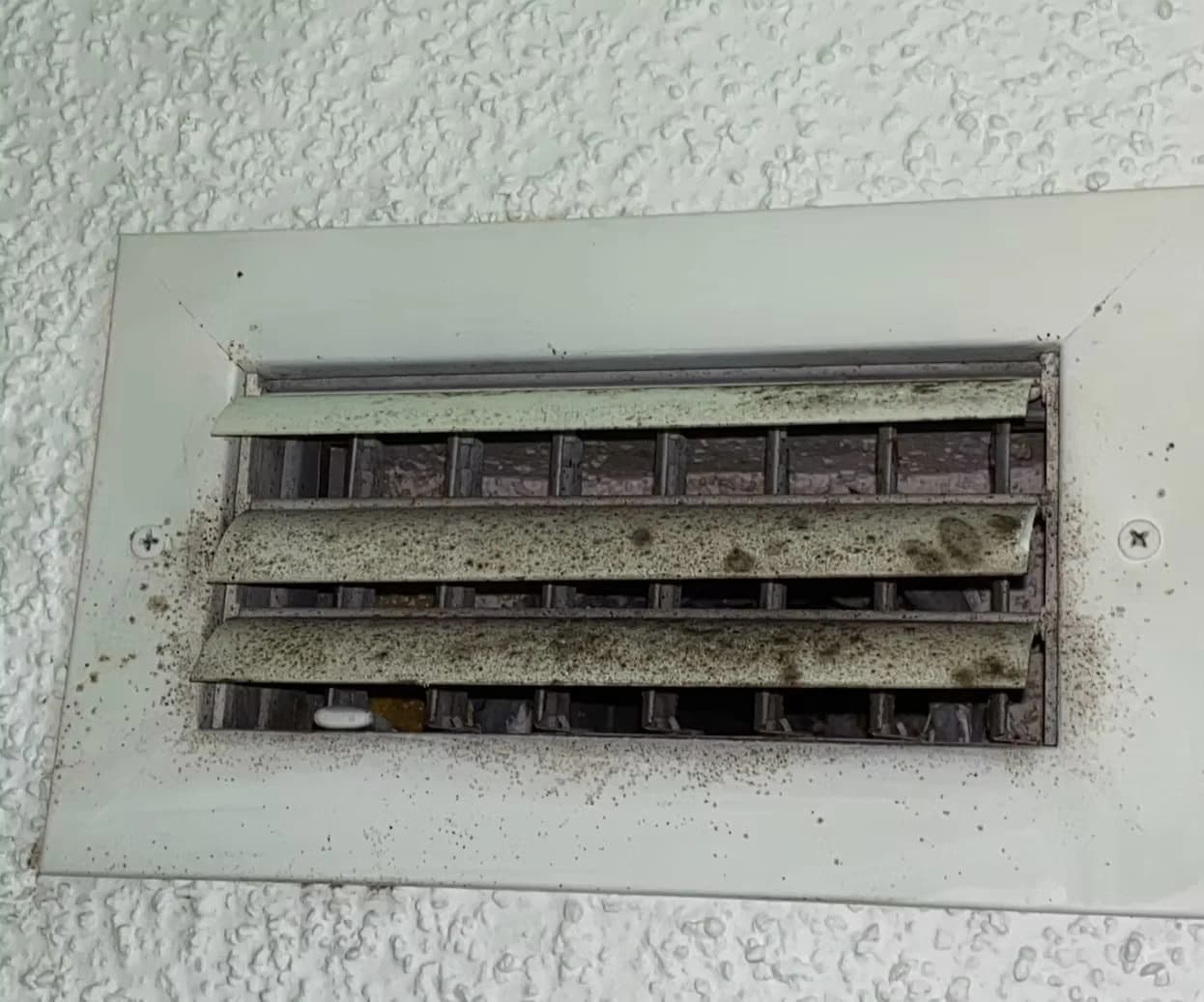
Mold spores travel through your air system and settle in duct work. We replace your HVAC filter and fog antifungal vapor through the ducts to kill airborne spores at the source. A small patch on a bathroom ceiling is often something you can get rid of yourself. Mold in the ducts is a different job. We seal off and treat the HVAC system, since Orlando's central-air homes carry spores duct to duct into rooms that never got wet. If you are comparing mold companies, ask whether each quote treats the ducts. Ours does, because incomplete remediation is not remediation.Waterproof the Entry Point
This is the step that stops the mold coming back. Once the mold is out, we waterproof the foundation entry point that let moisture in. Without closing the source, mold will come back. We hold Florida mold remediator license MRSR5565 and we do the waterproofing in the same project, so you do not need to hire a second contractor and coordinate two separate scopes of work. If water damage has occurred, we also offer water damage restoration in Orlando and we cover the rest of Orange County from the same crew. See waterproofing and mold remediation in Orlando.Final Check and Clearance Testing
Florida licenses mold assessors and mold remediators separately, and a remediation company is not permitted to run the air quality test on a home it has just worked on. So the clearance test is not ours to do, and we do not push it. Removal plus the antifungal fogging through the house and the HVAC system is what leaves the property in a state that passes an air test comfortably. Where a test does earn its cost is when a licensed assessor wrote the report that started the job, or when you need documentation for a landlord, an insurer or a lawyer. If you want one, tell us and we will point you to a licensed assessor. Our guide to the free mold inspection explains where that line sits.
One Company. Mold Out. Water Stopped. Warranty Backed.
Cleaning up the mold that is there is half the job. We do that and then close the path water used to get in, so you deal with one company from start to finish. Bullfrog holds Florida mold remediator license MRSR5565 and performs full foundation waterproofing under the same contract. That means one crew, one project and one warranty. The moisture that caused the mold is gone for good, not just cleaned up until the next wet season.
License MRSR5565
Florida Mold Remediator
200+ Jobs Completed
Across Florida's Gulf Coast and Central Florida
Lifetime Warranty
On all foundation waterproofing work
5.0 Google Rating
Licensed and insured, reviewed by Florida homeowners
One Contractor
Foundation waterproofing and mold remediation
HVAC Duct Treatment
Killing airborne spores at the source
Mold Remediation in Orlando: Frequently Asked Questions
How fast does mold grow in Orlando?
In Orlando's humidity, usually 24 to 48 hours after any moisture gets in. Central air then spreads spores through the ducts, so a leak in one room can show up as mold across the house within a week.
How much does mold remediation cost in Orlando?
We price each Orlando job after a free on-site inspection and you get the estimate in writing before any work starts. The biggest cost driver is how much material has to come out, which is usually more than the visible patch. After that come the square footage affected, where the mold sits (an open bedroom wall costs less to reach than an air handler closet) and whether the block wall or slab edge that let the water in needs waterproofing. In a concrete block home, how far the moisture has travelled inside the wall cavity is the part nobody can price from a photo.
What time of year is worst for mold in Orlando?
Orlando has no real slow season for mold. Hurricane Milton (October 2024) moved across the I-4 corridor and flooded Dr. Phillips, Metro West and other southwestern Orange County neighborhoods. Eighteen months later, many of those homes are still dealing with secondary mold that was not properly remediated after the storm. The same pattern played out after Hurricane Ian (September 2022). Florida's year-round heat and humidity mean mold can begin growing within 24 to 48 hours of water getting in, whether the source is storm flooding, a foundation crack or a slow seep. There is no cold season that stops the growth.
Does Orlando's clay soil make foundation moisture worse?
In Metro West and much of southwest Orange County, yes. Clay-rich soil holds water instead of letting it drain away. After a storm, saturated clay presses against your foundation walls and maintains that pressure for days. Combined with a water table that can sit as close as two to five feet below grade in low-lying areas, clay soil significantly increases the hydrostatic pressure your foundation walls are under. That pressure finds any crack or gap in the block mortar and water follows.
Why does mold keep coming back in my Orlando home?
Usually because the moisture source was never fixed. AC condensation, year-round humidity, or a slab that wicks water will regrow mold in the same spot within months if you only remove what you can see. In Orlando's climate it comes back fast, which is why we seal the water source as part of the job, not just clean the surface.
My Orlando home flooded during a hurricane. Could there still be mold?
Yes. Homes across Metro West and Orange County that took on water during Hurricane Ian in 2022 often grew mold inside wall cavities that a quick dry-out never reached. A full remediation with clearance testing confirms whether it is actually gone.
“Speedy response, and so thorough in treatment protocols! My project was more extensive than originally expected and they still finished in a timely manner. I don't ever want to have mold again, but if I do they will be the first company I call. I would absolutely recommend them to all my friends.”
Julie Hallowell
Google review