Mold Inspection Tampa FL
Tampa Bay Doesn't Get a Dry Season.
Neither Does the Mold Behind Your Walls.
A musty smell in your Tampa Bay home with no visible mold usually means it is hiding somewhere you cannot see. In coastal homes that is often the pier-and-beam crawl space or the duct system. An inspection finds the source. We inspect the home, map moisture, sample the air and give you a written report.
Available 24/7 · No obligation · Free estimates for homeowners
Trusted, Licensed, and Certified

What does a mold inspection include?
A mold inspection is a check for mold and the moisture feeding it. An inspector does a visual review, takes moisture readings inside walls and around windows, and samples the air when the source is unclear. You get a written report showing what was found and where.
Mold Inspection Tampa FL
What Hides in Tampa Bay Homes When the Gulf Coast Never Dries Out
Gulf Coast Salt Air Creates Year-Round Mold Conditions
Most of Florida gets a few drier months in winter when humidity drops and mold slows down. Tampa Bay does not. Salt particles in Gulf air absorb moisture from the atmosphere between rain events and deposit it on interior surfaces through gaps in window frames, roof penetrations and older building envelope materials. That sustained dampness keeps mold active in attics, wall cavities and crawl spaces all year. Older homes in Palma Ceia, Hyde Park and along the Bayshore Boulevard corridor are particularly exposed. Mid-century construction with gaps that would not pass a modern energy audit gives Gulf air a direct path to interior surfaces. You do not need a storm to have a mold problem here. The air is doing enough on its own.
What Hurricane Milton Left Behind in Hillsborough County
Hurricane Milton made landfall near Siesta Key on October 9, 2024, and pushed historic rainfall totals across Hillsborough County in under 24 hours. Seminole Heights, Westchase, Davis Islands and Town N Country all had standing water. The obvious flooding got addressed quickly. The harder cases were the homes where water entered through block wall joints and under-floor gaps, then sat inside the wall cavity while the surface dried out. Six months later, the mold had taken hold. An air quality test is the only way to catch it before it gets that far. Our Tampa Bay storm watch tracks the alerts and rainfall that start this pattern.
Pinellas County Crawl Space Homes Hide Mold for Years
Older homes in Safety Harbor, Dunedin, Clearwater Heights and along Pinellas County's inland corridors were built on pier-and-beam foundations, not concrete slabs. The crawl space underneath gives Gulf Coast humidity a direct path to wood floor joists, subfloor sheathing and any cellulose material near grade. There is no visible sign of it from inside the home until the mold reaches the subfloor surface or the smell works through the floor. A professional inspection covers the crawl space as a primary area because that is where the problem starts in these homes. A moisture meter reading on a wall gives you nothing useful if the joists below are already colonized.
What a Tampa Bay mold inspection looks for
Coastal construction changes where mold hides. Many older Pinellas County and St. Petersburg homes sit on pier-and-beam foundations, so the crawl space underneath is the first place we check, because humidity off the bay and any past flooding breed mold there out of sight. We see two common triggers. Homes flooded by Hurricane Helene in 2024 across South Tampa and Pinellas that were never professionally inspected, and real estate or insurance situations where a documented report is required. Salt air and a high coastal water table mean moisture readings matter even when nothing is visible.
Our Inspection Process
What We Check During a Free Mold Inspection in Tampa
Visual Assessment
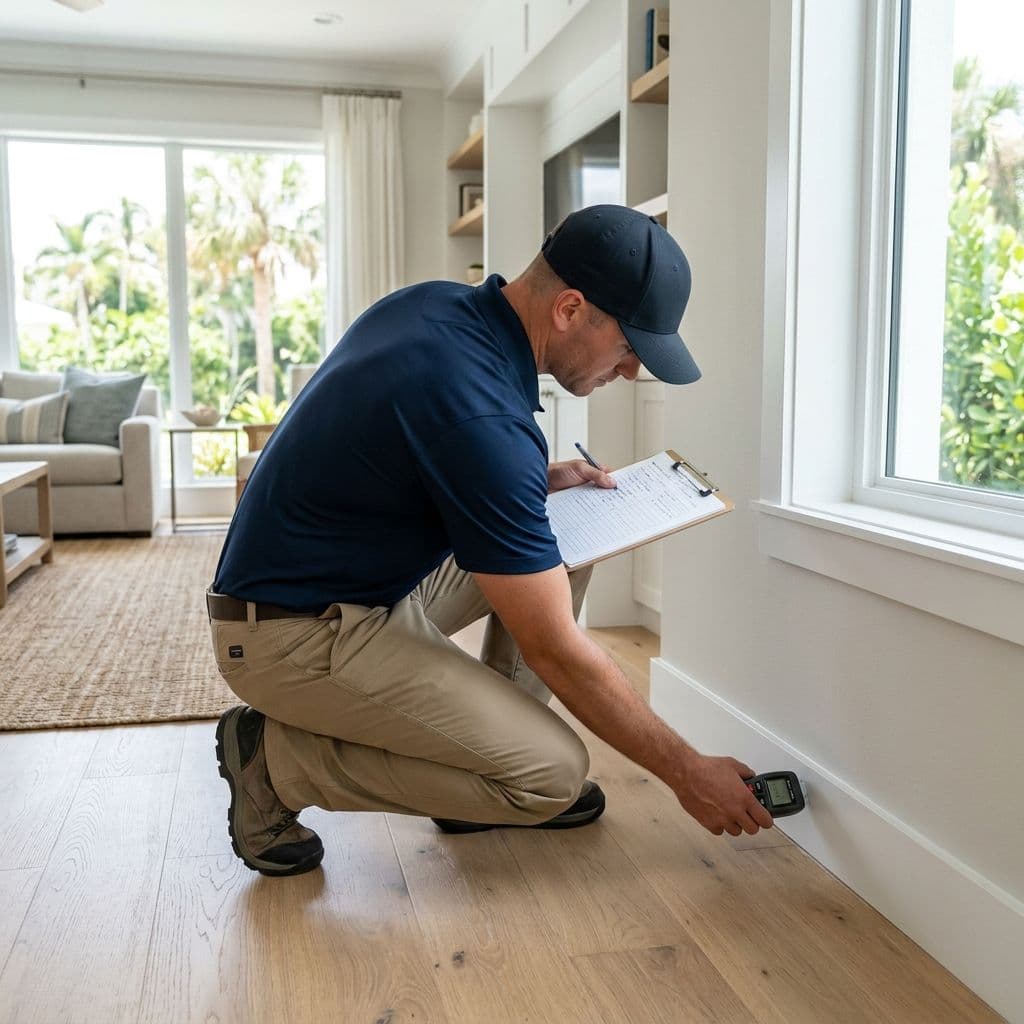
We walk the home and note every area where moisture commonly enters or collects: foundation walls, crawl spaces, under sinks, around HVAC systems, roof penetrations and window frames. In Hillsborough County CBS homes, we pay particular attention to block wall cavities and the slab-to-wall joint at the exterior grade line, where groundwater builds against the foundation during heavy rainfall and storm events. In older Pinellas County pier-and-beam homes, the crawl space is the primary focus. We check for standing water, visible mold on wood framing, elevated moisture on joists and any signs of vapor infiltration through an exposed earth floor.
Moisture Mapping
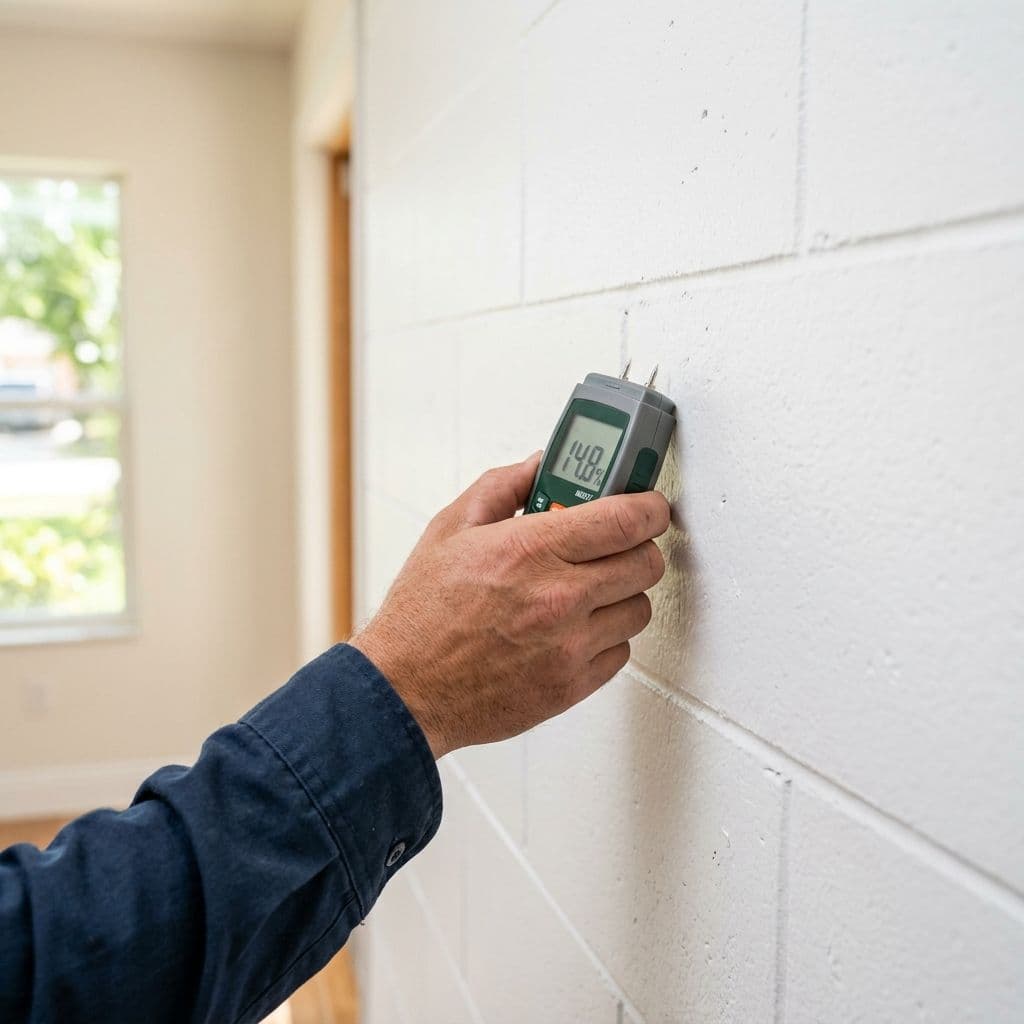
We use a moisture meter to map readings across walls, floors and ceilings. In CBS block homes, elevated readings in areas that appear dry on the surface indicate water intrusion inside the block cavity. In pier-and-beam homes, we take readings on the subfloor sheathing and wood members in the crawl space as well as the floors above. Elevated moisture in locations not near a visible water source tells us the intrusion path is concealed. We map from the reading back to the entry point before any sampling begins.
Air Quality Sampling
We collect air samples from inside the home and from a reference point outside. Lab analysis compares indoor spore concentrations to the outdoor baseline. If indoor counts significantly exceed outdoor levels, or if species associated with water damage such as Stachybotrys or Chaetomium appear at elevated levels, the report flags it. In Tampa Bay, outdoor baseline spore counts already run higher than inland markets because of year-round humidity and salt air. Indoor counts need to be read against the outdoor baseline at your specific property, not a regional average.
Surface Swab Testing
Where visible growth is present, we collect surface swab samples for lab analysis. Swab testing identifies the specific species, which determines the remediation protocol and the safety precautions required. Not every inspection needs it. We assess on-site and recommend it only when there is visible growth to confirm or when air sampling returns elevated counts of a concerning species.
Written Report With Lab Results
You receive a written report detailing the inspection findings, moisture readings and lab results. The report identifies affected areas, mold species found (if any) and recommended next steps. This document is yours to keep and share with your insurance company, real estate agent or lender. For Tampa Bay homeowners in FEMA-reclassified flood zones, a documented inspection report is useful as part of a file that shows due diligence on moisture management.
Remediation Plan if Mold Is Found
If the inspection confirms mold, we give you a written remediation proposal on the same visit. We hold Florida mold remediator license MRSR5565 and perform removal, HVAC duct treatment and foundation waterproofing in the same project. You do not need to find a second contractor. See our full mold remediation process for Tampa Bay homes for details. We offer the same mold inspection service across Florida. For the Bay area specifically, see waterproofing and mold remediation in Tampa Bay.

Every Mold Inspector in Tampa Sends You Somewhere Else for the Fix
Every mold inspector in Tampa gives you a report and sends you somewhere else to fix it. The company that tested your air hands you findings and a referral list. Finding a licensed remediator, scheduling them around your insurance timeline and managing a second contractor is entirely your problem. Bullfrog holds Florida mold remediator license MRSR5565 and performs inspection, remediation and foundation waterproofing in one project under the same contract. That matters most when you are working against a closing date in South Tampa, a Pinellas County insurance claim with a documentation deadline, or a post-Milton mold situation that has already been sitting for months. One call handles the inspection, the lab work, the removal and the structural seal. Start to finish, one warranty.
License MRSR5565
Florida Mold Remediator
Free Inspection
For homeowners. No cost, no obligation, written assessment
Air Quality Lab Testing
Indoor vs outdoor spore count comparison
200+ Jobs Completed
Across Hillsborough, Pinellas and Florida's Gulf Coast
Written Report Included
Findings documented before any work begins
Remediation Available
We remove mold and waterproof the source
Mold Inspection in Tampa Bay: Frequently Asked Questions
How much does a mold inspection cost in Tampa, FL?
Does Tampa Bay salt air make mold grow faster than in inland Florida?
Why does a Tampa mold inspection check the crawl space?
My Tampa home flooded during Helene but looks fine now. Should I still get inspected?
How do I get a free mold inspection in Tampa?
"We had Hurricane Milton water in the garage and discoloration on a wall in the back bedroom. Bullfrog came out, inspected the whole house and found elevated mold counts in the crawl space that we would never have checked. They remediated it and sealed the source in one project. Glad we did not just paint over it."
Tampa Homeowner
Hillsborough County · Verified Google Review