Mold Remediation Tampa
Tampa Bay's Humidity and Storm Surge
Keep Mold Growing Year-Round.
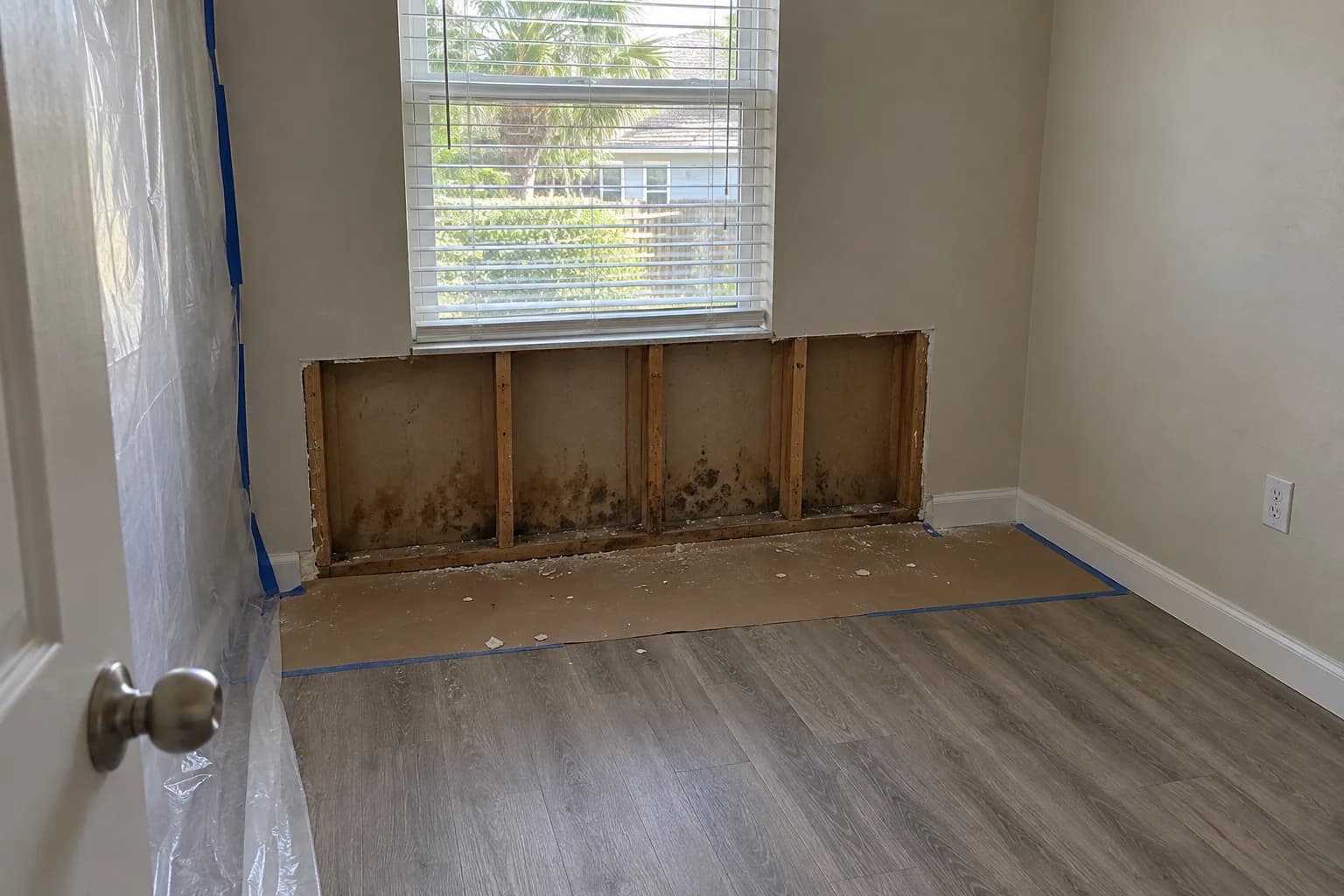
Mold in a Tampa Bay home has a coastal accelerant. Year-round humidity keeps it growing and the surge water that storms like Hurricane Helene pushed inland in September 2024 left contaminated moisture in low-lying homes across Pinellas County and South Tampa. We contain the mold, remove it, treat the ducts and seal the source in one project.
Available 24/7 · No obligation · Free estimates for homeowners
Trusted, Licensed, and Certified
What is mold remediation?
Mold remediation (you will also see it called mold mitigation) means taking out the mold and the moisture that feeds it. In a Tampa Bay house that is usually two jobs: removing the growth from the walls, the floor or the space under a raised floor, then stopping the bay water, rain or ground water that started it. Florida requires a state license to do the work.
Why mold keeps coming back in Tampa Bay
In Tampa Bay, the water around the house does half the work for the mold. Humid air off the Gulf and the bay keeps surfaces damp for much of the year. Add a humid crawl space under an older St. Pete bungalow and you have a year-round mold engine that runs whether or not it rains.
The 2024 storms made it worse, and the mold is still showing up. When Helene pushed surge into South Tampa and Shore Acres and Milton followed weeks later, a lot of homes were dried on the surface and closed back up. Salt residue from surge water keeps materials damp long after they look dry, so mold kept growing behind the drywall for months. Many of these are older block homes with walls that were never sealed, and a good number are seasonal or rental properties that sat empty while it spread unseen. We check the crawl space and the air handler first, because in Tampa that is usually where it starts.
Mold Remediation Tampa FL
What Makes Tampa Bay's Mold Problem Different
Coastal Humidity and a Long Rainy Season
Pinellas County faces open water on two sides: the Gulf to the west, Tampa Bay to the east. Humidity stays high all year and climbs through the rainy season, which the National Weather Service in Tampa Bay dates from May 25 to October 10 for west-central Florida. Moisture collects on exterior walls, under rooflines and inside crawl spaces and properties in Shore Acres, Gulfport and the Old Northeast neighborhood of St. Pete deal with elevated moisture year-round, not just after storms.
Hurricane Idalia and a Storm Season That Keeps Coming Back
On August 30, 2023, Hurricane Idalia made landfall at Big Bend and pushed storm surge into Tampa Bay that flooded Pinellas County neighborhoods along the waterfront. Shore Acres, Gandy and other low-lying coastal Pinellas communities saw water push into crawl spaces, under doors and through foundation walls. A house that took on bay water and was only dried on the surface can grow mold inside the wall for months and a Tampa winter is too warm to slow it down. Our Tampa Bay storm watch follows the rainfall and surge forecast whenever the next system heads for the bay.
Older Homes Built for a Different Era
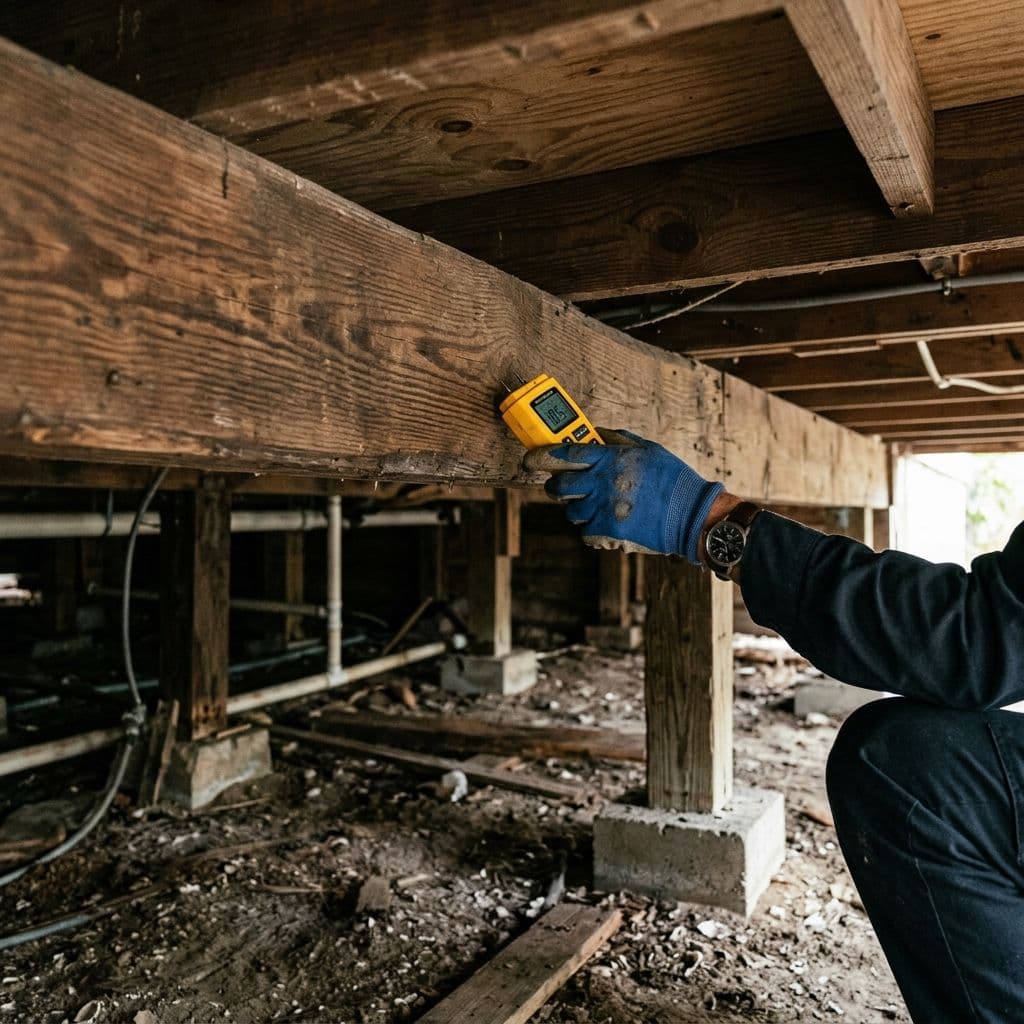
The mid-century bungalows throughout Old Northeast St. Pete, the historic Kenwood neighborhood and the older blocks of Seminole Heights in Tampa were built on pier-and-beam foundations with open crawl spaces below. Unlike slab-on-grade construction, pier-and-beam homes sit above grade with unprotected soil underneath, and coastal moisture collects in those crawl spaces continuously. Florida's property insurance market is in crisis, non-renewals are hitting Pinellas County hard and a documented mold claim can push a carrier to cancel. Waterproofing the source before a claim is filed protects both the coverage and the home.
Our Process
Six Steps to a Mold-Free Home in Tampa Bay
Inspection and Moisture Mapping
We start by walking the house with moisture meters and look at everything a surge, a storm or a leak could have reached. Air samples and lab results are not part of our visit. A licensed mold assessor provides those as a separate paid service. On an older pier-and-beam house we go under the floor first, then the wall cavities and the block foundation walls where bay water and rain get in. The air handler comes next, because Tampa's humidity keeps it wet. You get our findings in writing before any work begins.Containment
Removal stirs spores up, so the work area gets walled off with plastic sheeting and held under negative air pressure first. Air flows into the work zone and out through filters instead of drifting down the hall. When the mold is under a raised floor, we close off the floor openings as well, so nothing gets pulled up into the rooms above.Removal and Surface Treatment
Porous material the mold has grown into comes out: drywall, insulation, carpet pad and, under a raised floor, any soaked subfloor that cannot be saved. Hard surfaces are scrubbed clean and treated with an EPA-registered fungicide. Painting over mold or sealing it in place is not remediation, so we do neither. If surge water got in, we wash off the salt and silt it left behind instead of drying over them. Skipping that is a big part of why mold keeps coming back after a storm.HVAC and Duct Treatment
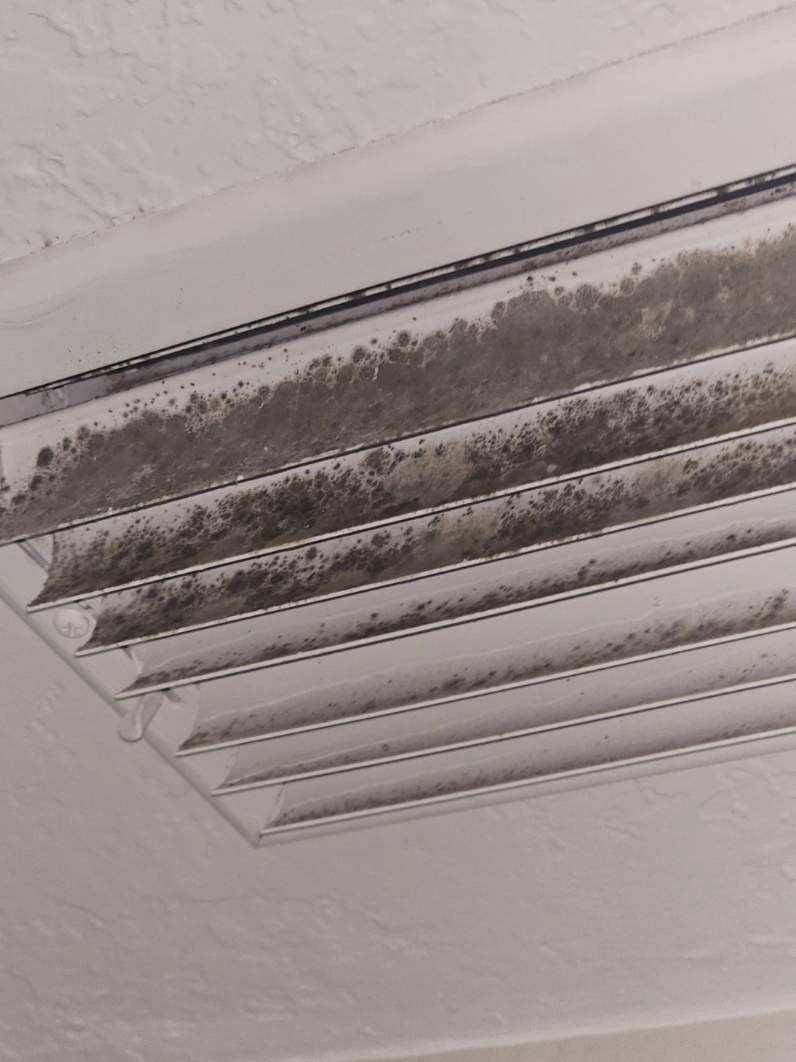
A Tampa air handler runs for most of the year and the condensation it makes keeps the drain pan and the ducts damp. Spores that settle there get blown into every room. We change the filter and fog an antifungal through the duct system as part of every remediation. When you compare quotes from mold companies, check which ones include the ducts.Waterproof the Entry Point
Mold returns when the water does. After the mold is out, we waterproof the foundation or the block wall where the water came through, with the same crew on the same job. There is no second contractor to find and no gap between two scopes of work. If the house also took on water, we offer water damage restoration in Tampa for the extraction and drying. For everything we do around the bay, see waterproofing and mold remediation in Tampa Bay.Final Check and Clearance Testing
Florida licenses mold assessors and mold remediators separately, and a remediation company is not permitted to run the air quality test on a home it has just worked on. So the clearance test is not ours to do, and we do not push it. Removal plus the antifungal fogging through the house and the HVAC system is what leaves the property in a state that passes an air test comfortably. Where a test does earn its cost is when a licensed assessor wrote the report that started the job, or when you need documentation for a landlord, an insurer or a lawyer. If you want one, tell us and we will point you to a licensed assessor. Our guide to the free mold inspection explains where that line sits.
One Company. Mold Out. Water Stopped. Warranty Backed.
If the water that fed the mold can still get in, the mold will be back by the next rainy season. Bullfrog removes the mold under Florida mold remediator license MRSR5565 and waterproofs the foundation under the same contract, with one crew and one warranty. If your insurer has sent a renewal notice with questions about water, a closed water source is something you can show them in writing.
License MRSR5565
Florida Mold Remediator
200+ Jobs Completed
Across Florida's Gulf Coast and Central Florida
Lifetime Warranty
On all foundation waterproofing work
24/7 Emergency Response
Water damage does not wait and neither do we
5.0 Google Rating
Licensed and insured, reviewed by Florida homeowners
Free Inspection
For homeowners. No cost, no obligation, written estimate
Mold Remediation in Tampa: Frequently Asked Questions
Why does mold keep coming back in my Tampa home?
How much does mold remediation cost in Tampa?
What time of year is worst for mold in Tampa?
Does Tampa Bay's salt air make mold worse than in other parts of Florida?
Does the crawl space in my older Tampa home need mold treatment too?
My Tampa home flooded during Helene. Why is mold still showing up months later?
“Speedy response, and so thorough in treatment protocols! My project was more extensive than originally expected and they still finished in a timely manner. I don't ever want to have mold again, but if I do they will be the first company I call. I would absolutely recommend them to all my friends.”
Julie Hallowell
Google review