Water Damage Restoration Tampa
When Water Gets In,
Mold Is 24 Hours Behind It.
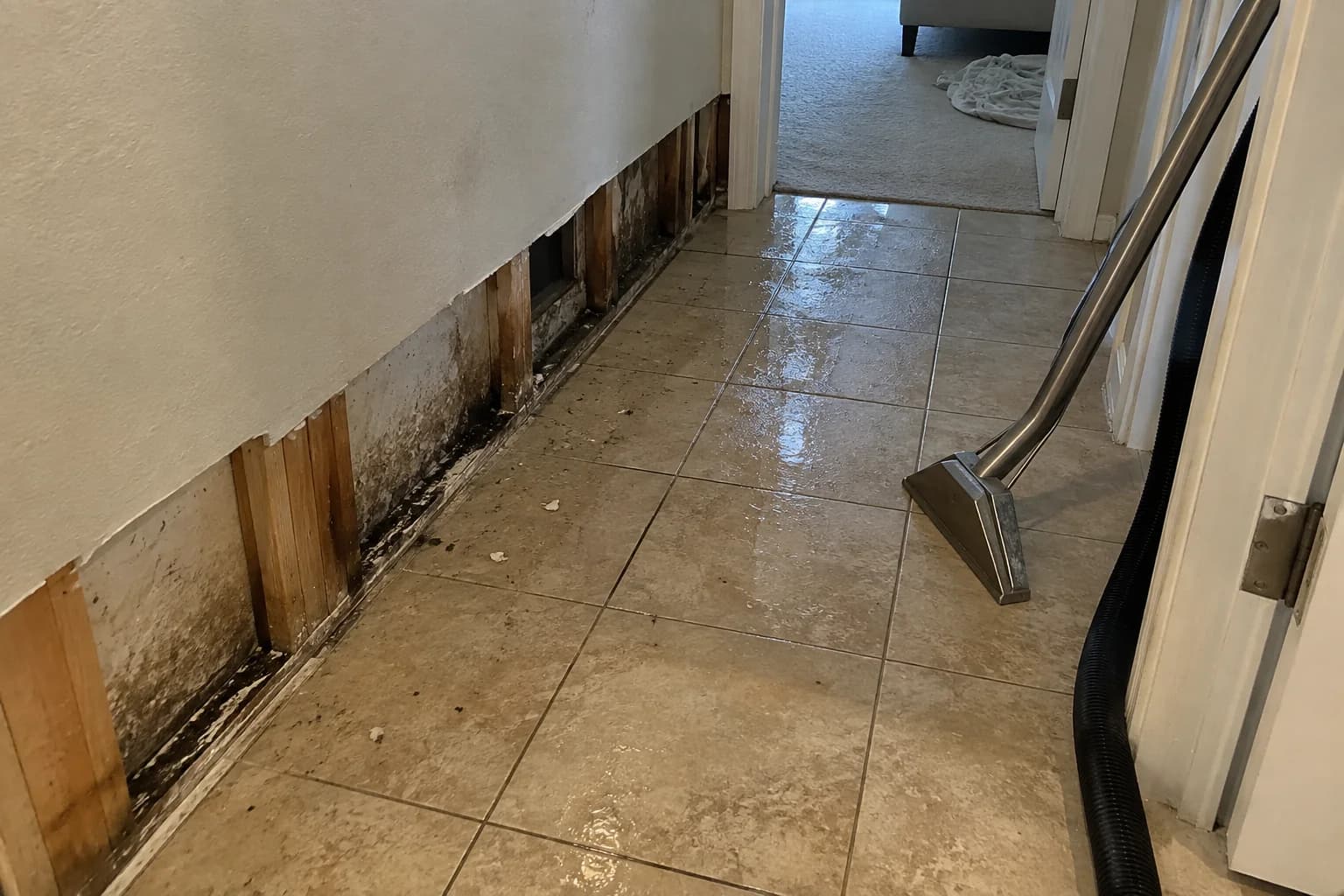
When water comes into a Tampa Bay home, the response window is short and the water is often dirty. Storm surge and flood water carry salt and contaminants, and in our coastal humidity mold can start within 24 to 48 hours. Surface fans will not beat that clock. We answer the phone 24/7, extract the water, dry the structure at depth with commercial equipment and seal the entry point before we close the job.
Available 24/7 · No obligation · Free estimates for homeowners
Trusted, Licensed, and Certified


What is water damage restoration?
Water damage restoration is the work of drying and repairing a building after a leak or flood. Crews extract standing water, remove soaked materials, run commercial dehumidifiers until the structure is dry, then repair the damage. Acting within 24 to 48 hours is what prevents mold from setting in.
Why water damage in Tampa Bay is different
Tampa Bay floods from the water side. Low coastal elevation and active surge zones across Pinellas County mean a storm does not have to make landfall here to put water in your house. Hurricane Helene proved it in September 2024, when surge pushed into South Tampa near West Shore Boulevard and swamped chronically flood-prone areas like Shore Acres across the bay in St. Pete. Milton followed weeks later, and Idalia did the same in 2023. Some low streets near the bay now take on water on a king tide with no storm at all. We track active alerts and surge risk on our Tampa Bay storm watch.
The building stock makes it worse. Older Tampa and St. Pete neighborhoods are full of mid-century bungalows, many on pier-and-beam foundations with crawl spaces that trap humid, salt-laden air. A lot of these homes also have block walls that were never parged or sealed. Water gets in low and stays, and in a crawl space you often cannot see it until the smell reaches the living room.
Water Damage Restoration Tampa FL
What Makes Tampa Bay Water Damage Different From the Rest of Florida
Two Back-to-Back Storm Seasons Changed What Homeowners Know
Hurricane Idalia (August 2023) pushed storm surge into Pinellas County neighborhoods including Shore Acres and Gandy. Hurricane Helene (September 2024) hit the same area harder. Shore Acres, Gulfport and low-lying coastal Pinellas communities reported four to six feet of standing water in some streets during Helene. Homes that had never flooded before flooded twice in 13 months. Florida's heat and coastal humidity mean water sitting in walls and under floors does not stay inert. Mold begins growing within 24 to 48 hours of intrusion, and Tampa Bay's warm coastal air keeps conditions favorable for growth long after standing water is extracted, because moisture trapped in block walls and crawl spaces continues feeding mold even when the room looks dry.
FEMA Map Changes and a Contracting Insurance Market
FEMA has reclassified thousands of Tampa Bay properties into higher flood risk zones over the past three years. Tampa Bay's private insurance market keeps shrinking. When water damage occurs and a claim is filed, carriers in Pinellas and Hillsborough County are scrutinizing documentation more carefully than they did three years ago. Homeowners in Shore Acres, Gandy and Riverview are managing mid-year non-renewal notices while dealing with active water damage events. We photograph and document everything before remediation begins so you have a complete written and photographic record if the adjuster disputes the scope or the cause.
Pier-and-Beam Homes in Flood-Prone Neighborhoods
The mid-century bungalows throughout Shore Acres, Gulfport and Old Northeast St. Pete sit close to Tampa Bay on pier-and-beam foundations with open crawl spaces below. When storm surge or heavy rain pushes water in, it collects beneath the floor as well as through foundation walls. CBS block construction in these neighborhoods has often gone 50 or 60 years without interior waterproofing treatment, and the mortar joints between blocks are a direct path for water. Without waterproofing that entry point after restoration, the same path lets water in every time there is a surge event or an extended period of rain.
Storm surge and your Tampa Bay insurance claim
A standard homeowners policy usually covers sudden, accidental water damage from an internal source such as a burst pipe. It does not cover storm surge or rising water, which is the water most Tampa Bay flooding actually involves, so that falls under a separate flood policy. With FEMA re-designations and the Florida insurance market as tight as it is, careful documentation matters more than ever. We photograph everything before, during and after, log every moisture reading and give you a written scope, so you can support the claim whether it runs through flood or homeowners coverage.
Our Process
Six Steps to a Dry, Restored Home in Tampa Bay
24/7 Emergency Dispatch
Call us at any hour of the day or night and tell us where the water came from: the bay, the sky or a pipe. Getting the water out fast matters, because every hour it sits adds to the drying scope and raises the chance of secondary mold damage. You speak directly with someone who can dispatch a crew, not a scheduling queue or a voicemail system.Inspection and Moisture Mapping
We inspect the affected area and map moisture through walls and structural cavities with professional meters. In pier-and-beam homes throughout Shore Acres and Gulfport, we check beneath the floor in the crawl space as well as wall cavities and block foundation walls. In older Pinellas and St. Petersburg homes we check the crawl space and pier-and-beam framing first, since that is where Tampa Bay's humid air and standing water do the quiet damage. You receive a written damage report with current readings before any work begins.Water Extraction
This is where water mitigation starts. We extract standing water using truck-mounted extraction equipment. The sooner water is out, the smaller the drying scope. Keeping surge out in the first place is what flood barriers are for. Floodwater and storm surge carry contaminants including silt, sewage and bacteria that work deeper into flooring, drywall and structural framing the longer water sits. Mold after a Florida storm walks through the checks that follow.Structural Drying
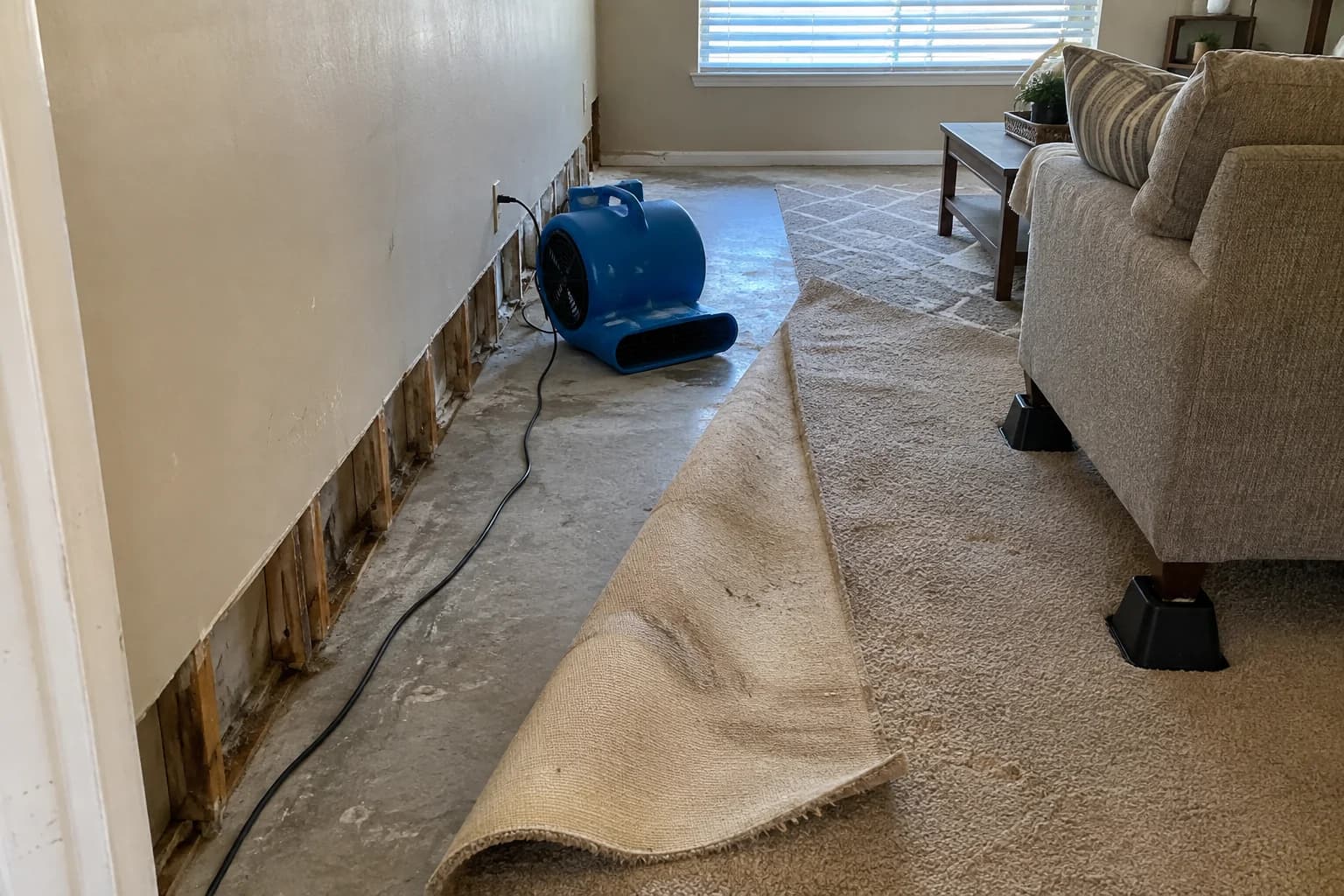
We set industrial air movers and dehumidifiers to dry the structure at depth, not just the surface. Water trapped inside CBS block walls or beneath pier-and-beam subfloors in Pinellas County homes causes mold and structural rot even when the room looks and feels dry to the touch. We monitor moisture readings daily until the structure reaches target levels and document every reading for your insurance adjuster.Cleanup and Sanitizing
Once the structure is dry, we clean and sanitize all affected surfaces with EPA-approved solution. Storm surge and floodwater in Tampa Bay neighborhoods carry storm drain runoff and, in some cases, sewage contamination. Salt residue from surge water keeps surfaces damp and feeds mold, so we flush and neutralize it rather than just drying over it. We treat odors at the source rather than masking them.Waterproof the Entry Point
This is the step that stops the same water coming back. Once the home is restored and dry, we waterproof the foundation entry point that let water in. Without this step, every future storm surge or extended rain event uses the same path. We hold Florida mold remediator license MRSR5565 and perform foundation waterproofing under the same contract, so there is one crew and one scope of work from initial extraction to a closed entry point.

One Crew Extracts the Water, Dries the Structure and Seals the Source.
Extracting the water and running dehumidifiers is where many water damage jobs stop. Bullfrog does that and then waterproofs the path water used to enter the home. We hold Florida mold remediator license MRSR5565 and perform foundation waterproofing as part of the same project, so there is one crew, one contract and one warranty from extraction to sealed source. For Tampa Bay homeowners dealing with FEMA flood zone upgrades and carriers writing non-renewal notices, documentation and source remediation are the difference between a paid claim and a disputed one. We photograph everything before, during and after the job. The moisture log goes to you. And when we leave, the entry point that let two years of storm surge in is closed. We also handle the mold remediation in Tampa that often follows water damage. Everything we do in the area is on our waterproofing and mold remediation in Tampa Bay page.
License MRSR5565
Florida Mold Remediator, mold prevention built into every job
200+ Jobs Completed
Across Florida's Gulf Coast and Central Florida
Lifetime Warranty
On all foundation waterproofing work
5.0 Google Rating
Licensed and insured
One Contractor
Foundation waterproofing and complete water extraction
Insurance Documentation
Provided for your adjuster
Water Damage Restoration in Tampa: Frequently Asked Questions
Does salt water from a Tampa storm surge cause more damage than rain flooding?
How much does water damage restoration cost in Tampa?
Is storm-surge flooding in Tampa covered by my homeowners insurance?
My Tampa home has a crawl space that flooded. Why does that need special attention?
What does water damage restoration include?
Is water damage restoration worth the cost?
“Came out the same day I called, found the problem, and completed the work before the week was over. … You'd be foolish to use anyone else!”
greg c
Google review