
If you have ever sprayed bleach on a moldy patch, watched it disappear, then found it back a few weeks later, you already know the short version. Bleach has its place, but it is the wrong tool for most of the mold people find in their homes. Here is what it actually does, where it works, and where it quietly makes the problem worse.
Where bleach does work
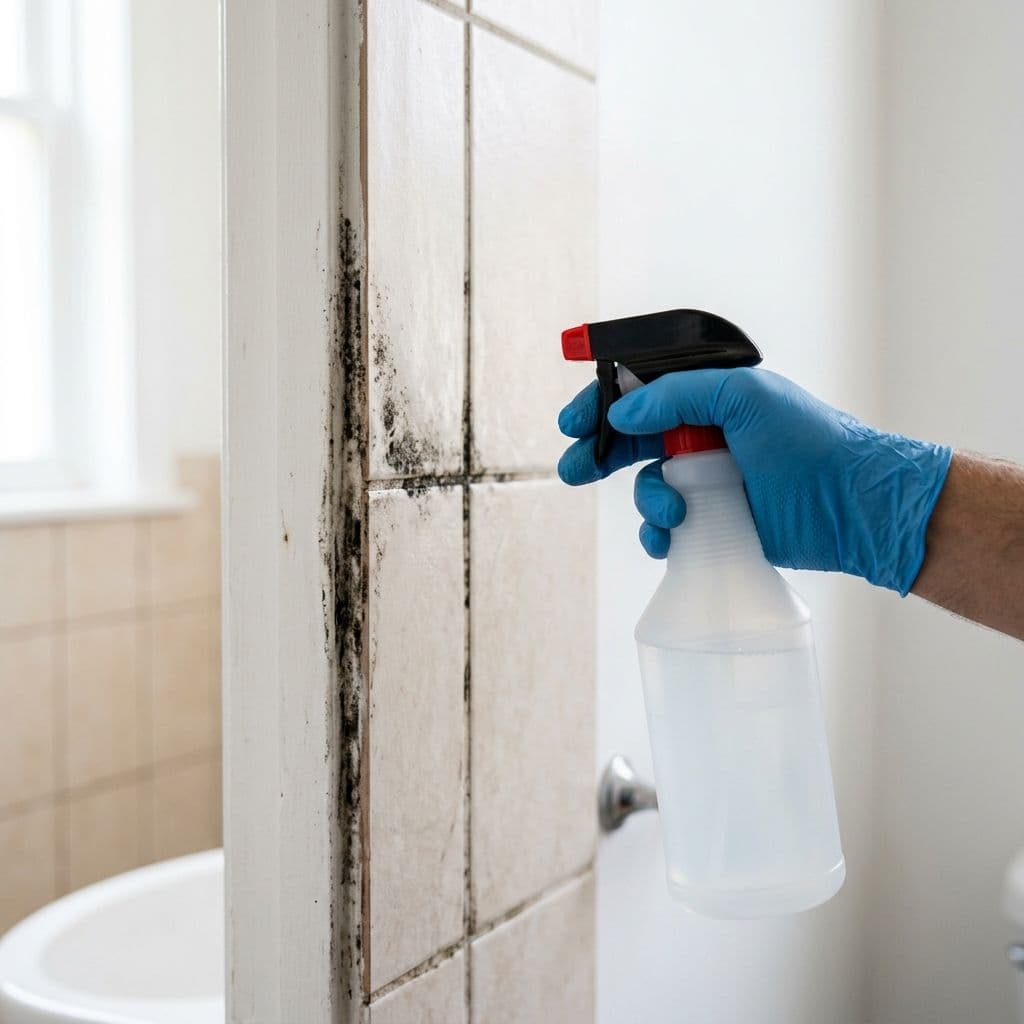
On a hard, non-porous surface, bleach kills mold and removes the stain. That covers a lot of bathroom situations: glazed shower tile, glass doors, the porcelain of a tub, metal fixtures, sealed countertops. The mold sits on top of these surfaces rather than rooting into them, so a diluted bleach solution wipes it out.
The CDC notes one rule you should never break: never mix bleach with ammonia or any other cleaner. The combination releases toxic gas. Open a window, wear gloves, and use it on its own.
Where bleach fails, and why it backfires
Most of the mold that worries homeowners is not on tile. It is on drywall, wood studs, ceiling board, grout, or behind baseboards. These are porous materials, and that changes everything.
Mold on a porous surface is not just sitting on top. It sends roots, called hyphae, down into the material. Household bleach is mostly water. When you apply it to drywall or wood, the chlorine stays on the surface and lifts the color, so the spot looks clean. The water content soaks straight past it into the material, where the roots are. You have removed the stain and watered the root system at the same time. A week or two later the mold is back, sometimes worse.
This is why the EPA states plainly that using a biocide like chlorine bleach "is not recommended as a routine practice during mold cleanup." Dead or alive, mold still triggers allergies, so the goal is removal, not just killing the surface layer.
How it works
Why bleach works on tile and not on drywall
- A hard, non-porous surfaceTile, glass, metal, a tub. The mold sits on top, so a diluted bleach solution wipes it out.
- A porous materialDrywall, wood, grout, ceiling board. The mold sends roots, called hyphae, down into the material.
- The wipe that looks cleanThe chlorine stays on the surface and lifts the color. The growth inside the material is still there.
On porous material the goal is removal, not a cleaner-looking surface.
Source: EPA, Mold Cleanup in Your Home
Bleach vs vinegar vs what the EPA actually recommends
| Surface | What works | What to avoid |
|---|---|---|
| Tile, glass, metal, tub (non-porous) | Diluted bleach or plain dish soap and water both work | Mixing bleach with other cleaners |
| Drywall, wood, grout, ceiling board (porous) | Undiluted white vinegar penetrates better than bleach; soap and water for light surface mold | Bleach (feeds the roots) |
| Anything over about 10 square feet | A licensed remediation pro | Any DIY spray bottle |
White vinegar gets recommended for porous surfaces because it actually penetrates instead of sitting on top. Spray it undiluted, let it sit for an hour, then wipe. It is not a miracle and it will not fix a wall that is staying wet, but it beats bleach on drywall every time.
The EPA's own guidance is simpler than most people expect: for routine cleanup, scrub mold off hard surfaces with water and detergent, and dry completely. The cleaner matters less than the drying.
The reason it keeps coming back (this is the part nobody tells you)
Here is the thing every honest source agrees on, and the part most blog posts skip. The cleaner is not your problem. The water is.
Mold needs moisture to grow. If it keeps returning to the same spot after you clean it, something is keeping that spot wet. A slow plumbing leak, condensation, a roof that drips during storms, or water wicking up through a concrete foundation. You can bleach that wall every month for a year and the mold will come back every time, because you are treating the symptom while the cause runs underneath it.
In Florida this is especially common. Homes here sit on concrete slab and block rather than basements, and our humidity runs high for most of the year. Water moves through foundation walls and under slabs, then shows up as mold on the inside of an exterior wall or along the base of a closet. No spray bottle reaches that. The water has to be fixed at the source.
When to stop cleaning and call a professional
Clean it yourself when the patch is small (the EPA's threshold is about 10 square feet, roughly a 3 by 3 foot area), the surface is hard and non-porous, and you know exactly what got it wet and have already fixed it.
Call a licensed remediation company when:
- The area is larger than about 10 square feet
- It is on drywall, wood or another porous material and has set in
- It keeps coming back after you clean it
- There is a musty smell but you cannot find the source
- Mold may be inside your HVAC system or air handler
- The water came from a sewage backup or flooding
At Bullfrog Waterproofing, we are licensed mold remediators (license #MRSR5565) and we do something most remediation companies cannot: we fix the water source in the same project. Cleaning mold without stopping the water is a temporary fix, and we built the company specifically so homeowners do not have to hire one contractor to remediate and another to waterproof the foundation. We handle the foundation, the dry-out and the remediation under one roof, with a lifetime warranty on the waterproofing.
If the mold keeps coming back, the wall is trying to tell you something. We will find out what. We offer Orlando mold remediation, Tampa mold remediation, and Sarasota mold remediation across our service areas.

Mold that won't stay gone? Get a free inspection.
Available 24/7 · No obligation · Free estimates for homeowners