
Most people smell mold before they ever see it. That stale, damp note that hits you when you open a closet or walk into a room can be the first and only warning that mold is growing somewhere out of sight. Learning to recognize it is genuinely useful, because the smell often shows up weeks before a stain does.
The classic mold smell
The word almost everyone reaches for is musty. Beyond that, people describe it as:
- Earthy, like fresh soil, damp leaves or a forest floor
- Wet socks or gym clothes left in a bag too long
- Old books or a basement that has been closed up
- Rotting wood or decaying paper
- Sour or tangy, a little like fermenting alcohol or spoiled food
The exact note depends on the type of mold and what it is feeding on, but the common thread is damp, stale and slightly sweet in a way that does not belong.
What actually causes the smell
The odor is not the mold itself. As mold grows and digests whatever surface it is on, it releases gases called microbial volatile organic compounds, or mVOCs. Those gases are what your nose picks up. Because they are airborne and travel easily, you can smell mold through a wall, under a floor or inside an air vent long before any visible growth reaches the surface.
That is the important part. A musty smell is your early-warning system. The EPA notes that these compounds are often the source of the moldy odor people associate with hidden growth.
Smells that get mistaken for mold
Not every musty note is mold. A few things fool people regularly:
- Mildew, which is really just surface mold, smells similar but milder and lives on damp surfaces like grout and shower curtains
- Stagnant water in a P-trap from a drain that is rarely used
- Dirty HVAC filters or dust burning off a heater
- Old or damp carpet and upholstery
- A dead animal in a wall or vent, which is sharper and worse than mold
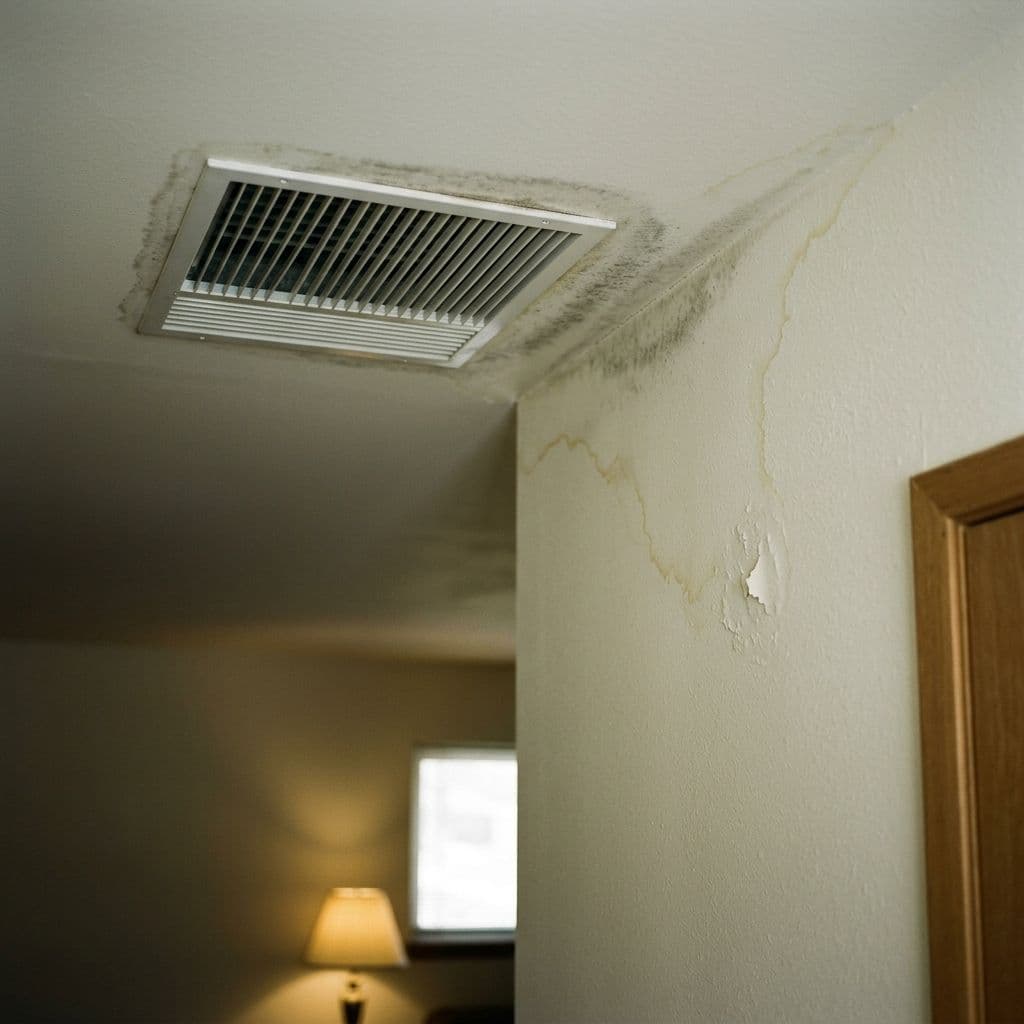
A quick test, and how to test for mold properly if you want certainty: if the musty smell is strongest near vents, gets worse when the air conditioning runs, or returns after you have cleaned every surface you can reach, it is pointing at something hidden rather than a dirty rug.
The Florida angle, that smell when the AC kicks on
In Florida, one of the most common ways people first notice mold is a musty puff of air the moment the air conditioning starts. That smell is coming from the air handler or the ducts. Our humidity keeps the inside of HVAC systems damp, and mold settles in on the coil, the drain pan and the duct walls, then gets blown through the whole house every cycle. Surface cleaning a vent cover does nothing about it.
A musty smell that comes and goes with the AC, or one that returns after a storm, is worth taking seriously. Both point to moisture that is feeding mold somewhere you cannot reach with a spray bottle.
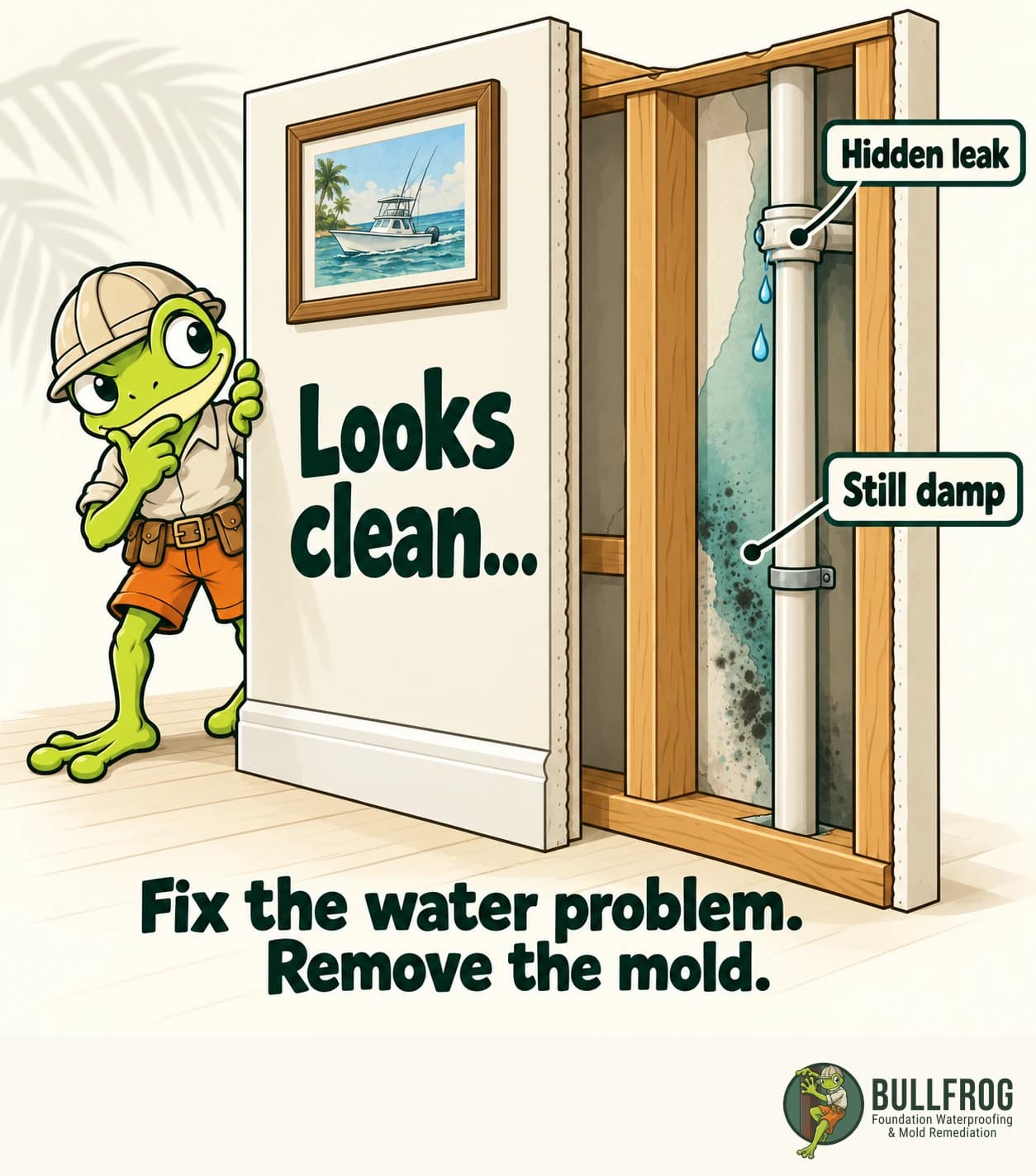
You smell mold but cannot see it. Now what?
A persistent musty odor with no visible source means the mold is behind drywall, under flooring, above a ceiling, or inside your HVAC. Where the growth is visible and small, how to get rid of mold covers what a homeowner can do safely. At that point cleaning is not the issue, finding it is. A professional mold inspection uses moisture meters and experience to trace the smell back to the water that is causing it, which is the only way to fix it for good.
This is where Bullfrog Waterproofing is built differently. We are licensed mold remediators (license #MRSR5565), and when we find hidden mold we also find and fix the water source feeding it, in the same project. Our mold remediation includes replacing the HVAC filter and fogging an antifungal through the ducts to clear airborne spores, then we stop the moisture so it does not return. Most companies treat the smell. We trace it to the leak.
We provide a comprehensive mold inspection in Orlando, mold inspection in Tampa and mold inspection in Sarasota. On the southeast coast we cover Melbourne, West Palm Beach, Boca Raton and Fort Lauderdale. If you've been noticing a strange smell in your house, do not ignore it. Removing the mold and stopping its source early is the key to preventing extensive damage. You may also find it helpful to know if bleach actually kills mold when treating visible patches.

Musty smell you can't find? Get a free inspection.
Available 24/7 · No obligation · Free estimates for homeowners