Foundation
Foundation Repair Near Me — Florida Guide (2026)
Looking for foundation repair in Florida? Learn the cause, the cost, and why waterproofing beats patching long term. Free estimates available.
You searched "foundation repair near me" and got a list of names. That's the easy part. The hard part is that most contractors on that list won't actually fix what's wrong with your foundation, and some of them can't legally touch the mold that usually comes with it.
Florida foundation problems are different from what you'll read in national guides. Sandy soil, a high water table and a rainy season that dumps 60 to 70 percent of the state's annual rainfall between May and October create a specific set of conditions that most out-of-state content simply doesn't account for. This guide covers what actually causes foundation trouble in Florida homes, how to tell whether you need structural repair or waterproofing, what each one costs and how to find a contractor who can fix the actual problem.
Table of Contents
- Types of Foundation Problems in Florida
- Foundation Waterproofing vs Foundation Repair: The Difference
- Signs Your Foundation Has a Water Problem
- What Causes Foundation Water Intrusion in Florida
- How Foundation Waterproofing Works
- Why Tar-Based Products Fail in Florida
- Cost of Foundation Waterproofing in Florida
- How to Choose a Foundation Contractor
- FAQ
- Get a Free Foundation Assessment
Types of Foundation Problems in Florida
Most Florida homes sit on a concrete block (CBS) foundation. When homeowners notice trouble, it typically falls into one of two categories. Getting clear on which one you're dealing with determines who you call and what you pay.
Structural foundation problems involve the foundation itself losing load-bearing capacity. Symptoms include doors and windows that stick or won't close, floors that slope noticeably, diagonal cracks running from window corners at 45-degree angles, and visible separation between the walls and the ceiling line. These problems are caused by the foundation sinking, shifting, or settling unevenly. Fixing them requires a structural engineer and a contractor who installs piers, pilings, or underpinning systems.
Foundation water intrusion involves moisture pushing through the foundation wall rather than the wall failing structurally. Symptoms are different: water seeping through the lower block courses after rain, white chalky deposits (efflorescence) on block walls, a persistent musty smell, or visible mold along the base of interior walls. The wall may still be structurally sound. The problem is that the seal between the block wall and the slab has failed, or cracks have opened up and water is finding its way through under pressure.
These two problems require different contractors and different solutions. Knowing which one you have before you call saves time and avoids bringing in the wrong person.
Foundation Waterproofing vs Foundation Repair: The Difference
This distinction matters, and the search results don't make it easy to see.
When you search "foundation repair near me" in Florida, you'll see companies that rank well for that phrase but primarily do foundation lifting and structural stabilization. Alpha Foundation, for example, ranks at the top of Florida search results for foundation-related queries. They do excellent structural work. They do not do waterproofing, and they refer waterproofing jobs out.
Foundation repair addresses structural failure: the foundation has settled, cracked structurally, or lost its load-bearing capacity. The contractor installs piers or pilings beneath the slab to lift and stabilize it. This is expensive work, typically starting around $5,000 and running to $30,000 or more for extensive structural issues. It is the right solution when the foundation is actually failing structurally.
Foundation waterproofing addresses water intrusion: the foundation is structurally sound but moisture is getting through. The contractor finds the entry points, seals them with a product designed to bond to concrete and flex with seasonal movement, and applies drainage solutions if needed. For most Florida homes with water seeping through block walls, this is the actual problem.
If you call a structural repair company for a water intrusion problem, they'll tell you the foundation looks fine and send you away without a fix. If you don't realize you need structural repair and spend money on waterproofing instead, you won't resolve a sinking slab. The diagnostic inspection is the most important step either way.
Signs Your Foundation Has a Water Problem
Knowing what to look for tells you early whether this is a waterproofing job. Catching it earlier means less remediation work later.
Water seeping through block joints. After heavy rain or during the rainy season, you see moisture beading through the mortar joints between block courses, especially in the lower two or three courses. This is hydrostatic pressure forcing water through the path of least resistance.
Efflorescence on block walls. That white, chalky, or powdery residue on the face of your concrete block is a direct indicator of water moving through the wall. It is the mineral salts left behind after water evaporates. The wall looks dry when you see it, but the staining tells you water has been transiting through regularly.
Musty smell with no visible source. You can't see mold but you smell it. In Florida's humidity, mold begins growing within 24 to 48 hours of water getting trapped in a wall cavity. If the smell is in a room that shares a wall with the exterior foundation, moisture behind or in the block wall is the most likely source.
Visible mold on base of interior walls. Mold growing at the floor-wall junction on interior walls, particularly after a wet summer, points to moisture wicking up through the slab or coming through the base of the block wall.
Eroded mortar joints. Run your finger along the mortar joint between the bottom block course and the concrete slab. If the mortar crumbles or you can feel a gap, water has been working on it. This is the most common entry point for water intrusion in Florida block homes.
Dark staining or mineral deposits on the exterior wall near grade. Where soil meets your exterior wall, look for staining lines that indicate repeated water saturation at grade level. Florida's sandy soil doesn't hold water away from the foundation during heavy rain.
What Causes Foundation Water Intrusion in Florida
Florida's conditions are not typical. Understanding why helps you evaluate the fixes you're being offered.
The biggest driver is hydrostatic pressure from saturated soil. Most of Florida sits on sandy or loamy soil with poor water retention. During the rainy season, May through October, that soil becomes saturated quickly. Once it's saturated, the water weight pushes against your foundation wall. Any gap or weak mortar joint becomes an entry point.
The most common gap is at the block-slab junction. The joint where the concrete block wall meets the concrete slab is the weakest point in a Florida foundation. The mortar used to seal it ages, contracts and expands with Florida's temperature cycles, and eventually erodes. Once there's a gap, every heavy rain pushes water through it.
Florida's water table makes things worse. In much of Central and South Florida, the water table sits only a few feet below grade. Homes built in low-lying areas or near retention ponds face upward pressure from below in addition to lateral pressure from saturated soil. That wicking comes up through the slab and through lower block courses.
Rain intensity is also a factor people underestimate. Florida averages 50 to 60 inches of rain per year, and the rainy season delivers 60 to 70 percent of that in concentrated storm events. A single afternoon thunderstorm can drop two inches in an hour. Soil that was dry yesterday becomes saturated in an afternoon, and that saturation pushes against the foundation immediately.
Finally, age matters. Homes built in the 1960s through 1980s used materials and techniques that were standard at the time but weren't designed with modern understanding of long-term water pressure management. Original tar-based waterproofing coatings have likely degraded. Mortar has had 40 or 50 years of wet-dry cycles working against it.
How Foundation Waterproofing Works
This section describes the process Bullfrog Waterproofing uses for most Florida foundation waterproofing projects. The scope varies by the specific entry points found during inspection, but the framework is consistent.
Step 1: On-Site Inspection and Entry Point Mapping
A thorough inspection covers the entire perimeter of the foundation, both interior and exterior where accessible. The goal is to find every entry point, not just the most obvious one. Water intrusion that goes unaddressed at a secondary entry point will continue even after the primary crack is sealed. The inspection also checks for evidence of existing mold in wall cavities, which determines whether remediation is needed alongside waterproofing.
Step 2: Structural Sealing of Entry Points
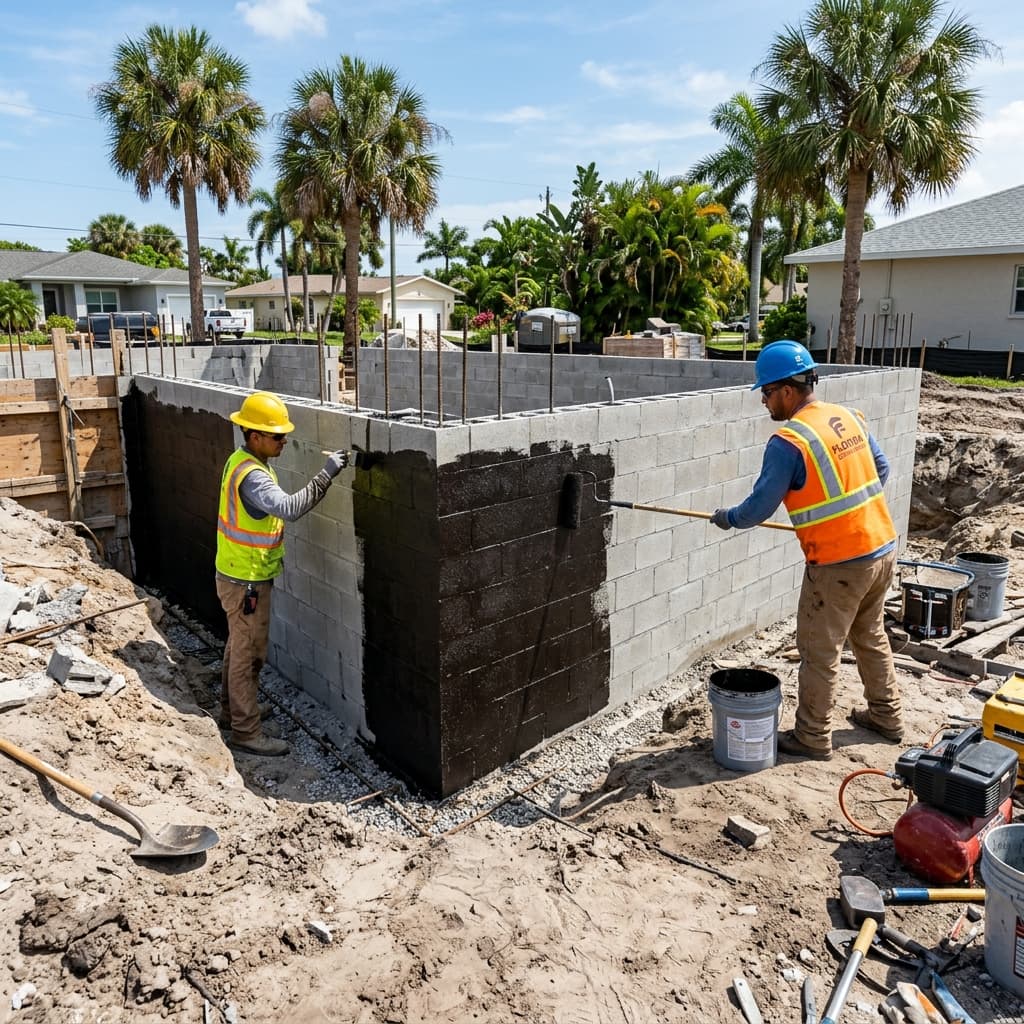
Cracks, eroded mortar joints, and gaps at the block-slab junction are sealed using materials that bond structurally to concrete and flex with the foundation's natural seasonal movement. The seal goes into the gap, not over it. This is different from hydraulic cement patch products sold at hardware stores, which sit on top of the crack and fail when the concrete moves again.
Step 3: Drainage Assessment
In some cases, water intrusion is made worse by inadequate grading or drainage that directs runoff toward the foundation rather than away from it. Where drainage is a contributing factor, correcting it is part of the permanent solution. Sealing entry points in a wall that continues to have water pooling against it addresses only half the problem.
Step 4: Mold Inspection and Remediation (If Needed)
If water has been entering the wall cavity for any length of time, mold is a real possibility. Bullfrog checks for mold in the same project. If mold is present, remediation happens alongside the waterproofing work. This matters because it means one inspection and one mobilization, not two separate projects discovered a week apart.
Step 5: Warranty Confirmation
Bullfrog's foundation waterproofing work carries a lifetime warranty against water intrusion through the treated areas. The warranty scope is specific: it covers the areas treated, not untreated sections of the foundation and not catastrophic events like storm surge. The warranty terms are explained clearly before work begins.
Why Tar-Based Waterproofing Fails in Florida
Tar and petroleum-based foundation waterproofing products were used widely through the 1970s and 1980s. You'll still see them sold at hardware stores and offered by some contractors. They are not a good fit for Florida.
Concrete is a porous material that absorbs and releases moisture naturally. Tar coatings don't breathe, so any moisture that gets into the wall from the interior side has nowhere to go. It sits trapped against the concrete and accelerates deterioration from the inside, which is the opposite of what you're trying to accomplish.
Florida's climate makes this worse faster than almost anywhere else. Tar products are designed to stay flexible in moderate temperatures, but Florida's heat, humidity and UV exposure causes them to harden, crack and peel within a few years. Once the coating cracks, water enters through those cracks in a material that is now bonded to the wall and harder to remove than the original problem.
The third issue is that a surface coating doesn't go into the crack at all. It sits on top of the wall. When Florida's sandy soil shifts with the seasons, which it does every year, the underlying gap reopens. The coating either bridges it temporarily or peels off entirely, and you're back where you started with extra material on the wall.
For a permanent fix in Florida, the waterproofing material needs to fill and bond inside the entry point itself, flex with concrete movement, and allow the wall to breathe rather than trapping moisture behind a rigid seal.
Cost of Foundation Waterproofing in Florida
The honest answer is that cost depends on what the inspection finds. A single crack in a small garage wall costs less than sealing the full perimeter of a 2,000-square-foot home with multiple entry points and active drainage issues. That said, homeowners reasonably want a range before they pick up the phone.
Industry data for Florida foundation waterproofing projects typically runs between $2,250 and $7,063 for residential work, with the lower end representing smaller, localized repairs and the upper end covering larger perimeters with more complex drainage needs. Projects that include mold remediation alongside waterproofing will cost more, but less than running two separate projects with two separate mobilizations.
Factors that affect the final number: the total linear footage of foundation perimeter being treated, the number and severity of entry points found, whether drainage correction is needed, whether mold remediation is in scope, and how accessible the foundation is for exterior work.
Insurance: Standard homeowners insurance rarely covers foundation waterproofing because it's considered a maintenance issue rather than sudden damage. If water intrusion has caused mold growth, Florida policies typically cover mold remediation up to $10,000 depending on the policy. Bullfrog can assist with insurance communication where applicable.
Financing: Ask about payment options during your estimate. Water keeps working while you wait, and the scope tends to grow.
How to Choose a Foundation Contractor Near You
The search results for "foundation repair near me" include structural repair companies, waterproofing companies, general contractors, and franchise restoration companies. Not all of them can do what your foundation needs, and some of them cannot legally handle mold even if they find it.
Verify mold remediation licensing first. In Florida, mold remediators must hold a state license. If a contractor finds mold and touches it without a license, that work is not legally compliant. Ask for the license number before work begins. Bullfrog's license is MRSR5565, issued by the State of Florida.
Ask specifically what the warranty covers. "Lifetime warranty" means different things to different companies. Ask exactly what is covered (specific treated areas vs the whole foundation), what events void it, and whether it transfers if you sell the home.
Confirm they waterproof rather than just repair. Several well-ranking Florida foundation companies do structural repair work only. They do excellent work in their category, but if your problem is water intrusion rather than structural settling, they will tell you so and refer you elsewhere. Get clear on what the company actually does before scheduling an inspection.
Be cautious with national restoration franchises. They are built to respond, dry out and remediate. They are not built to seal foundations, and they don't carry the warranties that a specialized waterproofing company does. Using one for water intrusion is like treating a roof leak by replacing the ceiling.
Check whether the company is locally operated. An owner-operated company has a different stake in your job than a franchise location. When you call, ask who does the estimate and who oversees the work.
Get the inspection first. A company that gives you a firm price before seeing the foundation is either working from a very narrow product set or quoting you something they'll adjust later. A proper estimate starts with a visual inspection of every accessible section.
FAQ
How much does foundation repair cost in Florida?
Structural foundation repair (piers, pilings, lifting) typically starts around $5,000 and can reach $30,000 or more for extensive work. Foundation waterproofing, which addresses water intrusion rather than structural failure, typically ranges from $2,250 to $7,063 for residential jobs in Florida. An on-site inspection determines which problem you have and what the actual scope is.
What are signs of foundation problems in Florida?
Signs break into two categories. For water intrusion: water seeping through block joints after rain, white mineral deposits (efflorescence) on block walls, musty smell near exterior walls, mold at the floor-wall junction, and eroded mortar at the block-slab joint. For structural issues: doors and windows that stick or won't close, sloping floors, diagonal cracks at 45 degrees from window corners, and visible wall-to-ceiling separation.
What causes foundation issues in Florida homes?
Florida's sandy soil creates two conditions that wear on foundations. First, saturated soil during the rainy season generates hydrostatic pressure against the foundation wall. Second, sandy soil settles and shifts, which opens mortar joints over time. Florida's high water table adds upward pressure from below in many areas. The combination of wet seasons and mobile soil is more aggressive than what most building materials were originally designed to handle over decades.
How do I find a reputable foundation repair contractor near me?
Verify licensing before anything else. Mold remediators in Florida must hold a state license (ask for the number). Check that the contractor specializes in the type of work you need: structural repair and waterproofing are different trades. Ask for a warranty in writing and read what it specifically covers. A company that starts with an on-site inspection rather than a phone quote is a better bet.
Is foundation repair covered by homeowners insurance in Florida?
Structural foundation repair and foundation waterproofing are generally not covered by standard homeowners insurance, as insurers classify them as maintenance or pre-existing conditions rather than sudden damage events. Mold remediation caused by water intrusion may be partially covered, with Florida policies typically allowing up to $10,000 depending on the specific policy language. If you have mold resulting from foundation water intrusion, ask your insurer before assuming coverage is unavailable.
What is the difference between foundation repair and foundation waterproofing?
Foundation repair addresses structural failure: the foundation has settled, sunk, or shifted and needs to be stabilized using piers or pilings. Foundation waterproofing addresses water intrusion: the foundation is structurally sound but moisture is penetrating through cracks, mortar joints, or the block-slab joint. Most homeowners who search "foundation repair" actually have a water intrusion problem, not a structural one. The two problems require different contractors, different materials and different budgets.
What is the best way to waterproof a Florida foundation?
The most durable approach fills and bonds inside the entry point rather than coating the exterior surface. Florida's sandy soil means the foundation moves seasonally, so the sealing material needs to flex rather than set rigid. Tar and petroleum-based coatings don't breathe and deteriorate quickly in Florida's heat and UV exposure. Structural sealing of entry points, combined with drainage correction where needed, is the fix that holds.
Can I use tar or hydraulic cement to fix a leaking foundation wall myself?
Hardware store patching products can stop active seeping temporarily. They don't address the mechanism causing the water pressure, and they fail when the concrete moves with seasonal soil changes, which happens every year in Florida. Hydraulic cement in particular sets rigid and can cause the surrounding concrete to crack when the foundation flexes. For a repair that holds longer than a season or two, the entry points need to be sealed with a flexible structural product applied by someone who has found every entry point, not just the visible ones.
Get a Free Foundation Assessment
Bullfrog Foundation Waterproofing serves Orlando, Tampa Bay and Sarasota. We are one of the few companies in Florida that does foundation waterproofing and licensed mold remediation in the same project, under one warranty. If we find mold during the foundation inspection, we handle it. You make one call and deal with one contractor, not two separate companies with two separate scopes.
We have completed 200+ foundation waterproofing and mold remediation jobs across Central and West Florida. Our foundation waterproofing work carries a lifetime warranty against water intrusion through treated areas. Our mold remediators hold Florida license MRSR5565.
If you're seeing water in your garage, a damp smell that won't leave, or white mineral stains on your block walls, the problem isn't going away on its own. Call us for a free on-site foundation assessment.
Call 888-603-6653 (888-603-MOLD)
Or request an estimate at bullfrogwaterproofing.com/contact.
For more information on what the waterproofing process looks like, visit our Foundation Waterproofing service page.
If mold has already developed, see our Mold Remediation service.
If you have active water damage from a storm or burst pipe, we offer 24-hour response through our Water Damage Mitigation service.
More from Bullfrog Waterproofing
Mold Remediation
Is Black Mold Dangerous? What Florida Homeowners Should Know
Black mold gets talked about like a death sentence. The real risk is more grounded, and in Florida humidity it is common. Here is what the science says and what to do.
Mold Inspection
Mold Inspection Cost in Florida (2026 Pricing Guide)
A Florida mold inspection usually runs $300 to $600, more with lab testing. Here is what drives the price, when it is worth paying and how to avoid overpaying.
Mold Remediation
Does Homeowners Insurance Cover Mold in Florida?
Whether your Florida policy pays for mold comes down to one thing: what caused it. Here is how coverage actually works, what gets denied and how to protect your claim.