Mold Remediation
How to Get Rid of Mold: Florida Homeowner's Guide (2026)
In Florida, mold is a matter of when, not if. Learn how to find it, what you can handle yourself, and when to call a licensed professional.

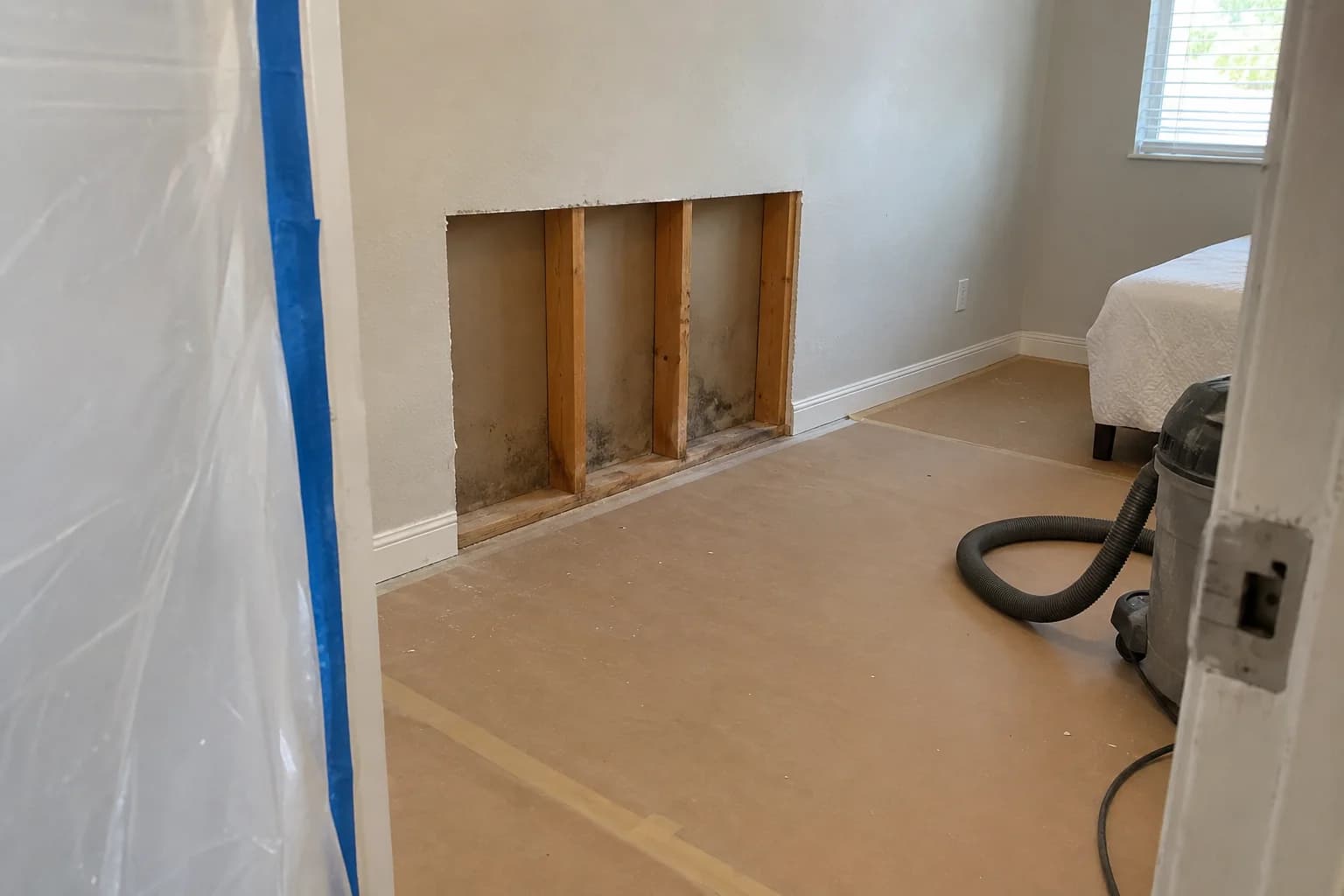
If you live in Florida, mold is not a question of if, it's a question of when. The state's heat and humidity create conditions that no dehumidifier or open window can fully offset. Mold can start growing within 24 to 48 hours of moisture getting trapped in a wall, under a floor or inside a crawl space.
This guide covers what you need to know: how to find mold in your home, what you can safely handle yourself, and when a licensed professional is the right call. It's written by the team at Bullfrog Foundation Waterproofing and Mold Remediation, licensed mold remediators (License #MRSR5565) with 6.5 years of experience handling mold remediation in Orlando, mold remediation in Tampa and mold remediation in Sarasota.
Types of mold common in Florida homes
Florida homes deal with a wider range of mold species than most states. The combination of year-round warmth, hurricane-season flooding and aging housing stock creates conditions where multiple species can take hold simultaneously.
Stachybotrys chartarum (black mold) appears as dark greenish-black patches on materials with high cellulose content: drywall, wood framing and ceiling tiles. It requires sustained water exposure to grow, which is why it shows up in walls after undetected leaks or flooding rather than from brief moisture events. Black mold produces mycotoxins that can cause serious respiratory and neurological symptoms with prolonged exposure.
Cladosporium is among the most common household molds in Florida. It grows on surfaces and in fabrics, appearing in olive-green, brown or black clusters. Unlike Stachybotrys, it can grow in cooler conditions and spreads readily. It is a common trigger for asthma attacks and allergic reactions.
Penicillium appears blue-green and spreads quickly across water-damaged materials. It has a distinctive musty odor and is frequently found under carpets and behind walls after flooding. Prolonged exposure has been linked to lung inflammation.
Aspergillus is a large genus with many species, several of which are common in Florida homes. It appears in white, yellow, green or black forms and is often found in HVAC systems, on walls and in attics. Some Aspergillus species produce aflatoxins, which are a genuine concern for immunocompromised individuals.
Worth noting: visual identification alone cannot confirm which species you're dealing with. If you need to know the exact species for health or legal reasons, a licensed mold inspector can conduct air quality testing. For remediation purposes, the approach is largely the same regardless of species.
Health risks: what mold actually does
Mold affects people differently depending on the species, the duration of exposure and the individual's health status. Children, elderly people and anyone with asthma, allergies or a compromised immune system are at higher risk than healthy adults.
Short-term exposure to common household molds typically causes:
- Runny nose and nasal congestion
- Itchy or watery eyes
- Scratchy throat
- Persistent sneezing
- Skin irritation
The symptom pattern that most clearly points to indoor mold: symptoms that improve when you're away from home and return when you come back. If your family feels better on vacation and worse the day you return, that's worth investigating.
More serious exposure, particularly to black mold or Aspergillus over extended periods, can produce respiratory distress, persistent coughing, headaches and, in severe cases involving mycotoxin-producing species, neurological symptoms. These are not scare statistics. They're outcomes that follow from prolonged exposure in homes where the mold source was never addressed.
Find the mold, find the water feeding it. That's how you protect your household.
How to find mold in your home
Mold hides. The visible patch on a bathroom ceiling is often the smallest part of the problem. Check all of these areas before you assume you've found everything.
Walls and ceilings: Discoloration that looks brown, black or greenish and won't wipe clean is the clearest visual sign. Soft or bubbling drywall suggests water intrusion behind the surface. A musty smell in a room with no visible mold means it's inside the wall.
Under sinks and around plumbing: Slow drips inside cabinets create exactly the enclosed, dark, moist conditions mold needs. Check the cabinet floor and the back wall behind pipes. Look for dark staining or soft spots in the wood.
Crawl spaces: Florida crawl spaces are one of the most common mold locations in the state. Inadequate vapor barriers, poor ventilation and proximity to ground moisture create a near-perfect growth environment. Look for black or white fuzzy growth on floor joists and the underside of the subfloor. A strong musty smell when you open the crawl space access is a clear indicator.
HVAC systems: Your air handler, the air handler cabinet and the duct system can all harbor mold. Check the interior of the air handler housing for visible growth and dark staining around vents. If you smell mold only when the AC is running, the duct system is likely involved. This is a serious situation because a running HVAC spreads spores throughout the entire house.
Foundation walls and below-grade areas: In Florida, true basements are rare, but below-grade spaces and block foundation walls see regular water intrusion. Look for white powdery deposits (efflorescence, which are mineral deposits from water pushing through the block), dark staining and the smell of damp concrete.
Windows and exterior walls: Condensation on single-pane windows and poor insulation on exterior walls can cause chronic moisture buildup, particularly during summer when cold air-conditioned indoor air meets hot humid exterior air.
If you find mold in one location, check adjacent areas. Mold follows moisture, and moisture follows gravity and air movement. One patch of mold on a bathroom ceiling may connect to a water leak that's been running inside a wall for weeks.
Small jobs: how to remove mold yourself
Some surface mold is genuinely safe to handle yourself. The EPA's guidance is straightforward: DIY remediation is appropriate for affected areas under 10 square feet on non-porous surfaces, provided you don't have respiratory conditions and you use the right protective gear.
That covers scenarios like a small patch of mold on tile grout, around a window frame or on the surface of a non-porous bathroom fixture.
What you'll need
- N95 respirator (not a basic dust mask)
- Safety glasses or goggles
- Nitrile gloves
- Old clothing or disposable coveralls
- Plastic sheeting to seal the work area from the rest of the house
What actually kills mold
Here's where a lot of homeowners get the wrong information: bleach does not kill mold roots on porous surfaces.
Bleach is a strong surface disinfectant on non-porous materials like tile, glass and metal. It kills mold cells on contact. On porous surfaces like drywall, wood framing, grout and concrete, bleach cannot penetrate deep enough to reach the mold's root structure (the hyphae). The surface looks clean after treatment. The mold is still alive below the surface and regrows within days to weeks.
For small surface mold jobs on non-porous surfaces, a diluted bleach solution of one cup of bleach per gallon of water works well. Spray, let sit for 10 to 15 minutes, scrub and rinse.
For porous surfaces, use hydrogen peroxide (3%) or a commercial antifungal product designed for mold remediation. Hydrogen peroxide penetrates into the material and kills mold at the root. Apply it, let it sit for at least 10 minutes, then scrub.
White vinegar (undiluted) is another option that penetrates porous surfaces and kills a broad range of mold species. It won't damage most surfaces and doesn't require additional ventilation precautions.
After cleaning, dry the area completely and address the moisture source that caused the growth. Without fixing the moisture, the mold returns.
When DIY stops being appropriate
If the affected area is larger than 10 square feet, stop and call a professional. Same goes if the mold is on drywall, wood framing, insulation or carpet. These materials absorb mold deeply and often need to be removed and replaced, not cleaned. If you're sneezing or having trouble breathing during the work, stop. If you open a wall and find more mold than expected, stop.
The difference between a DIY surface clean and a professional remediation job matters in practice. DIY attempts on areas that needed professional containment typically spread spores and make the eventual professional job larger and more expensive.
When you must call a professional
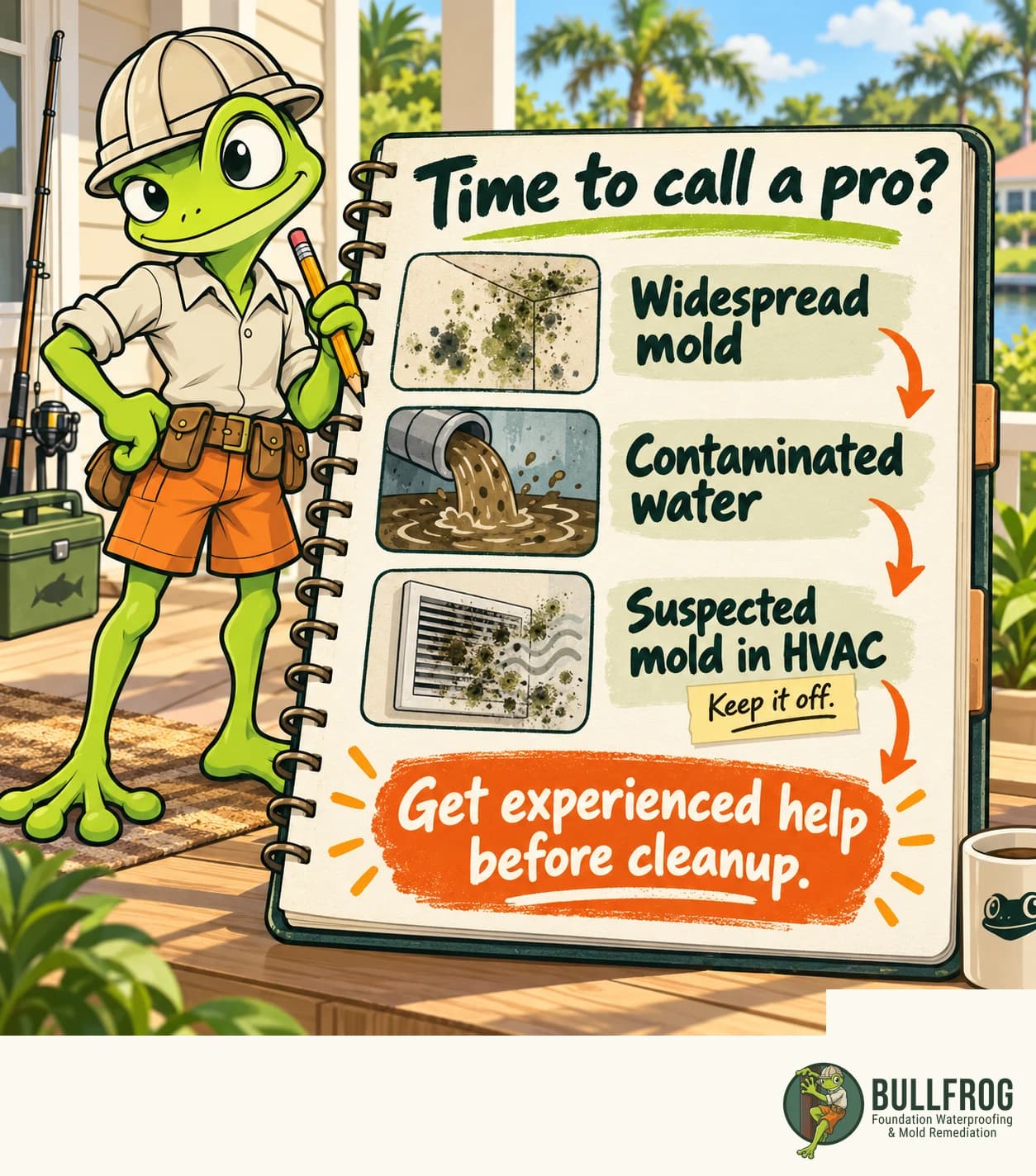
Florida law is specific on this point. The Mold-Related Services Act requires a licensed mold assessor and a licensed mold remediator for any remediation of significant mold. A mold remediator license like Bullfrog's MRSR5565 is a state-issued credential. Not every contractor who offers mold removal holds one. If you're hiring someone to remove mold from your home, check that they hold an active Florida mold remediator license before work begins.
Beyond the legal requirement, call a professional when:
The affected area exceeds 10 square feet. This is the EPA threshold for DIY. Above this size, proper containment and disposal is beyond what most homeowners can safely manage.
Mold is inside walls, ceilings or under floors. You'll need to open the structure to access it, which means knowing what's behind it, how to contain the work area and how to handle demolished material safely.
Your HVAC system is involved. This is not a DIY situation under any circumstances. Mold in ductwork requires proper containment and treatment that goes well beyond changing a filter. A running HVAC with mold inside it is actively spreading spores through every room in the house.
Anyone in the household has respiratory conditions, is elderly or is a young child. The health stakes are too high to treat this as a weekend project.
You have visible mold and water is still entering the structure. This happens most commonly with foundation water intrusion, when water comes through block walls, slab joints or crawl space vents. Remediating the mold without sealing the water source means the mold comes back. A professional can address both in the same project.
You can smell mold but can't find it. It's inside a wall, under a floor or in the HVAC system. Finding it requires either a trained inspection or moisture detection equipment. Guessing and cutting into walls randomly causes more damage than it fixes.
What professional mold remediation actually involves
A professional job looks very different from a DIY cleaning job. Proper remediation runs from inspection through clearance, and every step matters.
Step 1: Assessment
The remediator inspects the home to identify all areas of active mold growth, including inside walls using moisture meters and sometimes infrared cameras, in the HVAC system, in the crawl space and in any area with a history of water intrusion. This step determines the full scope before containment begins. Skipping a thorough assessment means there's mold left behind after the job.
Step 2: Containment
The work area is sealed off from the rest of the house using plastic sheeting and negative air pressure. This stops spores from becoming airborne and spreading into unaffected rooms during removal. Proper containment is the difference between a mold job that fixes the problem and one that spreads it.
Step 3: Removal
Porous materials that have absorbed mold, including drywall, insulation and wood framing in severe cases, are removed and properly bagged for disposal. Non-porous surfaces are cleaned and treated with antifungal agents. The goal is to remove the material hosting the mold, not only the growth you can see.
Step 4: HEPA filtration
Air scrubbers with HEPA filters run throughout the job and for a period after removal to capture airborne spores. HEPA filtration removes particles as small as 0.3 microns, and most mold spores range from 1 to 100 microns, so this is effective at clearing the air.
Step 5: Antifungal treatment
After removal and cleaning, remaining surfaces are treated with an antifungal agent to prevent regrowth. This goes on structural elements, subfloor and any surfaces adjacent to the removed material.
Step 6: HVAC treatment
This is the step most remediation companies skip, and it's where a lot of mold returns come from. If mold was present in the home while the HVAC was running, spores are in the duct system. Bullfrog replaces the HVAC filter and fogs antifungal vapor through the duct system to kill airborne spores that have settled in the ducts and air handler. Without this step, the HVAC continues to circulate spores after the remediation is complete.
Step 7: Post-remediation verification
A clearance inspection confirms the remediation is complete. Air sampling or surface sampling can confirm spore counts are within normal ranges. This step documents that the job was done correctly.
The root cause problem: mold that keeps coming back
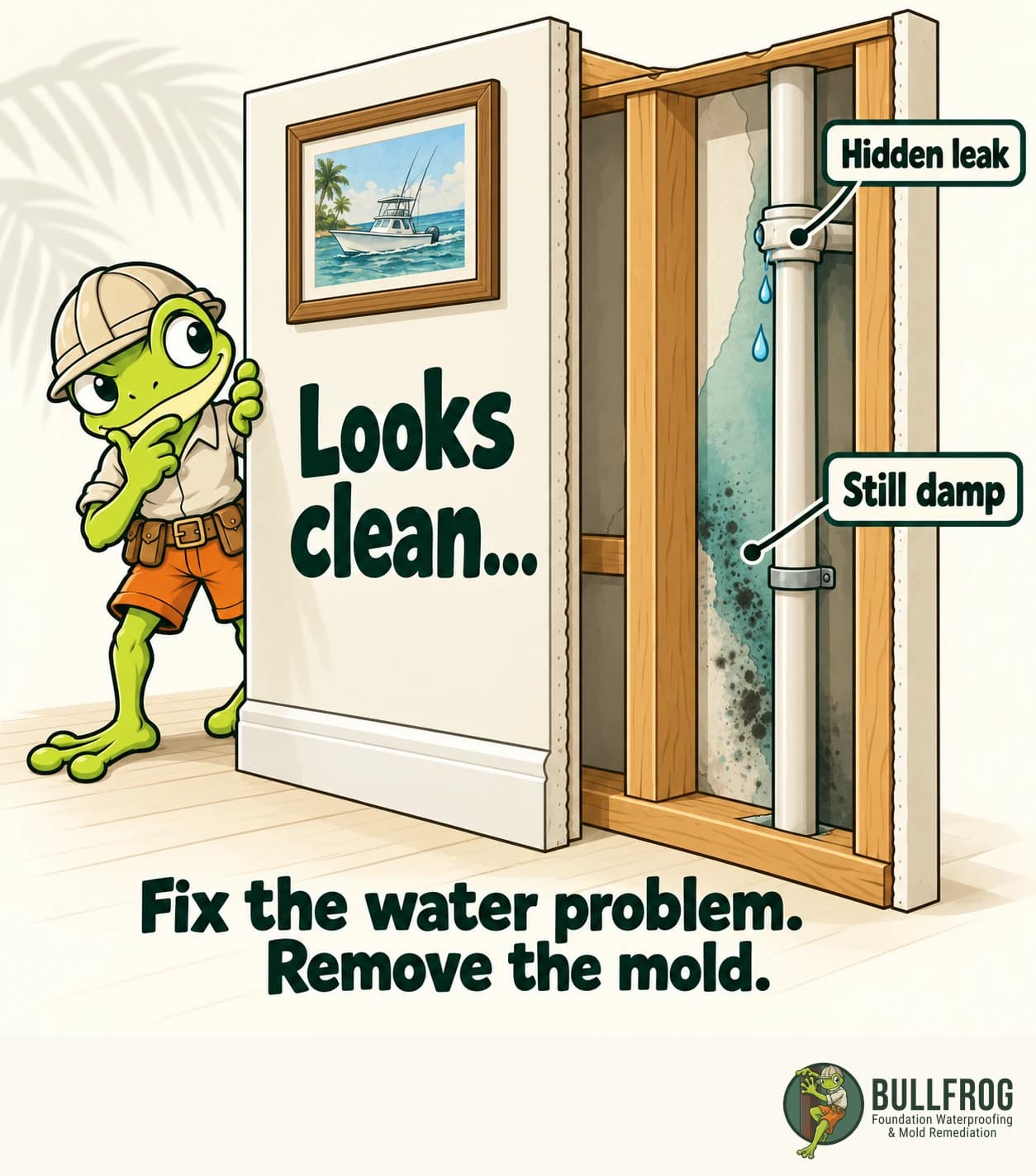
This is the issue most mold companies don't want to discuss, because fixing it requires more than remediation.
Mold needs two things to grow: organic material and moisture. You can remove every mold colony in a house and treat every surface. If the water source isn't fixed, the mold returns. In Florida conditions, you're back where you started within a few weeks.
The most common recurring mold situations in Florida homes come from foundation water intrusion, crawl space moisture, roof leaks and undetected plumbing leaks.
Foundation water intrusion means water pushing through block foundation walls or slab joints, typically in crawl spaces and lower walls. The moisture wicks continuously into drywall and framing. Crawl space moisture comes from ground moisture vapor rising through an unprotected crawl space floor, condensing on joists and the subfloor above. Without a proper vapor barrier and ventilation, this is a year-round problem in Florida.
A mold company that only handles removal can only address what's there now. They can't stop what's coming back next rainy season, because that requires waterproofing the source.
Bullfrog is one of the only companies in Florida licensed for both mold remediation and foundation waterproofing. When water intrusion is the source, we can waterproof the foundation and remediate the mold in the same project, under one warranty. You don't need two separate contractors, two separate timelines or two separate invoices.
Learn more about foundation waterproofing and how it stops the moisture source that feeds recurring mold.
How to prevent mold from returning
After a professional remediation, the goal is to eliminate the conditions that allowed mold to grow in the first place.
Fix the water source first. If water is entering through the foundation, through a roof penetration or through a plumbing leak, everything else is temporary.
Get a vapor barrier in the crawl space. A properly installed crawl space vapor barrier prevents ground moisture from rising into the structure. In Florida, this isn't optional for homes with crawl spaces. It's the difference between a dry crawl space and a recurring mold problem.
Keep indoor humidity below 60%. Florida's outdoor humidity is difficult to overcome in summer, but that's the target indoors, ideally between 30 and 50%. A whole-house dehumidifier handles this more reliably than portable units in larger homes.
Change your HVAC filters every 30 to 60 days. Florida's climate demands it, not the 90-day intervals that apply in drier states. Have the system inspected annually. A clean, well-maintained HVAC is one of your main tools for controlling indoor humidity.
Check your bathroom exhaust fans. They need to vent to the exterior of the house, not into the attic. Run them during and for 20 minutes after showers.
Schedule annual crawl space and foundation inspections. Florida's rainy season runs from May 15 to October 15, accounting for 60 to 70% of annual rainfall. An inspection before and after rainy season catches new moisture intrusion before it turns into mold.
For water damage mitigation after a storm or appliance failure, the 24 to 48 hour window matters. Getting water out of the structure fast is the most effective mold prevention step available.
Cost of professional mold remediation in Florida
Mold remediation pricing varies with the size of the affected area, what's involved in accessing it and whether structural materials need to be replaced.
What moves the number on a Florida job:
- Surface mold on non-porous material: treatment is the whole job, so this sits at the lower end.
- Mold on drywall, insulation or framing: walls get opened and material comes out, which adds removal and rebuild.
- HVAC involvement or a large affected area: more containment, more removal and duct treatment on top.
- Crawl space work: the size of the space and the height the crew has to work at both matter.
Any figure you find online is a guess about a house nobody has been inside. The only way to know what your job will cost is an on-site inspection by a licensed remediator. Bullfrog provides free on-site inspections for homeowners and property owners, followed by a written estimate before any work begins.
Florida homeowners insurance: Florida mold policies typically cover up to $10,000 in mold remediation costs when the mold results from a covered peril, such as a burst pipe, an appliance failure or a storm-driven leak. Mold from long-term water intrusion through the foundation or from flooding is generally not covered. Bullfrog assists clients with insurance communication when coverage applies.
If your policy includes mold coverage and the mold resulted from a qualifying event, report the claim before remediation begins. Insurance adjusters typically need to inspect before work starts.
Frequently asked questions
Can I get rid of mold myself?
Yes, for small surface jobs. The EPA recommends DIY cleanup for mold areas under 10 square feet on non-porous surfaces, provided you use proper protective gear: an N95 respirator, goggles and nitrile gloves. For anything larger, mold inside walls or ceilings, mold in HVAC systems, or if anyone in the household has respiratory conditions, you need a licensed professional. DIY attempts on larger areas often spread spores rather than contain them.
What kills mold permanently?
Nothing kills mold permanently if the moisture source remains. You can remove every colony and treat every surface, but mold returns within weeks if water is still entering the structure. The permanent fix is two steps: proper remediation followed by sealing the water source. On porous surfaces, antifungal treatments and hydrogen peroxide kill mold at the root. On non-porous surfaces, bleach is effective for surface disinfection.
Does bleach kill mold?
Bleach kills mold cells on non-porous surfaces like tile, glass and metal. It does not kill mold on porous surfaces like drywall, wood or grout because it cannot penetrate deep enough to reach the mold's root structure. The surface looks clean after treatment, but the mold regrows within days to weeks. For porous surfaces, use hydrogen peroxide (3%) or a commercial antifungal product rated for mold remediation.
How long does mold remediation take?
Most residential jobs take one to three days depending on the size of the affected area and whether walls need to be opened. Larger jobs involving crawl spaces, significant HVAC remediation or extensive structural material removal can take longer. Bullfrog handles inspection, containment, removal, HVAC duct treatment and post-remediation verification in one project.
When should I call a professional for mold?
Call a professional when the affected area exceeds 10 square feet, when mold is inside walls or ceilings, when your HVAC system is involved, when you can smell mold but can't locate it, or when anyone in the household has respiratory conditions. In Florida, the Mold-Related Services Act requires that significant mold remediation be performed by a licensed mold remediator.
How do I stop mold from coming back?
Fix the water source. That is the only step that produces a lasting result. After remediation, keep indoor humidity below 60%, change HVAC filters every 30 to 60 days, confirm that crawl space vapor barriers are intact and schedule annual inspections before and after Florida's rainy season. Mold that keeps returning after remediation almost always has an ongoing water intrusion source that hasn't been addressed.
Is mold dangerous to live with?
Living with mold carries real health risks, particularly for children, elderly individuals and anyone with asthma or respiratory conditions. Short-term exposure to common household molds causes allergy-like symptoms. Extended exposure to mold species that produce mycotoxins, including Stachybotrys (black mold), can cause more serious respiratory and neurological effects. If your household is experiencing symptoms that improve when you're away from home, a professional mold inspection is the right next step.
Get a free mold inspection from a licensed remediator
Mold moves fast in Florida. A visible patch on a wall is rarely the full picture, and mold that returns after cleaning almost always means there's a water source that hasn't been fixed.
Bullfrog Foundation Waterproofing and Mold Remediation is one of the only companies in Florida licensed for both mold remediation and foundation waterproofing. We remove the mold and seal the source, in one project, under one warranty.
Book a free mold inspection or call 888-603-6653 (888-603-MOLD).
Service areas: mold remediation in Orlando, mold remediation in Tampa and mold remediation in Sarasota.
Mold Remediator License #MRSR5565.
Protect your Florida home
We find the source of water intrusion and handle waterproofing and mold remediation. Start with a free on-site estimate.
Free on-site estimates are for homeowners and property owners. Renting or buying? See your options.
More from Bullfrog Waterproofing
Mold Remediation
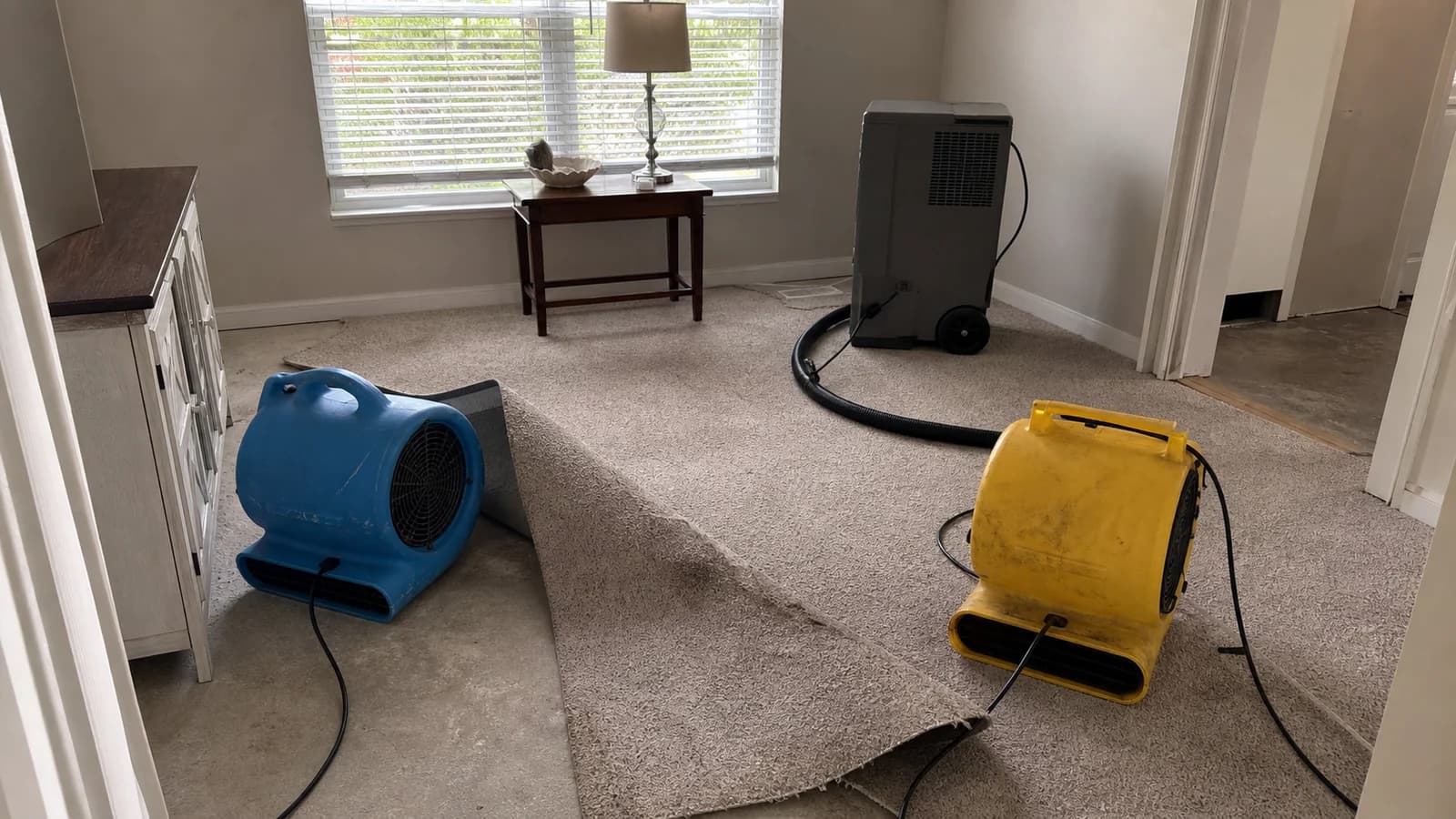
How to Prevent Mold After a Flood in Florida
Mold can start within 24 to 48 hours of a Florida flood. What you do in the first two days decides whether you get mold at all. Here is the playbook.
· 8 min read
Read article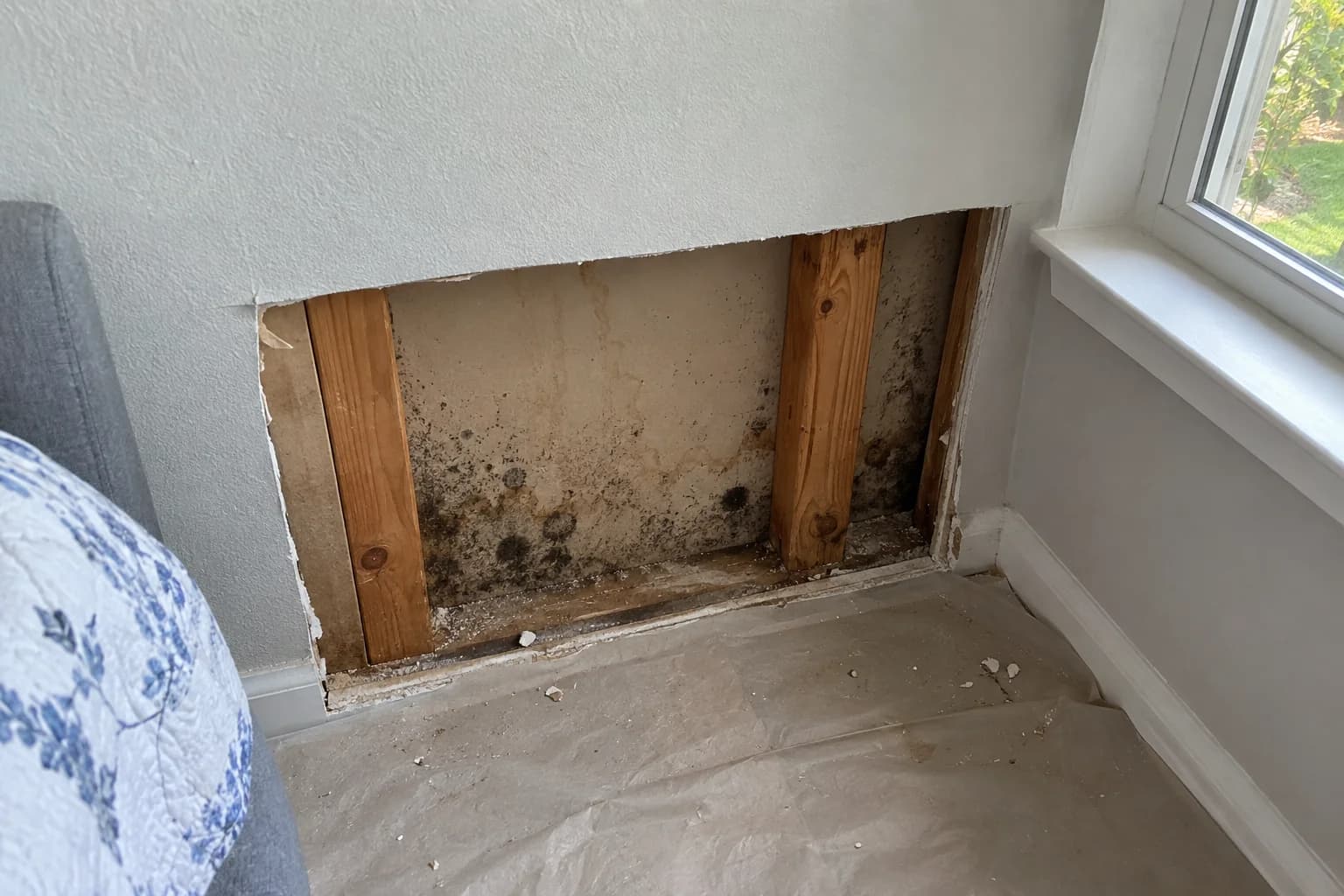
Mold Remediation
Is Black Mold Dangerous? What Florida Homeowners Should Know
Black mold gets talked about like a death sentence. The real risk is more grounded, and in Florida humidity it is common. Here is what the science says.
· 8 min read
Read article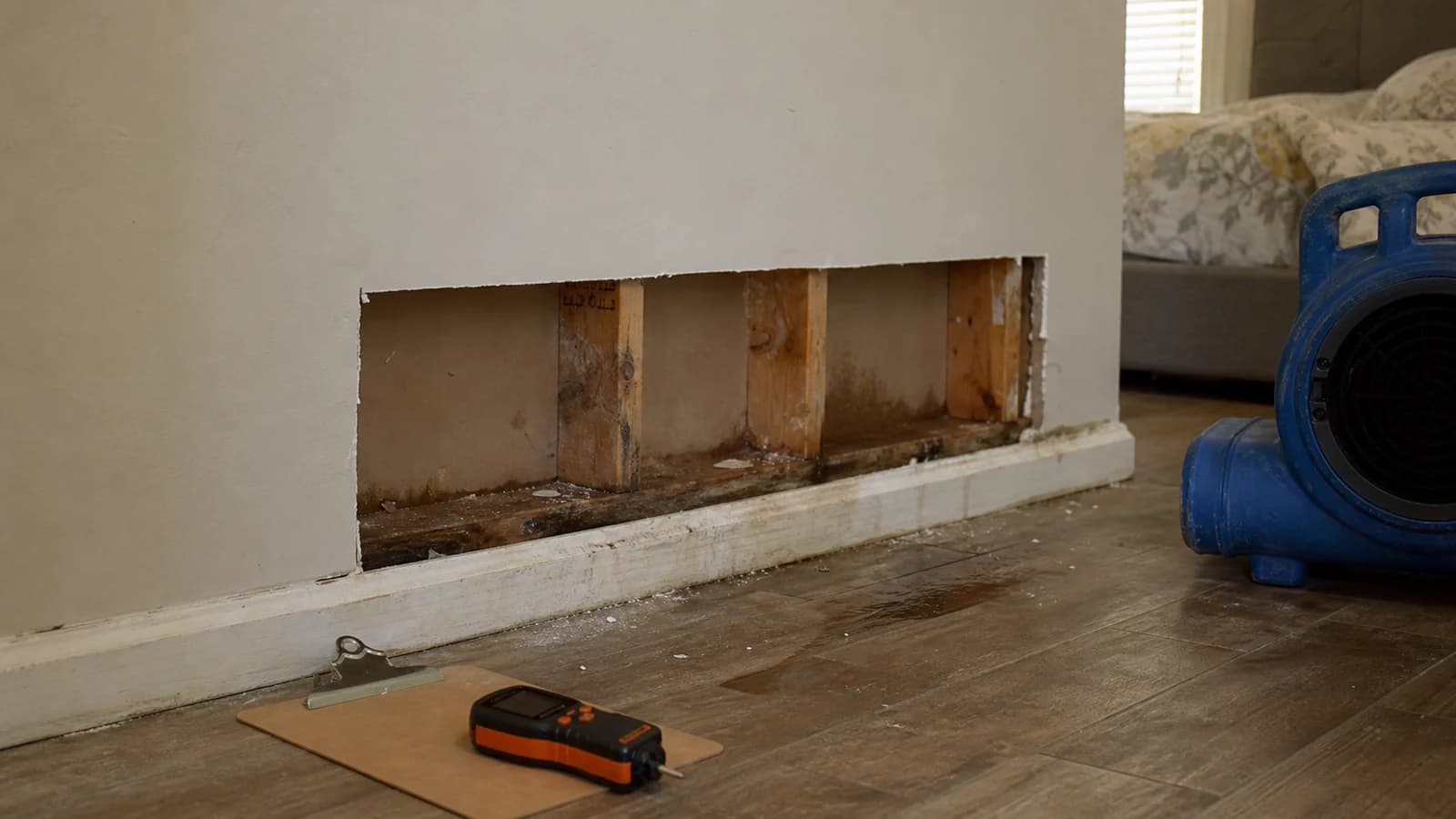
Mold Remediation
Does Homeowners Insurance Cover Mold in Florida?
Whether your Florida policy pays for mold comes down to what caused it. Here is how coverage works, what gets denied and how to protect your claim.
· 9 min read
Read article