Mold Remediation
Mold Removal Cost Per Square Foot in Florida (2026)
Professional mold removal in Florida runs $10 to $25 per square foot. See exact prices by surface type, plus what drives costs up in Florida's climate.
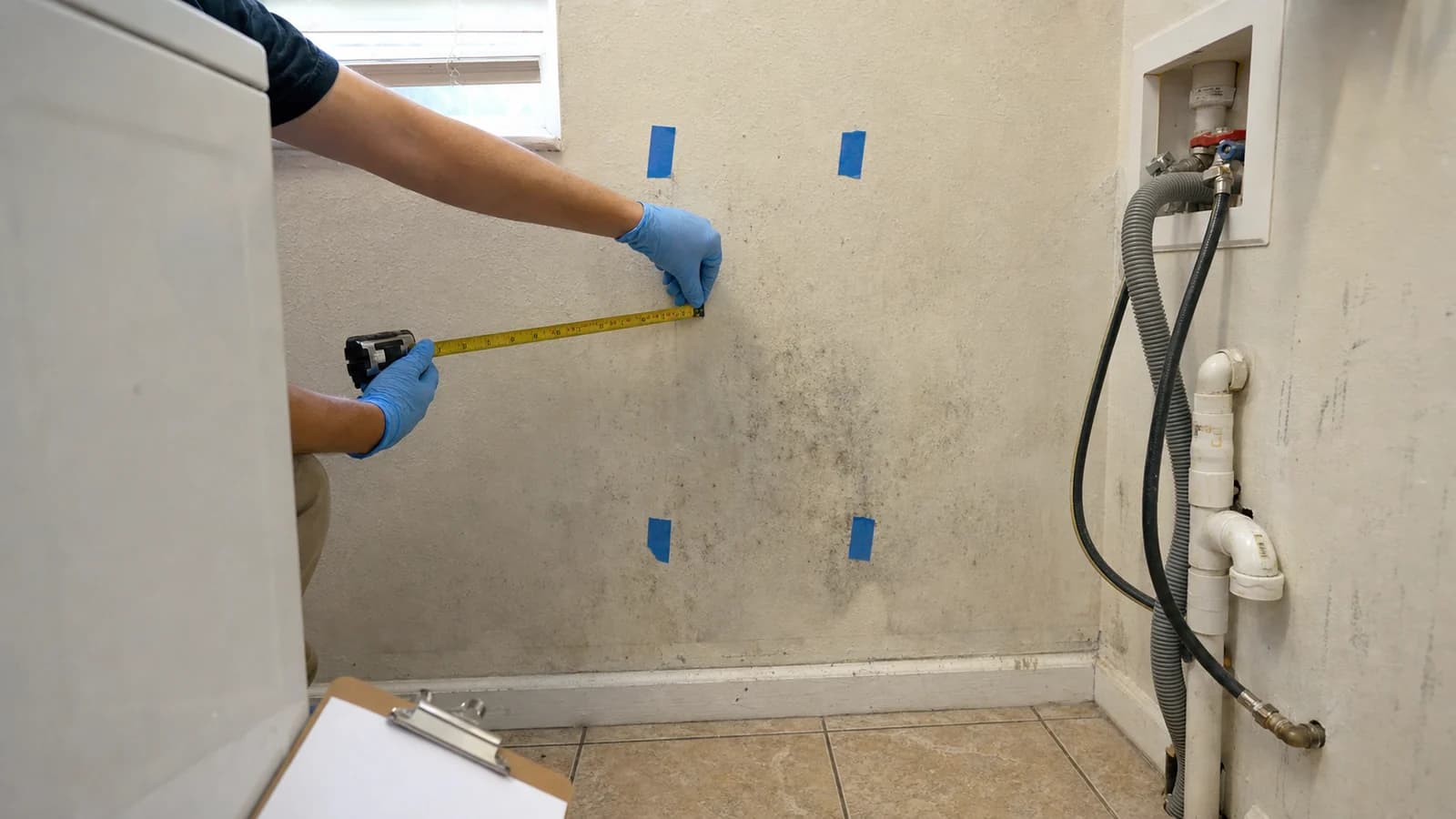
Professional mold removal in Florida runs $10 to $25 per square foot on average. That range covers standard remediation on typical surfaces. What you actually pay depends on what the mold is growing on, how deep it has gone into the material and whether the moisture source driving it has been fixed.
This article breaks down per-square-foot pricing by surface type, explains the added costs most contractors don't mention upfront and gives you the Florida context that pushes most jobs here toward the top of that range.
If you want the bigger picture on total project costs rather than per-sq-ft rates, see our companion piece: How Much Does Mold Remediation Cost in Florida?
Florida Mold Removal Cost Per Square Foot: Quick Reference
Use this table to estimate your job before calling a contractor. Measure the affected area as accurately as you can. Contractors will verify on-site, but having a rough number gets you a faster, more honest quote.
| Surface type | Cost per sq ft (FL, 2026) | Notes |
|---|---|---|
| Non-porous surfaces (tile, glass, concrete sealer) | $10–$15 | HEPA vacuuming + antimicrobial treatment; usually no replacement needed |
| Drywall (gypsum board) | $15–$25 | Mold penetrates the paper face; often requires removal and replacement |
| Wood framing and joists | $20–$30 | Sanding, HEPA vacuuming and encapsulation; replacement if structural damage present |
| Crawl space (total floor area) | $10–$25 | Priced on total crawl space sq ft, not just visibly affected area |
| Insulation (batts, blown-in) | $3–$8 per sq ft (removal only) | Mold-contaminated insulation cannot be cleaned; replacement priced separately |
| HVAC surfaces | Typically $500–$2,000 flat | Depends on system size and contamination extent |
Florida note: Most jobs here land in the upper half of that range. The reason is explained in the Florida Pricing section below.
How Contractors Actually Price Mold Removal
Per square foot is useful shorthand, but it is not how most contractors build their quotes. Understanding the full pricing model prevents surprises.
Most professional mold remediation companies charge a minimum of $500–$750 regardless of how small the job is. If your affected area is 20 square feet, you are not paying $300. You are paying the minimum. This covers mobilization, PPE setup, containment barriers and disposal.
Access difficulty is the next variable. A mold patch behind a bathroom toilet costs more per square foot than the same size patch on an open basement wall. Crawl spaces, attic rafters and inside wall cavities all carry access premiums.
Remediators also isolate the work area with plastic sheeting and negative air pressure to prevent spore migration. The larger and more complex the space, the higher this fixed cost. Running commercial HEPA air scrubbers during and after remediation adds another $200–$500 flat, independent of how large the affected area is.
Post-remediation clearance testing is separate again. A third-party inspector tests air quality after the work is complete, which runs $200–$500 and does not appear in the remediation quote. Some homeowners skip this. We recommend against it.
The last cost is the one most contractors leave off their estimate entirely: fixing the moisture source. Removing mold without addressing what caused it is a temporary fix. If water is entering through a foundation crack, a crawl space with no vapor barrier or a leaking pipe, the mold comes back. That repair cost sits on top of the remediation number.
Cost by Surface Type
Non-porous surfaces: $10–$15 per sq ft
Tile, sealed concrete, glass and metal fall here. Mold cannot root into these surfaces, so it sits on top. HEPA vacuuming followed by an antimicrobial treatment is usually sufficient. These are the fastest and least expensive jobs per square foot.
The catch: non-porous surfaces are rarely where significant mold problems live. The grout surrounding ceramic tile is semi-porous. The drywall behind the tile is fully porous. A bathroom with visible tile mold often has more extensive contamination behind the wall.
Semi-porous surfaces (drywall): $15–$25 per sq ft
Drywall is paper-faced gypsum. Mold penetrates the paper facing within 24–48 hours of water exposure. Once the paper face is compromised, surface cleaning does not remove the mold. It removes visible growth while leaving roots in the material.
The standard remediation protocol for drywall is removal. The affected section gets cut out, bagged and disposed of as contaminated waste. Replacement drywall, tape, mud and paint are priced separately and add $2 to $6 per sq ft installed, depending on finish quality.
Trying to save money by cleaning drywall instead of removing it is one of the more reliable ways to see mold return within six months.
Porous surfaces (wood framing and joists): $20–$30 per sq ft
Wood is where remediation gets expensive and where the structural stakes are highest. Mold roots into wood grain. Treatment involves HEPA vacuuming, sanding the affected surface, applying a mold-killing treatment and then encapsulating with a barrier coating.
If the wood is structurally compromised (soft, crumbling or showing signs of rot) sections require sister-framing or full replacement. That pushes costs well above $30 per sq ft for those specific areas.
Crawl space floor joists are the most common wood-mold scenario in Florida. Homes without proper vapor barriers and adequate ventilation build up humidity under the floor, and the joists sit in that wet air for months before anyone notices.
Crawl space mold: $10–$25 per total sq ft
Crawl space pricing works differently. Contractors price on the total square footage of the crawl space, not just the visibly affected sections. Mold spores are airborne, so treating only visible growth while leaving contaminated air and surfaces elsewhere in the space does not solve the problem.
A 1,200 sq ft crawl space runs $12,000–$30,000 for full remediation, which often includes vapor barrier installation or replacement. If the moisture source is not addressed, that investment repeats.
Why Drywall and Wood Cost More to Remediate
On tile or sealed concrete, mold has no root structure. Wipe it off, treat the surface and it is gone. On drywall and wood, mold grows hyphae (thread-like root structures) into the material itself. You can remove every visible trace and still have active mold living inside the wall.
This is why licensed remediators follow EPA protocols that call for removing and replacing affected drywall rather than cleaning it. The same logic applies to wood: sanding removes surface contamination, but severely affected wood requires encapsulation (sealing the entire surface with a penetrating antimicrobial coating) to prevent regrowth.
The cost difference is real and warranted. A $20/sq ft drywall job reflects the labor of cutting, bagging, disposing and replacing material, plus the containment needed to do that without spreading spores through the rest of the house. It is not padding.
Additional Costs Beyond Per-Square-Foot
The per-sq-ft rate covers remediation of the contaminated material. Several other costs attach to most jobs.
Pre-remediation mold testing runs $200–$600. Air sampling and surface swabs before work begins establish a baseline, which is useful for insurance claims and for verifying the scope of contamination.
HEPA air scrubbing adds $200–$500 flat. Commercial HEPA units run continuously during remediation. Not every company includes this in their base rate, so ask before you sign.
Disposal fees run $50–$200 depending on volume. Contaminated material is classified waste and has to be handled accordingly.
Structural repairs are separate from remediation. Replacing cut-out drywall, sister-framing damaged joists or repairing subfloor decking adds cost beyond the remediation work itself.
The biggest one most homeowners defer: the moisture source. Foundation waterproofing for a crawl space or below-grade wall runs $3,000–$15,000 depending on scope. Vapor barrier installation for a crawl space runs $1,500–$4,000. Without fixing the source, you are paying for remediation twice.
Bullfrog handles both remediation and waterproofing in a single project. Most remediation companies do not waterproof, and most waterproofing companies are not licensed for mold work. You end up coordinating two contractors, two timelines and two warranties. Our license number is MRSR5565 for mold work, and we carry a lifetime warranty on foundation waterproofing.
Florida Pricing vs the National Average
Mold remediation across the US runs $10 to $25 per sq ft for professional treatment. Florida sits at the top of that band. Severe or structural jobs push past $30. Two real factors drive it.
Florida's rainy season runs May 15 through October 15, five months of sustained high humidity. Mold growth that takes weeks to develop in a dry climate can establish itself in 24–48 hours here. Mold problems in Florida tend to be more extensive than the same problem caught at the same stage in a northern climate.
Homes that have had mold once in Florida are at higher risk of recurrence than comparable homes in lower-humidity states. Remediators price that into their work. Thorough containment, complete removal and proper post-treatment matter more here than in markets where ambient moisture is not constantly working against any gaps in the job.
Florida also requires mold remediators to hold a state license. Licensed remediators cost more than unlicensed operators. That cost is real and it protects you. Unlicensed mold work creates liability exposure that can affect your home's insurability and future sale.
Minimum Service Charges Explained
Most homeowners searching for per-square-foot pricing have a small, specific area of mold in mind: a patch under a sink, a corner of a basement wall, a few feet of baseboard in a bathroom.
If your affected area calculates to $150–$300 at standard per-sq-ft rates, you are still paying the minimum service charge of $500–$750 at most professional companies. That minimum exists because a professional job requires setup, containment, PPE, specialized equipment and compliant disposal whether the job is 10 sq ft or 100 sq ft.
A company willing to do a $150 mold job is probably spraying bleach and leaving.
The minimum charge is one of the strongest arguments for treating small mold problems before they spread. A 10 sq ft patch that doubles to 20 sq ft costs the same minimum charge. A 10 sq ft patch that spreads into wall cavities and reaches 200 sq ft crosses the threshold where the per-sq-ft rate takes over and the total bill climbs fast.
DIY Mold Removal vs Professional: The True Cost Comparison
The hardware store sells mold-killing spray for $15. That makes DIY look cheap. Once you price proper PPE and disposal, the gap closes faster than most people expect.
DIY true costs:
- N95 respirator (N100 recommended for mold): $30–$80
- Full-face respirator for larger jobs: $150–$300
- Tyvek suit and gloves: $25–$60
- Plastic sheeting for containment: $40–$80
- HEPA vacuum (purchase, not rental): $200–$600
- Antimicrobial treatment: $40–$120
- Disposal bags (contractor-grade, sealed): $30–$50
- Drywall replacement and finishing if needed: $200–$800+
A reasonably equipped DIY mold removal on a 20 sq ft patch runs $700–$2,000 once you account for proper PPE and disposal. And that assumes you did not spread spores into adjacent areas, which requires HEPA-filtered containment to prevent.
The other cost is scope. Homeowners consistently underestimate how far mold has gone. You see 10 square feet on a wall. The wall cavity holds 60. By the time the drywall is open, the job is three times larger than planned.
Professional remediation is not cheap. But the comparison to DIY is closer than the $15 spray bottle suggests, and the consequences of doing it wrong (spreading contamination, missing root growth, failing to fix the moisture source) are significant.
For jobs smaller than 10 sq ft on non-porous surfaces with no evidence of moisture intrusion, DIY cleaning with proper protective gear is reasonable. For anything involving drywall, wood, crawl spaces or a known water intrusion source, call a licensed remediator.
How to Get an Accurate Quote
Contractors quote faster and more accurately when you come prepared.
Before you call, measure the affected area: length times width for visible patches, plus height if mold runs up a wall. Write the number down. Know the surface type, because tile, drywall and wood framing price very differently. Know where the mold is located and whether it is somewhere awkward to access. Crawl spaces, wall cavities and finished ceilings all carry access premiums.
Be ready to describe the moisture history. A flood, a plumbing leak, ongoing humidity problems: the contractor needs this to scope the job correctly. If there is an active water intrusion source (a foundation crack, a failed vapor barrier, a leaking pipe) say so upfront. The moisture source is part of the solution, not a separate conversation.
When you call Bullfrog, you get a licensed mold remediator on the phone, not a call center. We cover Orlando, Tampa Bay and Sarasota and can typically schedule an on-site assessment within 48 hours. Emergency situations get same-day response.
For a free on-site assessment and written quote, call 888-603-6653 or request a free estimate online.
Florida Mold Removal Costs: Frequently Asked Questions
How much does mold removal cost per square foot in Florida?
Professional mold remediation in Florida runs $10 to $25 per sq ft on average. Most Florida jobs land in the upper half of that range. Surface type matters: non-porous surfaces (tile, sealed concrete) run $10–$15/sq ft, drywall runs $15–$25/sq ft and wood framing runs $20–$30/sq ft. Most companies charge a minimum of $500–$750 regardless of job size.
How do contractors calculate mold remediation cost?
Most contractors start with a minimum service charge ($500–$750), then add a per-sq-ft rate based on surface type and contamination depth. Access difficulty, containment requirements, disposal volume and whether moisture source repair is included all affect the final quote. Air scrubbing and post-remediation testing are priced separately.
Is it cheaper to remove drywall with mold or clean it?
Removing mold-affected drywall is more effective and cheaper over time. Mold penetrates the paper face of drywall within 24–48 hours. Surface cleaning removes visible growth but leaves root structures in the material. Most cleaned drywall shows visible mold again within six months. Full removal and replacement costs $15–$25/sq ft for remediation plus $2 to $6/sq ft to replace and finish the drywall.
What is the minimum charge for mold remediation?
Most professional mold remediation companies in Florida charge a minimum of $500–$750 regardless of affected area size. This covers setup, containment, PPE, specialized equipment and compliant disposal. A company quoting below this threshold is likely not performing professional-grade work.
Why is professional mold removal so expensive?
The cost reflects the equipment, training and compliance requirements of doing the job correctly. Licensed remediators use commercial HEPA vacuums, negative air pressure containment, full PPE and antimicrobial treatments. The work generates contaminated-waste disposal costs, and post-treatment air testing verifies the job is complete. Cutting corners on any of these steps risks spreading contamination or leaving active mold behind.
Can I negotiate mold remediation prices?
On large or complex jobs, there is sometimes room to negotiate total project price, especially if you bundle mold remediation with moisture source repair (foundation waterproofing, vapor barrier installation) in a single contract. On small or minimum-charge jobs, there is less room. The best approach is to get three quotes from licensed remediators, verify each contractor holds a Florida mold remediator license and compare the scope of what each quote includes, not just the bottom line.
What happens if I do not remove mold?
Mold spreads. Ten square feet on a wall can grow into wall cavities, reach framing and subfloor and contaminate HVAC systems within weeks. Health effects, including respiratory irritation, allergic reactions and aggravated asthma, tend to worsen with prolonged exposure, particularly for children, elderly residents and anyone with existing respiratory conditions. Structurally, mold feeding on wood framing weakens the material over time. Florida's humidity means mold does not slow down seasonally the way it does in northern climates. A problem ignored in June will be significantly larger by September.
Call Bullfrog for a Free On-Site Quote
Bullfrog Foundation Waterproofing & Mold Remediation covers Orlando, Tampa Bay and Sarasota. We hold Florida mold remediator license MRSR5565 and have completed 200+ jobs across the state.
We are the only Florida company combining licensed mold remediation, foundation waterproofing and water damage mitigation under one roof. When we remove mold, we also fix what caused it, so you are not paying for the same job twice.
Call 888-603-6653 for a free on-site assessment and written quote. We respond within 24 hours, same-day for emergencies.
Request a free estimate online or read more about our mold remediation service.
More from Bullfrog Waterproofing
Mold Remediation
How to Prevent Mold After a Flood in Florida
Mold can start within 24 to 48 hours of a Florida flood. What you do in the first two days decides whether you get mold at all. Here is the playbook.
Mold Remediation
Is Black Mold Dangerous? What Florida Homeowners Should Know
Black mold gets talked about like a death sentence. The real risk is more grounded, and in Florida humidity it is common. Here is what the science says.
Mold Remediation
Does Homeowners Insurance Cover Mold in Florida?
Whether your Florida policy pays for mold comes down to what caused it. Here is how coverage works, what gets denied and how to protect your claim.