Mold Remediation
Basement Mold Removal: Florida Guide (2026)
Mold starts colonizing wet materials within 24-48 hours. Florida makes it worse. Learn the causes, health risks, removal costs and how to stop it coming back.
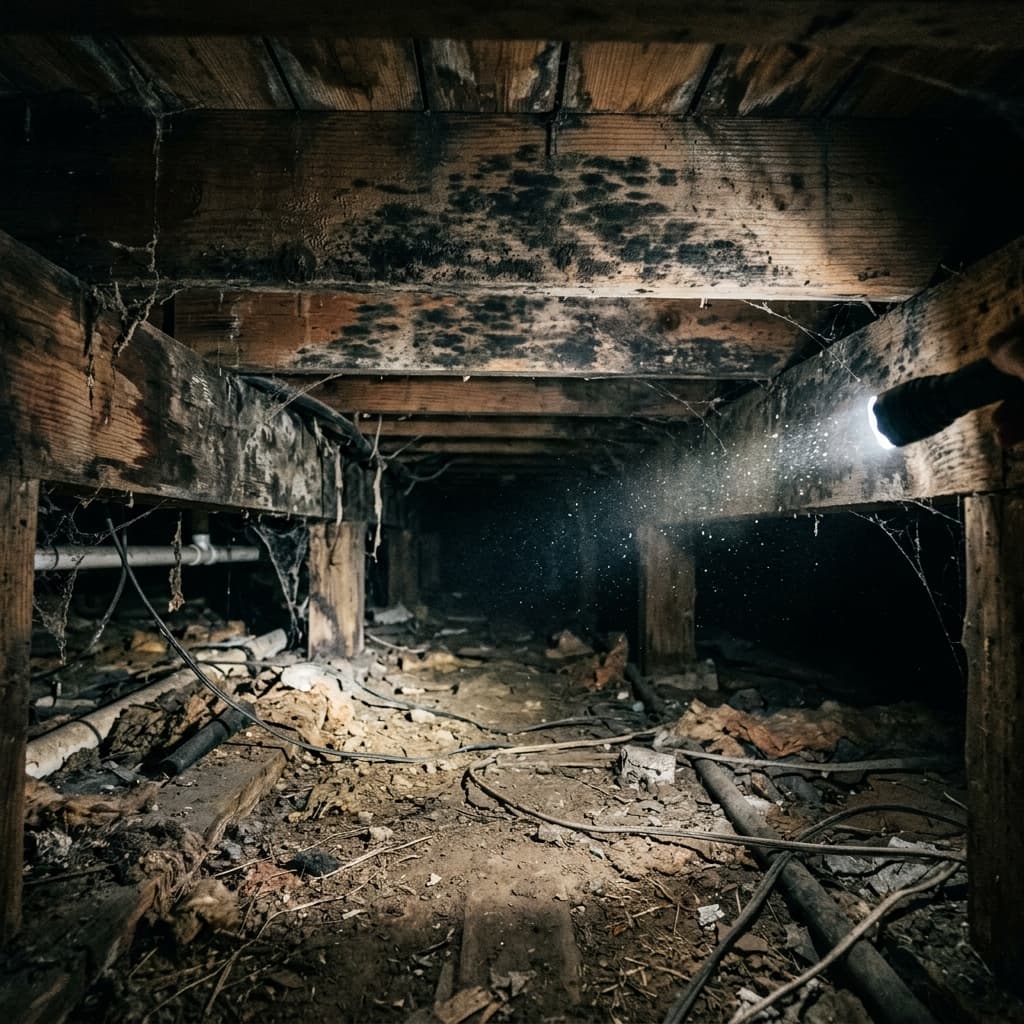
If you have mold in your basement, you have less time than you think. Mold starts colonizing wet materials within 24 to 48 hours of water intrusion. By the time you notice the smell or the dark patches on the wall, it has already been growing for days.
Florida makes it worse. The humidity here rarely drops below 60%, and rainy season runs from May through October. When water gets in, it finds the perfect environment to do damage fast.
Florida Context: Basements Here Are Different
Most Florida homes don't have basements. The water table across much of the state sits so high that digging below grade isn't practical in most areas. Some older homes in elevated parts of central Florida do have full basements, but they're the exception.
If you searched "mold in basement" and your home doesn't have a traditional basement, you may still be dealing with the same problem in a different form. Below-grade slabs, lower-level living areas, partially buried garages and crawl spaces all carry the same moisture risks. The remediation process is identical regardless of what you call the space.
This guide covers all of them. Wherever you have a below-grade area showing mold, the diagnosis, the risks and the fix apply.
Why Basements and Below-Grade Spaces Get Mold
Water gets into below-grade spaces in three main ways: it seeps through the foundation, it condenses on cool surfaces, or it floods in from outside. In Florida, all three happen regularly.
Foundation seepage is the most common source. Concrete block walls and slab joints develop gaps and cracks over time. Sandy Florida soil shifts with the wet-dry cycle of rainy season, and that movement stresses the mortar between blocks. Water follows the path of least resistance and finds those gaps.
Condensation happens when warm, humid Florida air meets a cooler concrete surface. The moisture drops out of suspension onto the cold wall or floor. You don't need a crack or structural failure. High humidity alone is enough to keep concrete surfaces damp in a poorly ventilated space.
Flooding pushes surface water directly into below-grade areas during heavy rain. Florida's flat topography and high water table mean rainwater has nowhere to go quickly. Basements, lower-level garages and below-grade slab areas sit in the path of that water.
HVAC condensation adds another layer. Air conditioning units work hard in Florida's heat. The cold surfaces of ductwork running through warm unconditioned spaces collect condensation, which drips onto walls, floors and framing below.
Once moisture gets trapped, mold follows within 24 to 48 hours.
Health Risks of Basement Mold
Mold in a basement doesn't stay in the basement. Your HVAC system pulls air from throughout the house, conditions it and pushes it through every room. Spores from a colony below grade get picked up by that air cycle and end up in your living areas, bedrooms and kitchen. The building's own ventilation does the spreading for you.
The health effects depend on the species and how long people are exposed. Nasal congestion, coughing, throat irritation, skin rashes and watery eyes are common. People with asthma, allergies or weakened immune systems respond more severely. Children and elderly residents carry the most risk.
If people in your home consistently feel worse inside than outside, and symptoms ease when they leave, that pattern is worth investigating. Airborne spores are one of the most common causes.
Some species produce mycotoxins, compounds that cause more serious effects with prolonged exposure. Black mold (Stachybotrys chartarum) is the most commonly cited example, but any significant colony in a living space warrants professional assessment rather than a DIY color identification.
Mold also does structural damage that compounds over time. It consumes drywall, wood framing and floor joists. Left alone, it turns what would have been a remediation job into a remediation-plus-reconstruction job.
Signs of Mold in Your Basement or Below-Grade Space
Visible Growth
The most obvious sign is patches of black, green, grey or white growth on walls, floors, framing members or stored items. Mold often shows up first in corners, along the base of walls, on the back of stored boxes and on exposed wood framing.
What's visible is rarely all there is. Surface mold is typically a fraction of the total colony. Growth extends behind drywall, into insulation and through framing long before it breaks through to the surface, which is why visible patches almost always undercount the actual spread.
Musty Smell
A persistent earthy or musty odor is a reliable early indicator. Active mold colonies produce microbial volatile organic compounds, and that smell is the byproduct. A dry basement doesn't smell like anything in particular. If yours does, moisture is present somewhere in the space.
Water Staining and Efflorescence
White chalky deposits on concrete walls are efflorescence, the mineral residue left behind when water moves through concrete and evaporates. It's harmless on its own, but it tells you water has been moving through that wall repeatedly. Dark staining along the base of walls and discoloration at floor-wall joints point to the same problem.
Peeling Paint and Bubbling Drywall
When moisture builds up behind a painted surface, the paint loses adhesion and starts to bubble or peel. Drywall softens and may feel spongy or show visible warping. Both signs mean moisture is in the wall cavity, which means mold conditions exist even if no growth is visible yet.
Health Symptoms Concentrated Indoors
When household members consistently have worse respiratory symptoms inside the home than outside, and symptoms ease when they leave, something in the building environment is the cause. Mold spores are among the most common culprits.
Types of Mold Found in Florida Basements
A few species show up most often in Florida below-grade spaces. Knowing what they look like has some practical value, but the treatment is the same regardless of species: containment, removal and post-remediation air quality testing. Color alone isn't reliable enough to identify a species, and species alone doesn't determine how serious the problem is.
Cladosporium is olive-green to black and one of the most common indoor mold species. It grows on drywall, wood and fabric and triggers allergic responses in sensitive individuals.
Aspergillus thrives in warm, humid conditions and shows up frequently in HVAC systems and ductwork. Several Aspergillus species produce mycotoxins.
Penicillium is blue-green and spreads fast across porous surfaces. It's common after water intrusion events and is associated with respiratory and allergic symptoms.
Stachybotrys (black mold) requires sustained moisture to establish, so you typically see it in spaces that have been wet for weeks or longer. It produces mycotoxins and grows on drywall, wood and paper-based materials.
DIY vs. Professional Removal
What You Can Handle Yourself
The EPA defines a practical threshold for homeowner cleanup: surface mold patches under 10 square feet on hard, non-porous surfaces (tile, glass, metal) caused by a single contained event like a minor plumbing leak can often be handled with proper protective equipment and an EPA-approved antimicrobial product.
Three conditions have to be true at once: hard non-porous surface, single contained moisture event, and under 10 square feet. All three. If any one of those is missing, you're in professional territory.
Florida Licensing Law
Florida requires licensing for mold remediation above certain thresholds. The Florida Department of Business and Professional Regulation licenses mold remediators and mold assessors separately, and work beyond minor surface cleaning requires a licensed remediator. Hiring an unlicensed contractor for a job above the DIY threshold is a regulatory problem, but it's also a practical one. Nobody signs off on clearance testing when there's no licensed remediator on the job, so you have no documentation that the work was actually done right.
Bullfrog Foundation Waterproofing holds mold remediator license MRSR5565.
When to Call a Professional
Call a licensed remediator when mold is behind a wall, under flooring or in any concealed space; when there has been standing water in the area; when the affected surface covers more than 10 square feet; when you can smell mold but can't find the source; when mold appears near the HVAC system; when any household member has respiratory conditions or immune vulnerability; or when the moisture source is still active.
Disturbing an established colony without proper containment pushes spores into the living space and spreads the problem to areas that weren't affected before.
How Bullfrog's Remediation Process Works
When we get a basement mold call, here's the sequence.
Air quality testing first. Before anything gets disturbed, we test airborne spore counts in the affected space. That baseline is what we measure against when the job is complete.
Containment. We seal the work area with plastic sheeting and run it at negative air pressure. Air movement is directed inward so spores can't reach clean parts of the house during the removal process.
Physical removal. All mold-contaminated materials that can't be cleaned get bagged and removed. We HEPA-vacuum remaining surfaces, then apply EPA-registered antimicrobial products. If a material can't be fully treated, it comes out.
HVAC fogging. This step gets skipped by a lot of remediation companies. Every time the air handler ran with mold in the space, it was pulling spores through the duct system. We replace the HVAC filter and fog antifungal vapor through the ductwork. Leaving the duct system untreated leaves the main recontamination pathway open.
Clearance testing. Post-remediation air quality testing confirms spore counts are within normal range. You get documentation of both readings before we close the job.
Fixing the Root Cause: Why Mold Comes Back
Remediation removes the mold that's there. If the moisture source isn't fixed, the conditions for regrowth stay in place.
A lot of companies clean up what they find and leave. If water is still entering through a foundation crack, seeping through a block wall joint or pooling against the foundation after rain, the space will be wet again in the next storm. Mold follows in 24 to 48 hours, same as before.
Bullfrog Foundation Waterproofing is the only company in Florida that handles mold remediation and foundation waterproofing under one roof. After we remediate, we seal the water entry point permanently. That work carries a lifetime warranty against water intrusion through the treated area.
Cleaning mold without sealing the source gets you a few weeks. Seal the source and you've actually fixed the problem.
Preventing Mold in Your Florida Basement
Control humidity. Keep basement humidity below 60% year-round. A standalone dehumidifier running through rainy season is one of the cheapest and most effective things you can do. Target 45 to 55% relative humidity and leave it running.
Waterproof the foundation. Interior waterproofing manages water after it enters. Exterior waterproofing stops it before it penetrates. Which approach fits depends on your foundation type and drainage situation, so a professional assessment before you spend money is worth the time.
Install a vapor barrier. A properly installed crawl space vapor barrier on below-grade floors and walls slows moisture migration through concrete. For partially below-grade slabs, pairing a vapor barrier with adequate ventilation is the starting point.
Maintain drainage around the foundation. Extend downspouts at least six feet from the foundation and confirm the grade slopes away from the building. Gutters depositing water against the foundation wall are loading that wall with moisture on every rain event.
Inspect after major rain. Walk the space and check for new water staining, efflorescence or condensation on the walls. Finding water intrusion early is the difference between a dehumidifier fix and a remediation job.
Cost of Mold Removal in Florida
Remediation costs vary based on the size of the affected area, the materials involved and the extent of moisture damage.
- Small jobs under 10 square feet in a single room: $500 to $1,500
- Mid-size jobs of 10 to 100 square feet with some material removal: $1,500 to $5,000
- Large jobs involving multiple rooms, structural materials or HVAC: $5,000 to $15,000 and up
Florida homeowners insurance policies typically include mold coverage up to $10,000. Coverage applies when mold results from a covered peril and when the homeowner takes action promptly. Delayed reporting is the most common reason mold claims get denied.
Bullfrog works with homeowners and their insurance companies on applicable claims. Accurate pre- and post-remediation documentation supports the claims process.
Acting early costs less. Mold that reaches structural framing turns a remediation job into a remediation-and-reconstruction job. Mold found during a real estate transaction affects appraisals and gives buyers negotiating leverage.
Frequently Asked Questions
What causes mold in a basement?
Moisture is the cause. Water entering through foundation cracks or wall joints, condensation on cool concrete surfaces and flooding from storm events all create the wet conditions mold needs. Florida's high water table and frequent heavy rain events make below-grade spaces particularly susceptible.
How do you get rid of mold in a basement?
Small patches on hard non-porous surfaces can be cleaned by a homeowner with an EPA-approved antimicrobial product and proper protective equipment. Anything beyond that requires a licensed mold remediator. In Florida, professional remediation means containment, physical removal, HEPA treatment, HVAC fogging and post-remediation air quality testing to confirm clearance.
Is basement mold dangerous?
Active mold growth in a living space is a health concern. Spores circulate through the HVAC system to every room in the house. Respiratory symptoms, allergic reactions and eye irritation are common effects. Certain species produce mycotoxins with more serious consequences. Children, elderly residents and people with respiratory conditions are most vulnerable.
How much does it cost to remove mold from a basement in Florida?
Costs range from $500 to $1,500 for small contained jobs up to $15,000 or more for large jobs involving structural materials and HVAC systems. Florida homeowners insurance typically covers mold up to $10,000 when the damage results from a covered peril and the homeowner responds promptly.
How do you prevent mold in a Florida basement?
Run a dehumidifier during rainy season to keep humidity below 60%. Waterproof the foundation to stop water entry. Install a vapor barrier on floors and walls. Maintain drainage that directs water away from the building and inspect the space after major rain events.
Does mold in the basement affect air quality upstairs?
Yes. Your HVAC system draws air from the affected area and distributes it through the entire house. Spores from a basement mold colony reach every room the system serves. HVAC fogging is a required step in professional remediation for exactly this reason.
Can I remove basement mold myself?
Homeowners can clean small patches of surface mold on hard non-porous surfaces. Anything in a concealed space, behind a wall, under flooring or in the HVAC system requires a licensed professional. Disturbing an established colony without containment spreads spores to areas of the house that weren't affected.
Get a Free Basement Mold Inspection
Mold assessed early is a single-trade remediation job. Left alone, it becomes a remediation-and-reconstruction job with a much bigger price tag and a longer stretch of time your family spends breathing contaminated air.
Bullfrog Foundation Waterproofing handles the full scope: licensed mold remediation under license MRSR5565, foundation waterproofing with a lifetime warranty and 24-hour emergency response for active water damage. We handle mold remediation in Orlando, mold remediation in Tampa and mold remediation in Sarasota.
Call 888-603-MOLD (888-603-6653) for a free inspection. Or request a free estimate online.
More from Bullfrog Waterproofing
Mold Remediation
How to Prevent Mold After a Flood in Florida
Mold can start within 24 to 48 hours of a Florida flood. What you do in the first two days decides whether you get mold at all. Here is the playbook.
Mold Remediation
Is Black Mold Dangerous? What Florida Homeowners Should Know
Black mold gets talked about like a death sentence. The real risk is more grounded, and in Florida humidity it is common. Here is what the science says.
Mold Remediation
Does Homeowners Insurance Cover Mold in Florida?
Whether your Florida policy pays for mold comes down to what caused it. Here is how coverage works, what gets denied and how to protect your claim.