
Every guide on preventing mold says the same thing in the end: control the moisture and you control the mold. That is true, and it is the whole game. What most guides miss is that Florida plays by harder rules. Our humidity barely lets up, our homes sit on concrete slab and block instead of basements, and storm season pushes water at the foundation for months. When one comes through, checking for mold after a Florida storm is its own job. The basics still apply here, they just need a Florida tilt. Here is how to actually keep mold out.
The one principle behind all of it
Mold needs three things: spores, a food source, and moisture. Spores are in the air everywhere and you cannot remove them. The food source is the drywall, wood and dust already in your home. Moisture is the only one of the three you can control, which is why every real prevention strategy is a moisture strategy. Take away the water and mold has nothing to grow on.
Keep humidity between 30 and 50 percent
The EPA recommends keeping indoor humidity below 60 percent, and ideally between 30 and 50. In Florida that takes active effort for much of the year. A cheap hygrometer from any hardware store tells you where you stand, and it is the most useful ten dollars you can spend on mold prevention.
To hold humidity down:
- Run your air conditioning rather than opening windows on humid days. Your AC is also your biggest dehumidifier.
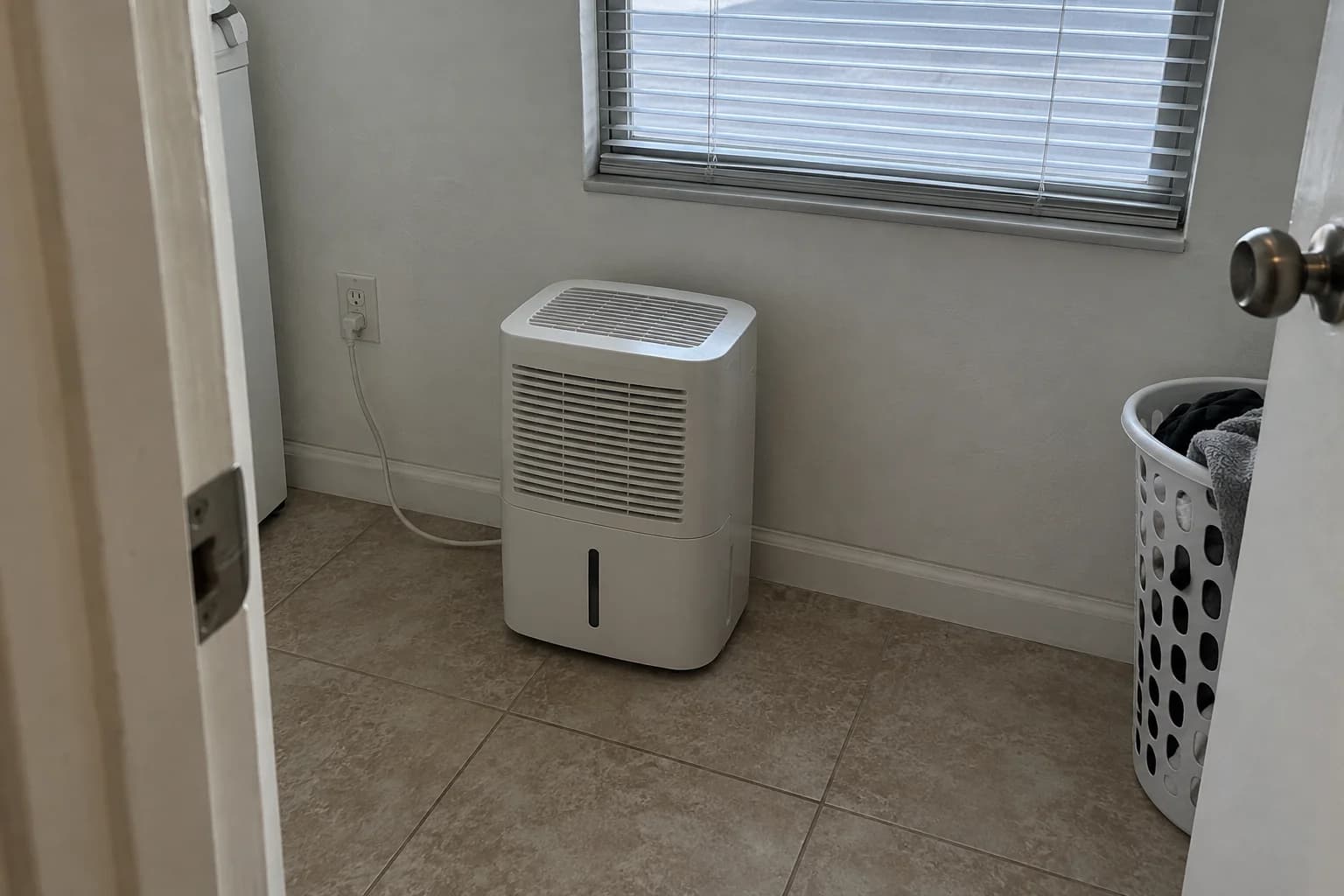
- Add a dehumidifier in the rooms that stay damp, like a closet on an exterior wall or a laundry room.
- Use exhaust fans in bathrooms during and for at least 15 minutes after a shower, and over the stove while cooking.
The number to watch
The humidity range that keeps mold from growing
- 30 to 50 percentThe EPA's ideal range for indoor humidity.
- Below 60 percentThe EPA's ceiling. In Florida it takes active effort for much of the year.
- What holds it downThe air conditioning, which is also your biggest dehumidifier. A dehumidifier in rooms that stay damp. Exhaust fans in bathrooms and over the stove.
A hygrometer tells you where you stand. Through the rainy season it is the number worth watching.
The Florida air conditioning trap
Here is a problem specific to our climate. An air conditioner that is too large for the space cools the air fast, shuts off, and never runs long enough to pull the humidity out. The room feels cold and clammy, and mold loves it. A right-sized unit that runs longer cycles actually keeps a home drier than an oversized one. If your house feels cold but damp, that is worth looking into.
Keep the system itself clean too. The coil, drain pan and ducts stay wet in our humidity, and mold that settles there gets blown through the whole house. A musty smell when the AC kicks on is the tell.
Fix leaks fast, because the clock is short
After water gets in, mold can start growing in 24 to 48 hours. That window is unforgiving in a humid climate. Treat any leak as urgent:
- Check under sinks, around the water heater, and at supply lines for slow drips
- Watch ceilings and exterior walls for stains after storms
- Dry any spill or flood within a day or two, not whenever you get to it
- Do not lay carpet in bathrooms, laundry rooms or on slab floors that can sweat
Keep water away from the foundation
This is the step national guides treat as an afterthought and the one that matters most in Florida. Our homes sit low on concrete slab and block, and our sandy soil moves water around. When rain pools against the house, water wicks through the foundation and into the walls from below, where no fan or dehumidifier can reach it.
The outdoor basics help: clean your gutters, and extend downspouts so they dump rainwater at least six feet from the house. Grade the soil so it slopes away from the foundation, not toward it. When grading is not enough, a French drain or a sump pump is the next step. But if water is already coming through the slab or block, surface fixes will not stop it. That is a waterproofing problem, and it is the root cause behind a lot of recurring mold that homeowners blame on the AC.
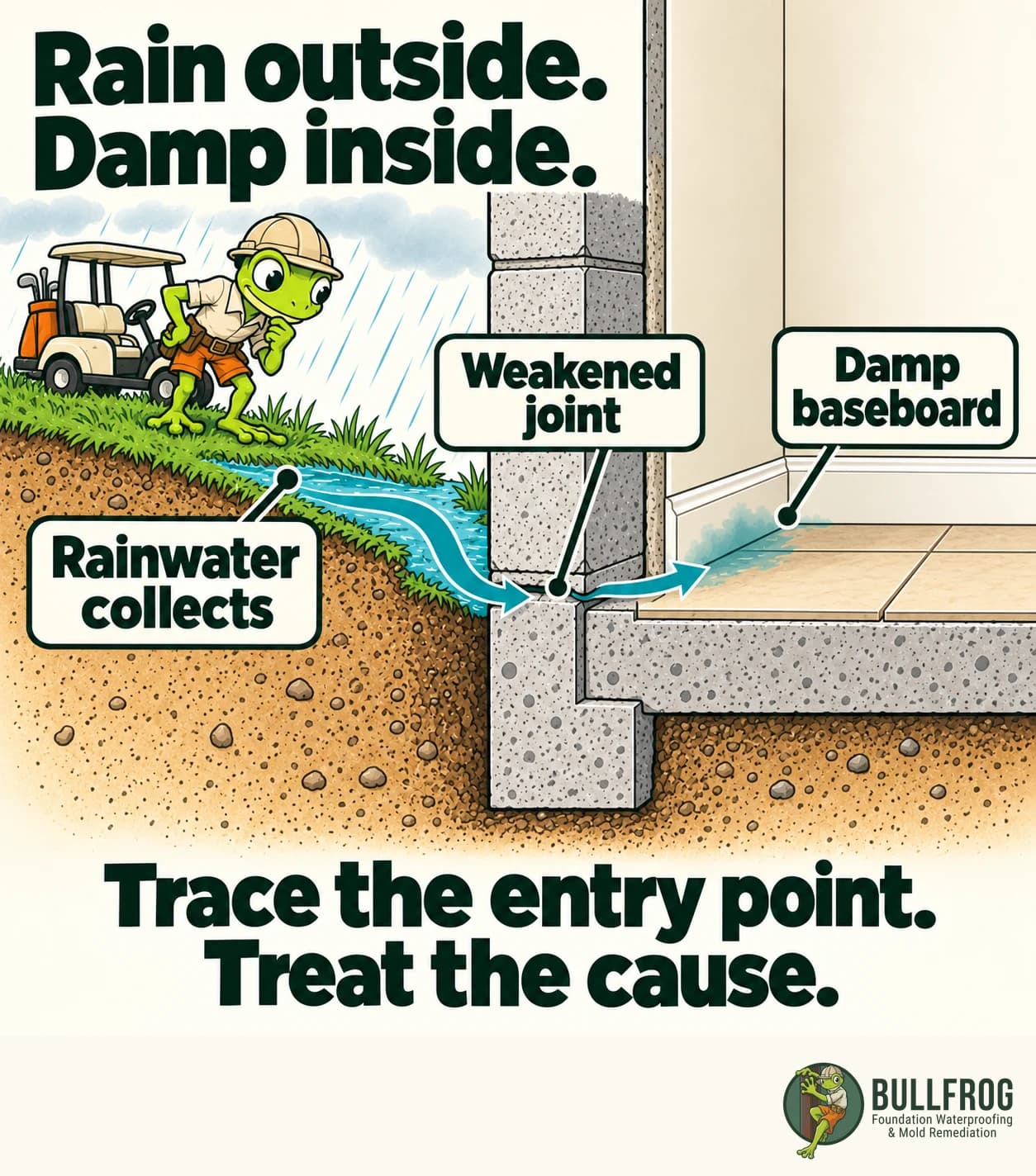
- Water collects outsideRain can leave the soil beside the wall saturated.
- A weak joint lets it throughAn opening at the wall or slab edge can provide a route inside.
- The clue appears indoorsDampness at the baseboard is a reason to trace the source.
Leaving the house for the summer? Do not shut the AC off
A specific warning for snowbirds and second-home owners. Turning the AC off completely while you are away for the Florida summer is how people come home to a house full of mold. With no climate control, indoor humidity climbs past 60 percent and stays there for months. Set the thermostat to around 78 degrees or use a humidistat rather than switching it off. The electricity costs far less than a remediation.
When prevention is not enough
If you are doing all of this and mold still appears, the moisture is coming from somewhere you cannot see, usually the foundation or a hidden leak. At that point prevention has done its job by flagging the problem, and it is time to find the source. If you want to know how to remove it safely, always take precautions.
Bullfrog Waterproofing handles both halves. We are licensed mold remediators (license #MRSR5565), and we seal the foundation that is letting the water in, in the same project, with a lifetime warranty on the waterproofing. Cleaning mold without sealing the foundation just resets the clock. We stop the water so the prevention you are doing inside can finally keep up. We work across Florida: waterproofing in Orlando, waterproofing in Tampa Bay and waterproofing in Sarasota. On the southeast coast we cover Melbourne, West Palm Beach, Boca Raton and Fort Lauderdale.

Doing everything right and still getting mold? Get a free inspection.
Available 24/7 · No obligation · Free estimates for homeowners