
Black mold looks alarming, and the panic it causes sends a lot of people straight to a spray bottle. A small patch on a hard surface is something you can handle yourself if you do it carefully. A large or recurring one is not, and knowing which is which will save you from spreading spores through the whole house. Here is the safe way to do it, and the honest line where you should stop.
First, a quick reality check on "black mold"
People use "black mold" to mean the scary toxic kind (Stachybotrys), but plenty of harmless molds are also dark. You cannot identify a species by color alone, and for cleanup purposes it does not matter much. The CDC's position is that any indoor mold growth should be removed regardless of type, and the cleanup method is the same. So skip the identification rabbit hole and focus on removing it safely.
What you need before you start
- An N-95 respirator mask (a cloth or surgical mask will not stop spores)
- Rubber gloves and safety goggles with no vents
- Old clothes you can wash hot or throw away
- A spray bottle, a stiff brush, and microfiber cloths
- Heavy-duty trash bags for any porous material you remove
Step by step for a small patch
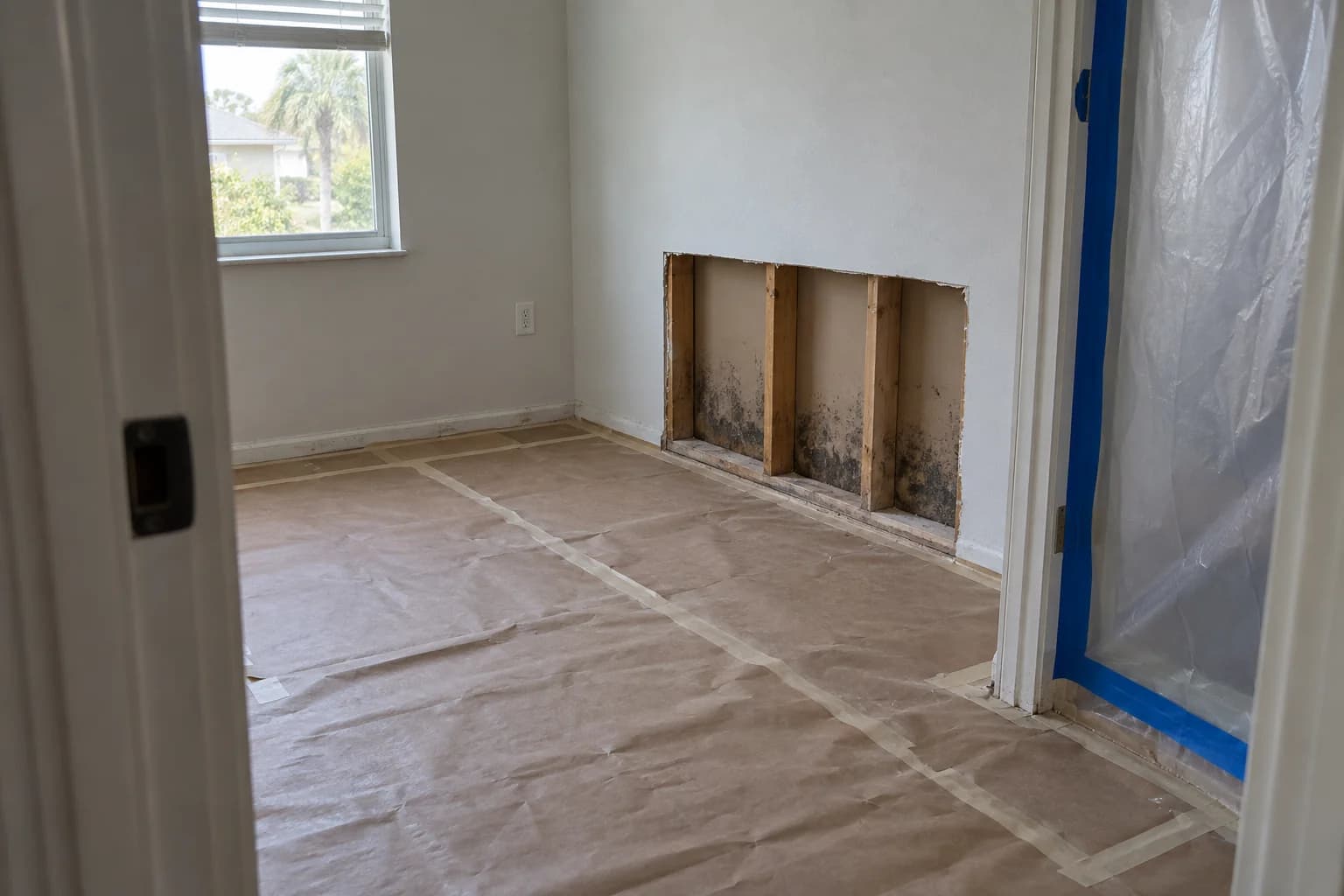
- Seal off the room. Close interior doors and cover any air vents with plastic. Turn off your HVAC or air handler so you are not blowing spores into the rest of the house. This single step matters more than the cleaner you choose.
- Pick the right cleaner for the surface. On hard, non-porous surfaces (tile, glass, tub, metal), 3% hydrogen peroxide or undiluted white vinegar both work. On porous surfaces (drywall, wood), white vinegar penetrates better than bleach. Skip bleach on porous material. It lifts the stain but feeds the roots underneath.
- Apply and wait. Spray the surface and let it sit. Ten to fifteen minutes for hard surfaces, up to an hour for porous ones so the vinegar can soak in.
- Scrub. Work the mold loose with a stiff brush or microfiber cloth. Wipe with a damp cloth and rinse it often so you are lifting the mold off rather than smearing it around.
- Dry it completely. This is the step people skip and regret. Use fans, a dehumidifier or open windows until the area is bone dry. Mold cannot regrow on a dry surface.
- Bag and toss what you cannot save. Moldy ceiling tile, carpet, or sections of drywall should go into sealed bags before they leave the room. Porous materials that soaked up water and mold usually cannot be cleaned and need replacing.
What kills black mold, and what is a myth
There is no product that kills mold "instantly and forever," no matter what a video promises. Hydrogen peroxide, white vinegar and detergent all work on the surface. The internet's love of bleach is misplaced for porous surfaces, and the EPA does not recommend it as a routine cleanup product. Whatever you use, the cleaner is only half the job. Drying the area and stopping the moisture is the half that actually keeps it gone.
Why black mold comes back (and how to make it stop)
Mold is a moisture problem wearing a costume. If a patch keeps returning to the same wall, ceiling corner or closet, something is keeping that spot wet. The usual suspects are a slow plumbing leak, condensation, a roof leak, poor ventilation, or water moving through the foundation.
In Florida that last one is common and easy to miss. Most homes here are built on concrete slab and block, not basements, and our humidity stays high. Water wicks through foundation walls or under the slab and shows up as mold along the base of an exterior wall, behind furniture, or inside a closet on an outside corner. Cleaning the surface does nothing about water arriving from outside the wall. Until the source is sealed, the mold has a standing invitation to return.
After any water intrusion, mold can start growing in 24 to 48 hours. That short window is why storm-season leaks turn into mold problems so fast here.
When to call a professional instead
The EPA's guideline is the one to remember: if the moldy area is larger than about 10 square feet (roughly 3 by 3 feet), bring in a pro. Also call a professional when:
- The mold is on drywall or wood and has set in
- It keeps coming back after you clean it
- You smell mold but cannot find it
- It may be in your HVAC system
- The water came from sewage or flooding
- Anyone in the home has asthma, allergies or a weakened immune system
EPA guideline
How much mold is too much to clean yourself
- Up to about 10 square feetRoughly a 3 by 3 foot patch on a hard surface. With an N-95 mask, gloves and goggles, and the room sealed off, a homeowner can clean it.
- More than thatBring in a pro. The same goes for mold that has set into drywall or wood, mold that keeps coming back and mold that may be in the HVAC.
Measure before you scrub. Anything bigger than a 3 by 3 foot patch is a job for a licensed remediator.
Source: EPA, Mold Cleanup in Your Home
Bullfrog Waterproofing is licensed for mold remediation (license #MRSR5565), and we fix the water source in the same project. Most remediation companies clean the mold and leave. We waterproof the foundation, dry the structure and remediate the mold under one roof, with a lifetime warranty on the waterproofing, so the problem does not come back the next time it rains. One call instead of three contractors.
We provide mold remediation in Orlando, mold remediation in Tampa and mold remediation in Sarasota.

Found mold bigger than a dinner plate? Get a free inspection.
Available 24/7 · No obligation · Free estimates for homeowners