Mold Remediation
Mold Remediation Cost in Florida: What Drives the Price
What makes one Florida mold remediation quote higher than another: affected area, access, how long it has been wet, and whether anyone fixes the water source.
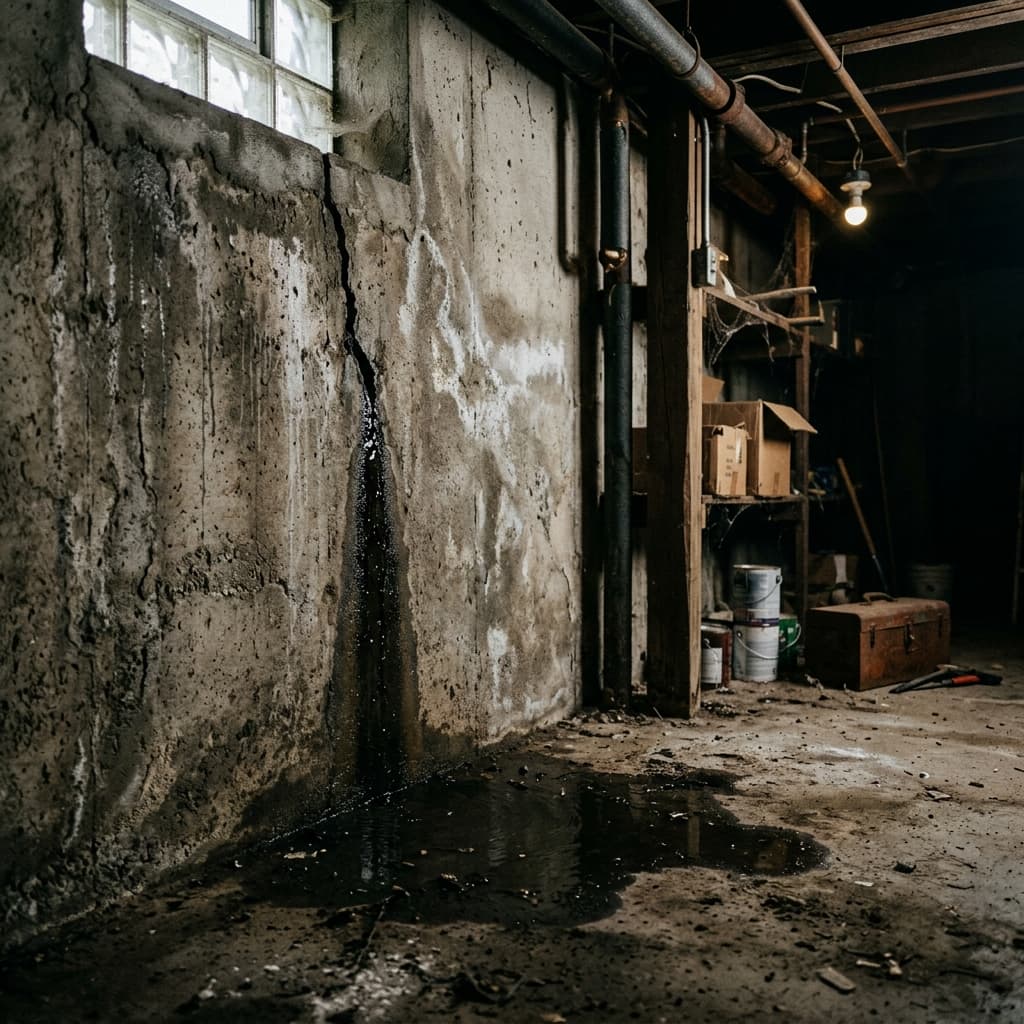
Every mold remediation quote is a quote for a scope of work, and the scope is the part you cannot see from the doorway. Two homes with an identical patch on an identical wall can price a long way apart. In one, the growth is on painted block and stops where you can see it stopping. In the other, the wall cavity has been damp since last summer, the insulation is spent and the bottom of the studs has gone soft.
So any figure you find online is a guess about your house, made by somebody who has not been inside it. What is worth knowing instead is which parts of your situation move the price. Those are the questions you can ask on the phone before anyone drives out, and settling them is the entire job of an on-site inspection.
One thing to sort out before you compare anything. Mold remediation and mold removal do not mean the same scope in every contractor's mouth. Some quotes cover wiping down what you can see. A remediation means containment, removal of the material that cannot be saved, antifungal treatment of what can, and a check at the end that it worked. A lower number attached to a smaller scope is not a better price.
What you are actually paying for
Most of the confusion between two quotes comes from the line items one of them left out. This is the usual split.
| Normally inside a remediation quote | Often a separate line, so ask |
|---|---|
| Inspection and moisture mapping | Pre-remediation lab testing and species identification |
| Containment and negative air pressure | Third-party post-remediation clearance testing |
| Removal, bagging and disposal of contaminated material | Rebuilding the drywall, insulation and trim that came out |
| HEPA vacuuming and antifungal treatment of salvageable surfaces | Correcting the water source that caused it |
| HVAC filter replacement and duct treatment | Emergency extraction and structural drying, if the event is recent |
| Final moisture readings and visual verification |
Nothing in the right-hand column is optional in the sense of being unnecessary. They are optional in the sense that a contractor can leave them out to make a number look smaller, and you will meet them later anyway.
The seven things that move the number
How much area is genuinely affected
Affected area is the biggest single driver, and it is almost always larger than the visible patch. Mold grows where the moisture is, and moisture spreads through a wall cavity far more readily than it shows on the surface. A stain the size of a dinner plate can sit in front of a foot of wet sheathing.
This is why a contractor working properly gives you a scope after an inspection rather than a price over the phone. A phone price has to assume something, and the assumption is either optimistic, in which case it changes on the day, or padded, in which case you are paying for the contractor's uncertainty.
What the mold is growing on
Non-porous surfaces can usually be cleaned and kept. Tile, sealed concrete, glass and finished metal fall here, and they sit at the cheap end because treatment is the whole job.
Porous and semi-porous materials are a different problem. Drywall, insulation, carpet, ceiling tile and particle board absorb growth into their structure, so treating the surface leaves the colony intact underneath. Those materials come out and get replaced, which turns a cleaning job into a demolition and rebuild job. Framing lumber sits in between: often treatable, sometimes too far gone.
How long it has been wet
A leak found in a week is a containment and removal job. The same leak found in eight months has usually degraded the drywall, ruined the insulation and started on the framing, and it has had time to reach places the water did not originally touch.
Florida compresses this timeline. Mold establishes within roughly 24 to 48 hours of a moisture event in this heat, and the wet season is long. NOAA does not define one wet season for the whole peninsula: South Florida's runs roughly mid-May to mid-October, Tampa's from late May to early October, and Orlando's median onset is 27 May. Wherever you are in the state, that is months of conditions in which a small unnoticed intrusion becomes a large one.
How hard the space is to work in
Access is a real labor cost, and it is the factor homeowners are most surprised by. A crawl space with eighteen inches of clearance takes far more time per square foot than an open wall in a bedroom, because the crew is working prone, dragging equipment and bagged material through a gap, and cannot use full-size tools. Attics with cathedral geometry are harder than flat-floored attics. Ductwork needs different equipment again.
Where the mold is often matters more to the price than how much of it there is.
Whether the HVAC was running
If the air handler ran during the moisture event, it has been distributing spores to every room the ducts reach. Clearing the visible growth and leaving the ductwork alone leaves a contamination pathway in place, and treated surfaces can be recontaminated within weeks.
Proper treatment means replacing the filter and fogging antifungal vapor through the duct system. It adds cost and time, which is exactly why it is the step most often missing from a cheaper quote. Ask whether it is in there.
What has to be rebuilt afterwards
Remediation and reconstruction are two different trades and two different budgets. Remediation gets the mold and the compromised material out. Something then has to go back: drywall, insulation, baseboard, flooring, occasionally framing.
Some contractors quote only the first half. That is not dishonest as long as they say so, but it makes their number look much better than a quote that includes putting your wall back. Ask for the two separated so you can see which you are being given.
Whether anyone fixes the water
This is the one that decides whether you pay once or twice.
Remediation removes what is there now. If the water source stays, the mold returns, usually within six to twelve months, and you buy the same job again with more damage attached. The real cost of solving the problem is the remediation plus the moisture correction, whether that is a foundation leak, a condensation problem, a failed window seal or a slow plumbing drip.
A contractor who can do both assesses the source and the growth in one visit, which removes a second mobilization and the scheduling gap where the wall sits open. If they can only do one, ask who is doing the other and when.
Where the cost concentrates in a Florida home
The same amount of mold is not the same job in every location. These are the areas that reliably scope larger here, and why.
Crawl spaces. The highest-risk area in most Florida homes and the most labor-intensive to work. Ground moisture, warm humid air condensing on cool surfaces and poor ventilation in older builds combine to produce active colonies quickly. Add restricted access, insulation that has to be cut out and bagged in place, and structural wood that may need treating from underneath. A vapor barrier afterwards is common and is usually its own line.
Attics. Attic mold normally traces back to a ventilation shortfall or a roof leak nobody spotted. By the time anyone looks, it can cover a lot of sheathing and rafter. Rough, porous lumber needs HEPA vacuuming rather than wiping, and the working conditions slow everything down.
Bathrooms. Steam, constant humidity and weak extraction, against drywall behind tile, wooden vanity carcasses and plywood subfloor. The question that sets the scope is whether growth is on the surface or has worked through the grout into the backing board and the framing behind it.
Wall cavities. Usually the result of slow intrusion through a foundation, a windowsill or a pipe. Cost tracks the linear feet of wall opened and whether the insulation between the studs goes out with the drywall.
HVAC systems. Rarely the origin, frequently the reason a problem is everywhere instead of somewhere. Treated as an add-on to the main scope, and worth confirming is included.
Basements. Uncommon in Florida but they exist in older homes and on higher ground. When one has mold it is nearly always structural water intrusion rather than surface humidity, so the fix involves foundation waterproofing and not just cleaning.
What a complete remediation includes
Knowing the stages helps you read a quote, because a missing stage is the usual explanation for a gap between two numbers.
Pre-work inspection
Moisture meters throughout the affected area, thermal imaging on larger jobs. This maps where water is entering, how far growth has gone past what is visible and whether structural material is compromised. It is what the scope and the price are built on.
Containment
The area is isolated with polyethylene sheeting under negative air pressure before anything is disturbed. Removal without containment distributes spores through the rest of the house, which turns one room into several.
Removal and disposal
Contaminated drywall, insulation and unsalvageable wood come out, get bagged to regulatory requirement and leave the site. Surfaces that can be kept are HEPA vacuumed.
Antifungal treatment
Applied to treated surfaces so it penetrates porous material such as framing rather than only cleaning what shows.
HVAC treatment
Filter replaced, antifungal vapor fogged through the ducts, where the system ran during the event.
Post-remediation verification
Final inspection confirming moisture is back inside acceptable range and visible growth is gone. Third-party clearance testing by an industrial hygienist can be arranged where insurance requires documentation.
Florida adds a legal layer worth knowing. Under Florida Statute 468, remediation of more than ten square feet requires a licensed mold remediator, and the state licenses individuals rather than companies. A quote well below everyone else's is worth a license-number question before anything else.
Does homeowners insurance cover mold remediation in Florida?
Sometimes, conditionally, and usually for less than people expect.
Florida homeowner policies generally include some mold coverage, but it is capped by a sublimit written into your specific policy, and it applies only when the mold follows a covered peril. A burst pipe, an appliance overflow or sudden storm-related water damage normally qualifies. Mold that developed from long-term intrusion, groundwater seepage, flooding or ongoing condensation is usually excluded, because insurers treat gradual moisture as a maintenance issue rather than damage.
That distinction does most of the work. A crawl space that has been collecting humidity for two years is unlikely to be covered regardless of what the sublimit says. Foundation waterproofing is rarely covered under any homeowner policy, since it reads as prevention rather than repair.
Read your own policy for the mold sublimit and the covered perils section rather than relying on a general figure, because both vary by carrier and by how recently the policy was rewritten. Then:
- Document before anyone starts work. Photographs, moisture readings if you have them, and a timeline of when you first noticed something.
- Ask your contractor whether the water source qualifies as a covered event.
- Get an independent assessment if a claim is denied. Adjusters do sometimes classify the water type wrongly, and the classification is what the decision rests on.
Bullfrog assists homeowners with insurance documentation where the intrusion source qualifies for a claim.
Doing it yourself
DIY cleanup looks cheap until you account for what it misses.
| Doing it yourself | Licensed remediation | |
|---|---|---|
| Legal for areas over ten square feet | No, under FL Statute 468 | Yes, with a licensed remediator |
| Containment during removal | Usually skipped | Required, and the reason it stays in one room |
| Material inside the wall | Not assessed | Assessed and removed if compromised |
| HVAC pathway | Untreated | Treated where the system ran |
| Moisture source | Rarely found | Assessed, and correctable in the same visit |
| Verification it worked | None | Final readings, clearance testing available |
| Recurrence | High | Durable once the source is fixed |
The EPA's guidance is that anything over about ten square feet, anything inside an HVAC system, and any situation involving household members with respiratory conditions or weakened immune systems should go to a professional. Below that threshold, on a non-porous surface, with a moisture source you have found and fixed, cleaning it yourself is reasonable.
The genuine cost of DIY on a real problem is paying for professional remediation later anyway, plus whatever accumulated in between. An unlicensed contractor doing work over the threshold is operating illegally, which also makes any warranty they offer you worthless.
How to get a quote you can compare
Ask these before you accept anything
- Does this include containment setup and breakdown?
- Does it include HVAC filter replacement and duct treatment?
- What happens if you open the wall and find more than the visible area suggested? How is that handled and priced?
- Is post-remediation clearance testing included, or separate?
- Is the reconstruction included, or is this remediation only?
- Who holds the Florida Mold Remediator License, and what is the number?
Compare scope, not the bottom line
A quote covering surface cleaning is not comparable to one covering containment, removal, antifungal treatment, HVAC fogging and clearance testing. Ask each contractor to itemize. Once the scopes match, the numbers mean something, and often the cheapest headline turns out to be the most expensive job.
Red flags
- No Florida Mold Remediator License for work over ten square feet
- A price given over the phone with no on-site inspection
- No mention of containment anywhere in the quote
- No verification offered at the end
- Pressure to start the same day without a written scope of work
Get the moisture source assessed in the same visit
Ask whether the contractor also does foundation waterproofing or water damage mitigation. One that does can assess the source and scope the complete fix while they are already there, which saves a second mobilization and the gap between two companies' schedules. It also means one warranty covering both halves rather than two that each stop where the other begins.
Bullfrog holds Florida Mold Remediator License MRSR5565 and does mold remediation, foundation waterproofing and water damage mitigation under one roof. Call 888-603-6653 for a free on-site inspection.
FAQ
How much does mold remediation cost in Florida?
It depends on a scope that has to be established on site, which is why we quote after an inspection rather than over the phone. The factors that set it are the area genuinely affected rather than the area you can see, what the mold is growing on, how long the material has been wet, how accessible the space is, whether the HVAC system distributed spores, how much has to be rebuilt afterwards and whether the water source is corrected as part of the work. The inspection is free for property owners, and it produces a written scope and estimate before anything starts.
What affects the cost of mold remediation?
Affected area is the largest driver, and it is usually bigger than the visible patch because moisture travels through a wall cavity more easily than it shows on the surface. After that: porous materials such as drywall and insulation have to be removed and replaced rather than cleaned, restricted spaces like crawl spaces cost more in labor per square foot, longer exposure means more degraded material, HVAC involvement adds duct treatment, and reconstruction after removal is often a separate trade and a separate line.
Why will nobody give me a price over the phone?
Because a phone price has to assume a scope, and the assumption is either optimistic, in which case it changes on the day you were counting on it, or padded, in which case you are paying for the contractor's uncertainty. The things that decide the price, how far the moisture has gone and what condition the material behind the wall is in, cannot be known from a description. A contractor who commits to a number sight unseen is telling you something about how the number was arrived at.
Does homeowners insurance cover mold remediation?
Florida policies generally include mold coverage subject to a sublimit written into your specific policy, and only where the mold follows a covered peril such as a burst pipe or an appliance leak. Mold from gradual intrusion, seepage, flooding or long-term condensation is usually excluded as a maintenance issue. Foundation waterproofing is rarely covered under any homeowner policy. Read your own policy for the sublimit and the covered perils section, document the cause of the moisture before work begins, and ask your contractor whether the source qualifies.
Is mold remediation worth it?
The comparison worth making is not remediation against nothing, it is remediation now against remediation later with the reconstruction that follows. Mold that has spread through drywall, insulation and ductwork over a year takes a much larger scope than the same problem caught while contained, and the structural repairs afterwards are their own trade. There are also health consequences to weigh, such as respiratory symptoms, worsened asthma, and symptoms that ease when you leave the house.
How long does mold remediation take?
Most single-room jobs run one to two days. Crawl spaces are typically two to three days depending on the area affected, how much insulation has to come out and the dry-out time required. Whole-house work following a major intrusion event can run five to ten days. Adding foundation waterproofing or a vapor barrier to the same project extends the timeline but removes a separate contractor visit and the scheduling gap in between.
What is included in mold remediation?
Inspection and moisture mapping, containment under negative air pressure, removal and disposal of contaminated material, antifungal treatment of surfaces that can be saved, HVAC filter replacement and duct fogging where the system ran, and post-remediation verification. Pre-remediation lab testing, third-party clearance testing and the reconstruction afterwards are commonly separate. Ask for an itemized scope so you know which you are being quoted.
How do I make sure I am not overpaying?
Get more than one quote and make sure each covers the same scope of work, because that is where the differences usually hide rather than in the rate. Confirm licensing, since Florida Statute 468 requires a licensed mold remediator above ten square feet. Avoid anyone quoting without an inspection. If one contractor can address both the mold and the moisture source, you avoid paying twice to mobilise. The free inspection is the sensible first step, because it settles the scope, and the scope is what any price is actually built on.
Get a free mold inspection
If you have found mold, get someone to look at it now. It does not stay where it is, Florida's humidity moves it faster than most people expect, and the job grows every month nobody addresses where the water is coming from.
Bullfrog Foundation Waterproofing & Mold Remediation holds Florida Mold Remediator License MRSR5565 and covers mold remediation in Orlando, mold remediation in Tampa and mold remediation in Sarasota. We handle mold remediation, foundation waterproofing and water damage mitigation ourselves, so the mold and the moisture source can be assessed in the same visit under one warranty.
Call 888-603-6653 or request a free estimate online. We will tell you what we can see and what it takes to fix it.
More from Bullfrog Waterproofing
Mold Remediation
How to Prevent Mold After a Flood in Florida
Mold can start within 24 to 48 hours of a Florida flood. What you do in the first two days decides whether you get mold at all. Here is the playbook.
Mold Remediation
Is Black Mold Dangerous? What Florida Homeowners Should Know
Black mold gets talked about like a death sentence. The real risk is more grounded, and in Florida humidity it is common. Here is what the science says.
Mold Remediation
Does Homeowners Insurance Cover Mold in Florida?
Whether your Florida policy pays for mold comes down to what caused it. Here is how coverage works, what gets denied and how to protect your claim.