Orlando Storm Watch
Orlando's lake country and karst soil
flood from the ground up.
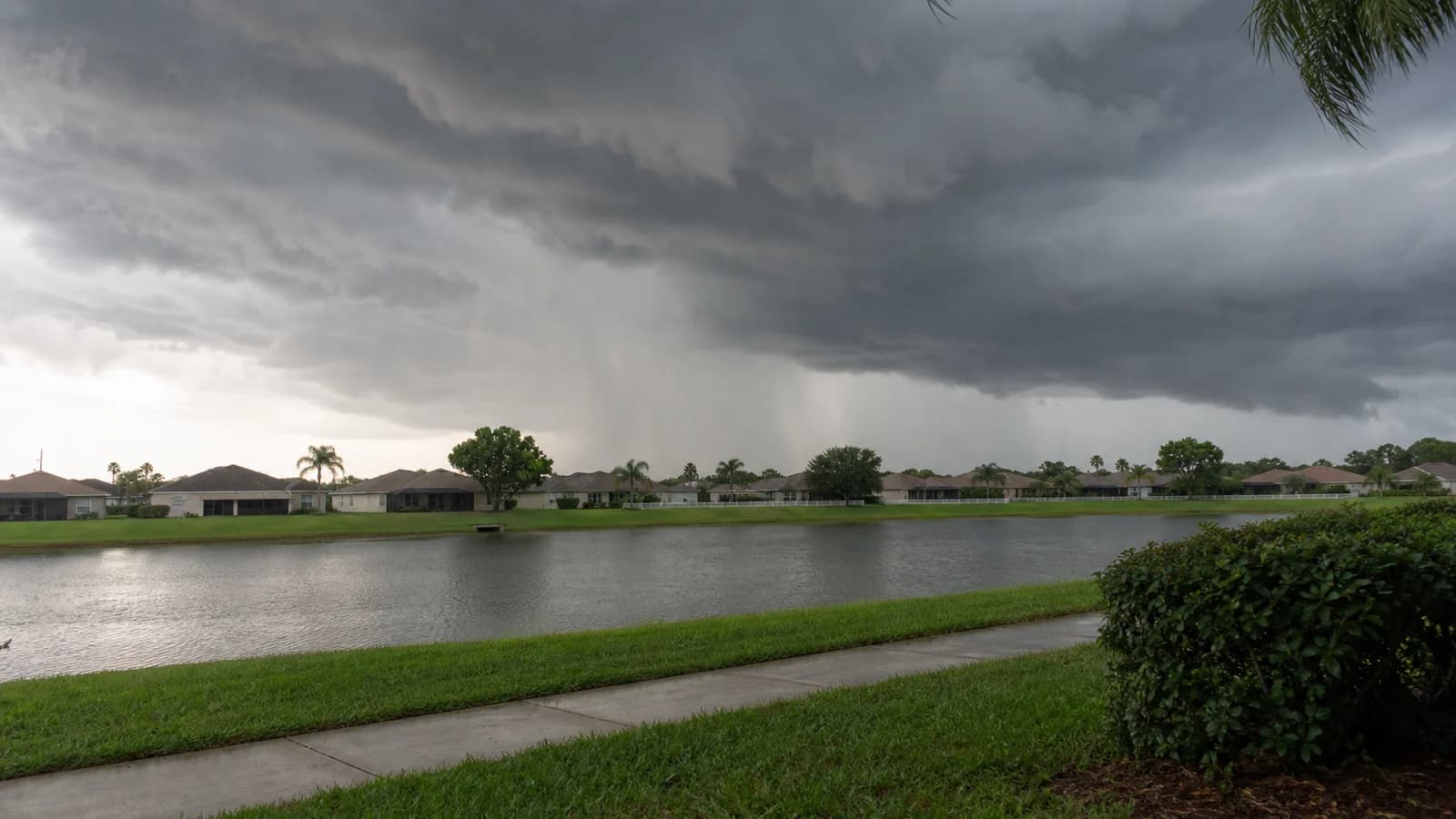
Orlando sits inland on sandy soil over porous karst limestone, so storm water reaches foundation walls in hours after heavy rain. Track watches, warnings and rainfall for MetroWest, Windermere, Dr. Phillips, Winter Garden and Ocoee. Hurricane Ian flooded the Econlockhatchee River basin in September 2022, triggering National Guard airboat rescues near UCF. We're available 24/7 if water gets in.
Active Alerts for Orlando
SevereFlood Warning
Lake, FL; Volusia, FL
Oct 14, 9:34 PM → Oct 15, 11:00 AM ET
Flood Warning
Flood Warning issued October 14 at 9:34PM EDT by NWS Melbourne FL
...The Flood Warning continues for the following rivers in Florida... St Johns River Near Astor affecting Lake and Volusia Counties. .The St Johns River at Astor is forecast to remain in Minor Flood Stage through Friday, as previous heavy rainfall continues to drain through the basin. However, strong northeasterly winds are forecast this weekend and will return the river to Moderate Flood Stage. For the St. Johns River...including Astor...Moderate flooding is forecast. * WHAT...Minor flooding is occurring and moderate flooding is forecast. * WHERE...St Johns River near Astor. * WHEN...Until further notice. * IMPACTS...At 3.0 feet, Water approaches or may enter lowest homes on or near Wildhog Road and nearby canals. Flooding reaches the parking lot of the Juno Trail Apartments. Flooding on portions of Alligator Road and Holiday Road. Lowest lying yards along Blue Creek are flooded. Roads at Astor Landing Campground and Lake Dexter Boat Ramp begin to flood. Water enters lower homes closest to the river on McPherson Lane. * ADDITIONAL DETAILS... - At 8:30 PM EDT Wednesday the stage was 2.7 feet. - Bankfull stage is 2.0 feet. - Recent Activity...The maximum river stage in the 24 hours ending at 8:30 PM EDT Wednesday was 2.9 feet. - Forecast...The river is expected to remain steady above flood stage at 2.7 feet. - Flood stage is 2.3 feet. - http://www.weather.gov/safety/flood
What to do
Motorists should not attempt to drive around barricades or drive cars through flooded areas. Caution is urged when walking near riverbanks. Additional information is available at www.weather.gov. The next statement will be issued Thursday morning at 1100 AM EDT.
Source: NWS Melbourne FL, National Weather Service
Orlando 7-Day Forecast
70°
Feels like 74°
Clear
Conditions
91%
Humidity
67°
Dew point
5 mph
Wind · gusts 9
Today
Overcast
88° 69°
6%
Fri
Overcast
89° 66°
66%
Sat
Drizzle
81° 71°
43%
Sun
Drizzle
79° 71°
22%
Mon
Drizzle
84° 73°
9%
Tue
Drizzle
84° 73°
8%
Wed
Drizzle
84° 70°
9%
Is Your Orlando Home at Risk?
A live read on the two things that put water and mold into Florida homes: how mold-friendly the air is, and how saturated the ground around your foundation has become.
Mold Risk Index
Humid air, but no recent water to feed it. Keep the AC running and damp rooms ventilated.
67°
Dew point
91%
Humidity
70°
Air temp
Ground Saturation
Wetter than 91% of October soil readings on record.
Among the wettest on record for the season. Saturated ground forces water hard against basements, slabs and crawl spaces.
0.0"
Last 3 days
0.1"
Last 7 days
0.19
Soil m³/m³
Days of rain have soaked the ground around Orlando homes.
- Saturated soil presses water against the foundation, the main cause of seepage through cracks and slab seams.
- Clear gutters and downspouts and make sure they discharge well away from the foundation.
- Recurring water in a basement or crawl space is a waterproofing problem, not a mopping one. Sealing the source is the fix.
Orlando Live Radar
Common Questions
What areas around Orlando does this cover?
My home took on water after a storm. What should I do first?
Why does Central Florida's soil make foundation flooding worse?
What recent storms caused the most water damage in the Orlando area?
If Water Got In, We Can Help
Get warned before the water does the damage.
Free email alerts the moment the National Weather Service issues a watch or warning for your area, so you can act before the storm, not after.
- Real-time National Weather Service watches & warnings
- 24/7 emergency response the moment water gets in
- Seasonal prep tips, no spam, unsubscribe anytime
How we calculate this: data & sources
Mold Risk Index
A conditions estimate grounded in the VTT (Viitanen) mould-growth model from building science: mold needs sustained humid, warm conditions and a moisture source, so the index only climbs into High/Severe when both line up, not on an ordinary muggy day. See also the WUFI Mould Index implementation.
Ground Saturation
Today's soil moisture expressed as a percentile against this location's own history for the month, the same anomaly method behind NOAA's CPC Soil Moisture and NLDAS drought products. “Wetter than usual” is the honest signal for water pressure against a foundation.
Storm conditions in Orlando. When water gets in, we're already on it.
Standing water turns into mold inside the walls within 24–48 hours. We're the one team that extracts the water, dries the structure, and seals the foundation source so it doesn't happen again, available 24/7 across Florida.
Available 24/7 · No obligation · Free estimates for homeowners
Bullfrog Storm Watch aggregates public data from the U.S. National Weather Service and forecast data from Open-Meteo (CC BY 4.0). It is provided as a convenience and is not an official warning source. For life-safety decisions, always follow the National Weather Service (weather.gov) and your local emergency management agency.