Mold Remediation
Does Homeowners Insurance Cover Mold in Florida?
Whether your Florida policy pays for mold comes down to what caused it. Here is how coverage works, what gets denied and how to protect your claim.

Does Homeowners Insurance Cover Mold in Florida? What Actually Gets Paid
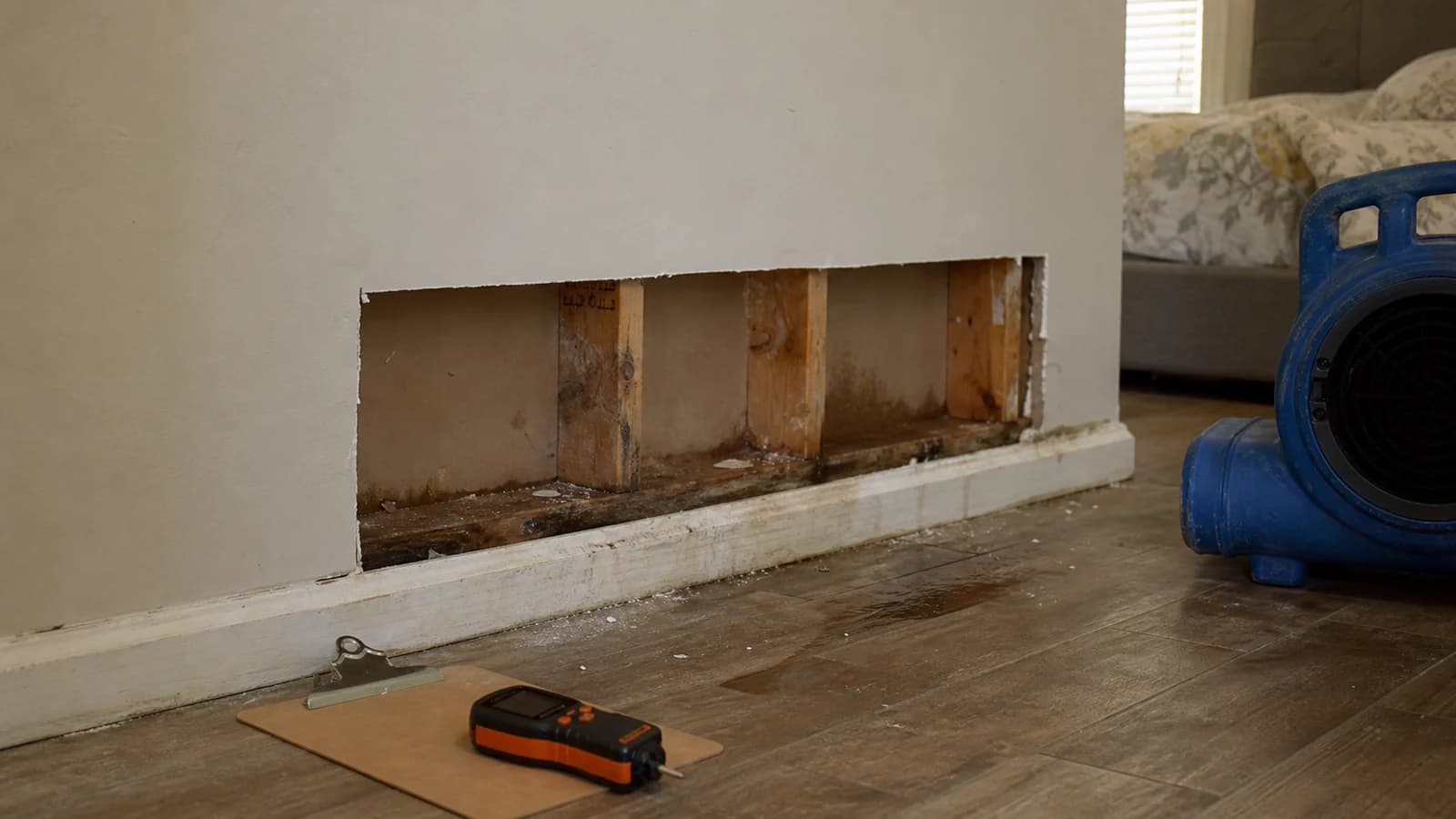
Almost every homeowner asks this question at the worst possible moment, standing in front of a wall that was fine last month and is now spotted black. The short answer is that Florida homeowners insurance sometimes covers mold, but only when the cause is a covered event, and Florida policies write mold coverage more tightly than almost any state in the country. What you do in the first few days matters as much as what your policy says.
The one question that decides your claim
Insurers do not ask "is there mold?" They ask "what caused the mold?" That single answer decides whether you get a check or a denial.
Mold is treated as a result, not a cause. So the adjuster traces it back to the water that fed it. If that water came from a sudden and accidental covered event, your mold has a path to coverage. If it came from something excluded, the mold is excluded with it. Two houses on the same street can have identical mold and get opposite answers, purely because of where the water started.
Covered sources usually include:
- A burst pipe or a supply line that lets go behind a wall
- A water heater that ruptures
- An overflow from an appliance like a washing machine or dishwasher
- A sudden roof breach from wind during a covered storm
Excluded or limited sources usually include:
- Flooding of any kind, including storm surge and rising water
- A slow leak that dripped for weeks or months before anyone noticed
- Humidity, condensation and poor ventilation
- Deferred maintenance, like a roof or seal the insurer says you should have fixed
That last category is where most Florida denials come from. Our climate grows mold on humidity alone, and "you let it happen" is the easiest reason for a carrier to say no.
How Florida limits mold coverage
Even when the cause is covered, Florida is a special case. After years of hurricane losses and a wave of mold litigation, carriers here narrowed mold coverage hard. Most standard Florida homeowners policies now carry a mold sublimit, a separate cap that applies to mold specifically, no matter how high your overall dwelling limit is.
That sublimit is commonly around $10,000, and on some policies it runs lower, closer to $2,500. You can raise it, but only before a loss: the Florida Department of Financial Services notes that a mold endorsement can increase the limit to $25,000 or $50,000. If you have never looked at your declarations page, this is the number to find. A whole-house mold job in Florida can pass that cap quickly, and anything above it comes out of your pocket.
Citizens Property Insurance, the state-backed carrier that now covers a large share of Florida homes, follows the same pattern: mold is covered only as a consequence of a covered peril, and it is capped. If you are with Citizens or one of the smaller carriers that filled the gap after national insurers pulled back, assume your mold protection is limited until you confirm otherwise.
Flooding is the big exclusion
This is the part that catches people after every storm. A standard homeowners policy in Florida does not cover flooding, and it does not cover mold caused by flooding. Storm surge, rising water and water that comes in across the ground are all "flood," and flood is a separate policy through the National Flood Insurance Program or a private flood insurer.
So if a hurricane pushes water into your living room and mold follows, your homeowners policy will very likely decline the mold along with the flood. If wind tears open your roof first and rain comes through that opening, that same water may be covered, because wind damage is a covered peril and the water is "wind-driven rain," not flood. The difference between the two can be a few feet and the whole claim, which is exactly why documentation matters so much.
If you are dealing with post-storm growth right now, our guide on what to check for mold after a hurricane in Tampa Bay walks through the first steps in order.
What gets your claim denied
Adjusters look for reasons the loss was gradual or preventable, because those shift it out of coverage. The most common denials in Florida come down to:
- Gradual damage. A leak that clearly ran for weeks reads as maintenance, not a sudden event.
- Late reporting. Wait too long and the carrier can argue the delay made the damage worse.
- No proof of the source. If nobody can show where the water came from, the insurer defaults to the exclusion.
- Flood, labeled correctly. Rising water is flood, and homeowners policies exclude it.
The through-line is proof. When you cannot show a covered cause, the policy language does the rest.
How to protect your claim in the first 72 hours
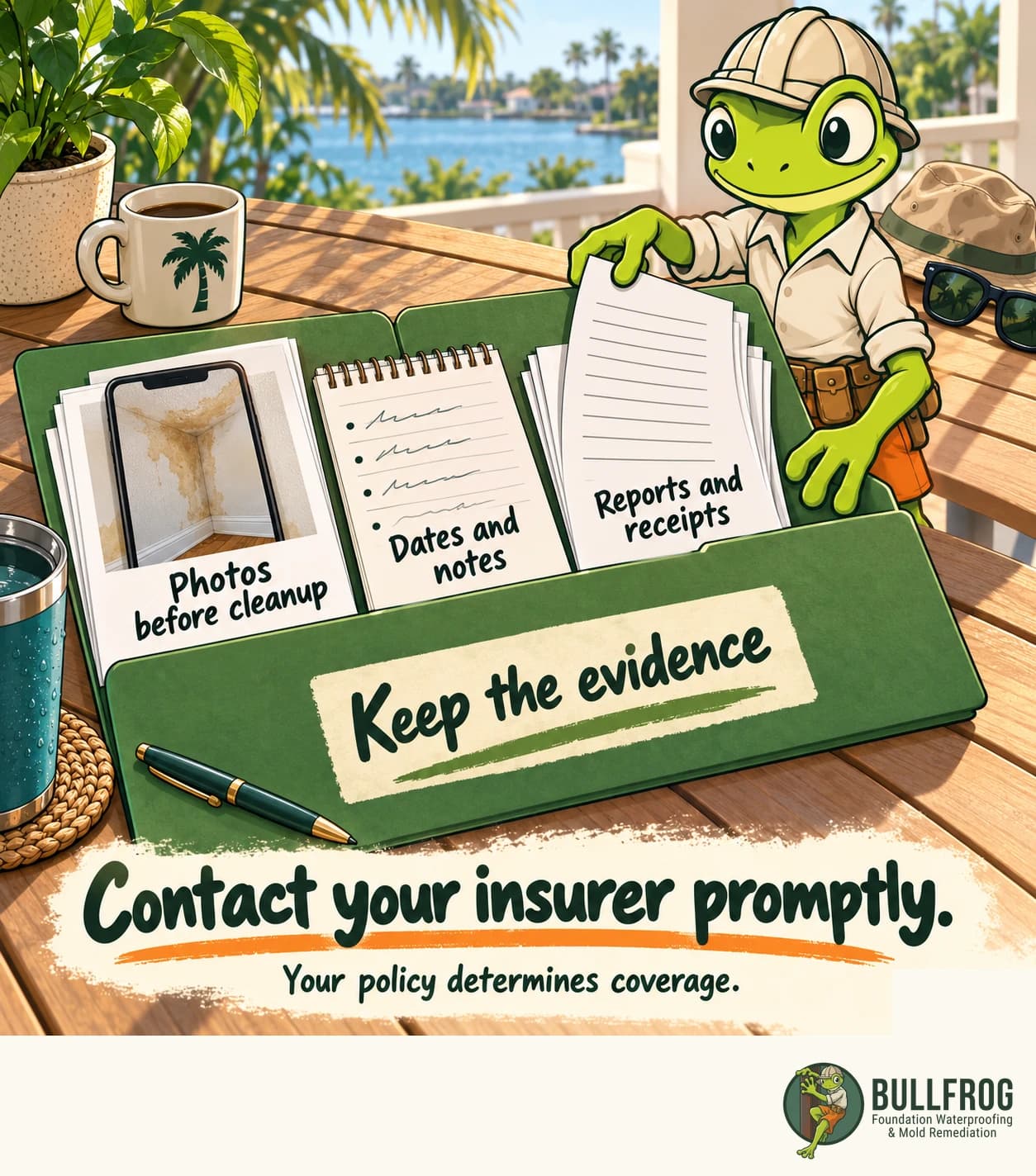
The days right after you find mold are when a claim is won or lost. Do these things in order:
- Photograph everything before you touch it. Wide shots of the room, close-ups of the mold and the source if you can find it. Timestamped photos are your evidence.
- Stop the water, do not hide it. Shut off the supply or tarp the roof, but do not rip out drywall before you have documented it and reported the claim.
- Report it promptly. Call your carrier and open the claim. Florida policies have notice requirements, and prompt reporting removes one of the easiest reasons to deny.
- Get a professional moisture assessment. A licensed inspection with moisture meters documents how far the water traveled and ties the mold to its source, which is the single most useful thing you can hand an adjuster.
A professional mold inspection in Orlando or your local market gives you a written record of the cause and the extent, before anyone starts arguing about it.
Where a licensed remediator helps the claim
There is a real difference between a handyman who "does mold on the side" and a licensed Florida mold remediation contractor. Florida licenses mold assessors and remediators for a reason, and an insurer takes documentation from a licensed team more seriously than a scribbled invoice.
A licensed remediator gives you a scope of work, moisture readings, before-and-after photos and a clearance record. That paper trail is what supports the dollar figure on your claim. It also protects you on the back end, because a job done to standard and documented properly is far harder for a carrier to dispute later. If you want to understand what sets the price of a remediation job, our Florida mold remediation cost guide explains what drives it.
Handling the water damage and the mold with one licensed contractor also keeps the story straight. When water damage restoration and mold removal come from separate crews, the timeline gets muddy, and a muddy timeline is what adjusters use to shrink a payout.
FAQ
Does homeowners insurance cover mold in Florida? Sometimes. It covers mold when the mold results from a sudden, covered event like a burst pipe, and it excludes mold from flooding, long-term leaks, humidity or neglect. Even when covered, most Florida policies cap mold with a sublimit, often around $10,000.
What is a mold sublimit? A separate cap that applies to mold only, regardless of your total dwelling coverage. Many Florida policies set it near $10,000, some lower, and you can raise it with an endorsement purchased before a loss.
Does insurance cover mold from a hurricane? Only if the water was wind-driven, such as rain entering through a wind-damaged roof. Mold from storm surge or rising water is flood damage, which a standard homeowners policy excludes. Flooding needs a separate flood policy.
Will my claim be denied if the leak was slow? Often, yes. A leak that ran for weeks reads as gradual damage or deferred maintenance, which most policies exclude. Sudden and accidental water has the best chance of coverage.
Should I clean up the mold before filing? No. Document everything with photos first and report the claim before you remove materials. Tearing out drywall before the adjuster sees it can weaken your case.
How do I get insurance to pay for mold removal? Tie the mold to a covered event and document it. Report the claim promptly, photograph the damage and the water source before you remove anything, then get a licensed inspection that links the mold to a sudden, covered cause. A documented covered source is what turns a denial into a payout.
What if my mold claim is denied? You can push back. Ask for the denial in writing with the specific policy language cited, then supply evidence that the cause was covered, such as an inspection report tying the mold to a burst pipe rather than gradual moisture. You can request a re-inspection, escalate to the carrier's appraisal process or bring in a public adjuster or attorney for a large loss.
Does Citizens Insurance cover mold? Citizens follows the same structure as other Florida carriers: mold is covered only as a result of a covered peril, and it is capped by a sublimit. Check your declarations page for your specific limit.
Book a Free Inspection
Not sure whether your mold traces back to a covered event? Get a licensed inspection that documents the source and the extent, so you walk into your claim with proof instead of guesswork.
Available 24/7 · No obligation · Florida mold license MRSR5565
Free on-site estimates are for homeowners and property owners. Renting or buying? See your options.
More from Bullfrog Waterproofing
Mold Remediation
How to Prevent Mold After a Flood in Florida
Mold can start within 24 to 48 hours of a Florida flood. What you do in the first two days decides whether you get mold at all. Here is the playbook.
· 8 min read
Read article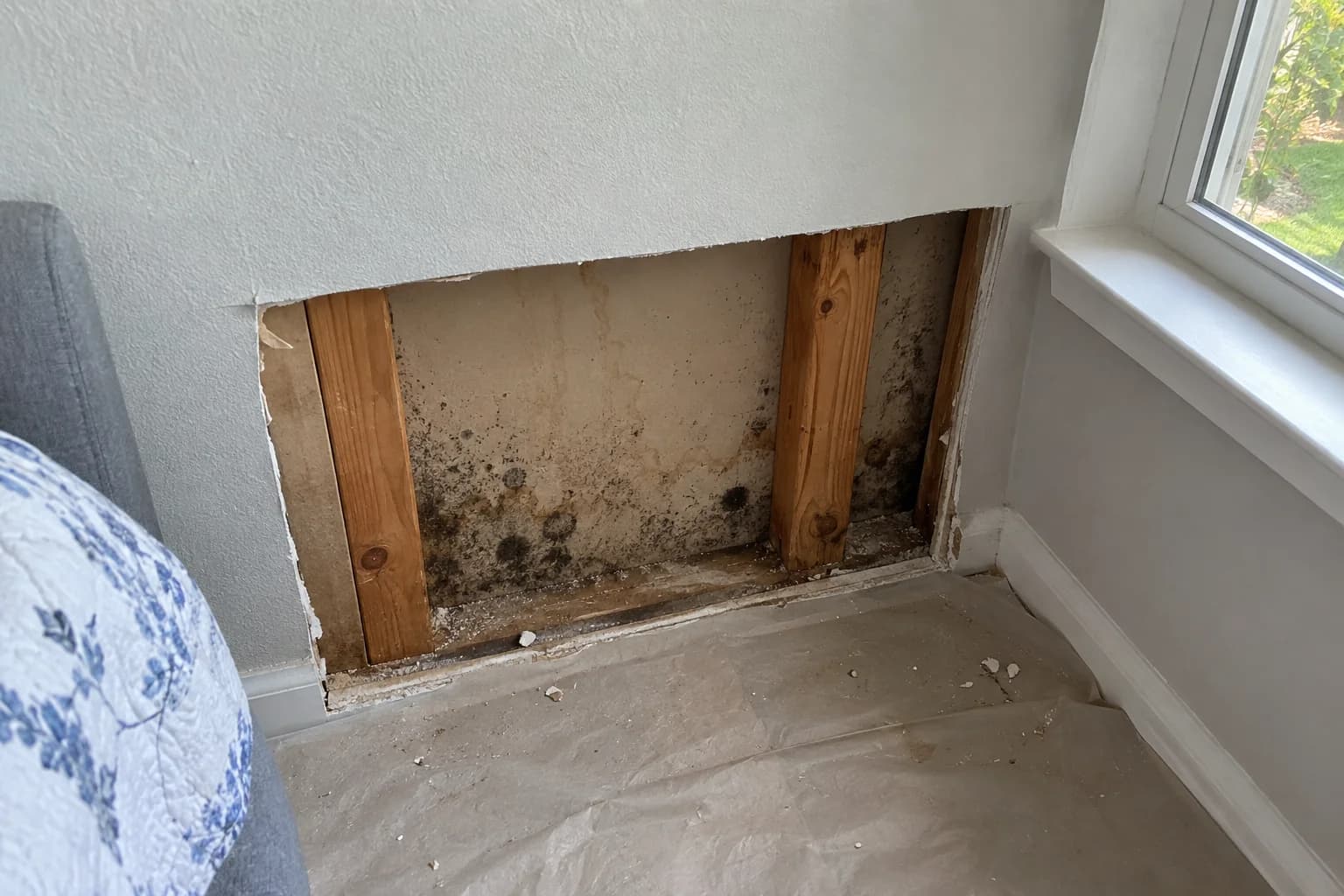
Mold Remediation
Is Black Mold Dangerous? What Florida Homeowners Should Know
Black mold gets talked about like a death sentence. The real risk is more grounded, and in Florida humidity it is common. Here is what the science says.
· 8 min read
Read article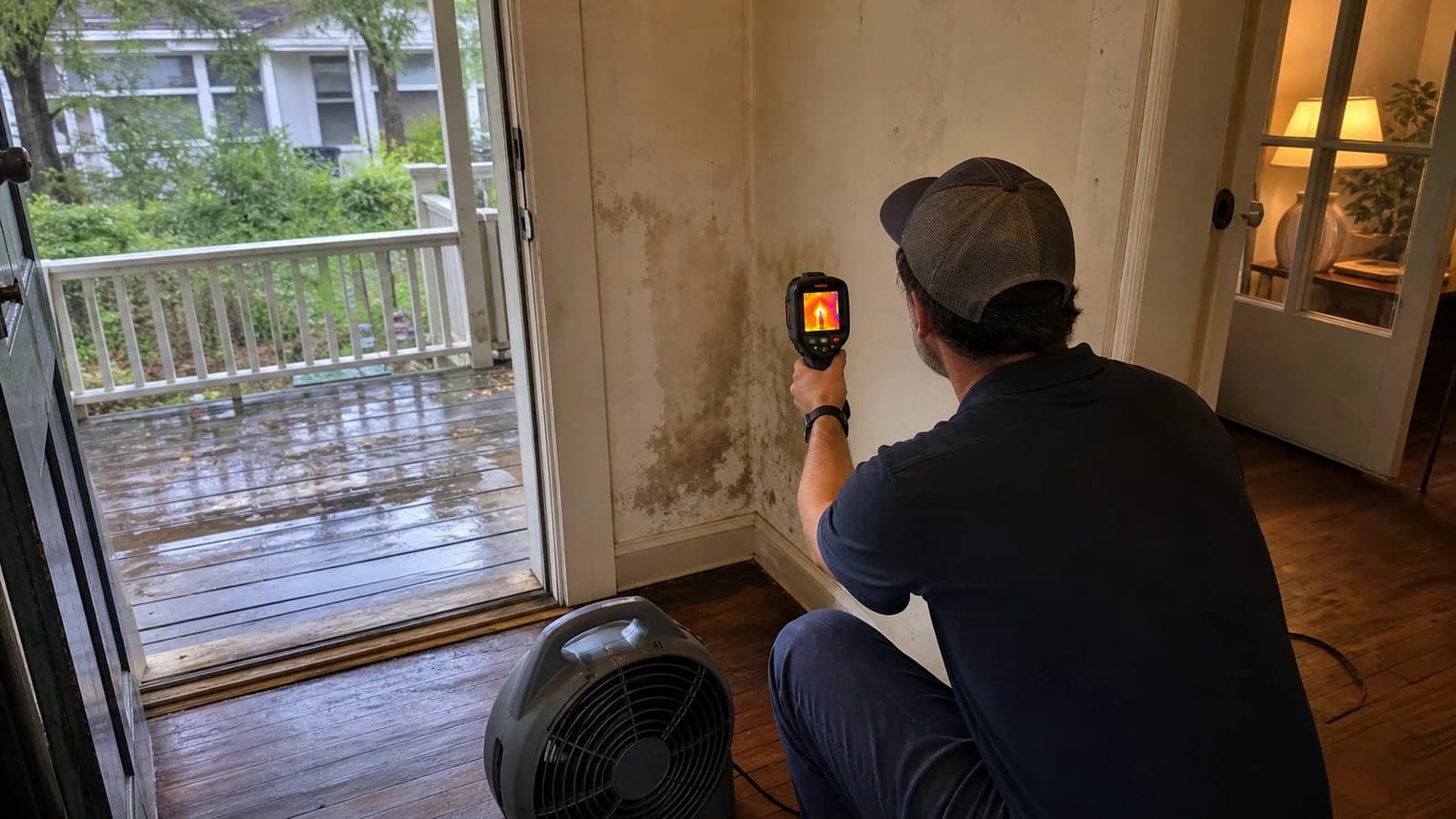
Mold Remediation
Mold After a Hurricane in Tampa Bay: What to Check First
Mold can start within 48 hours of a Tampa flood. What to check after a hurricane, the signs to watch for, and when to call a licensed remediator.
· 7 min read
Read article