Mold Remediation
How to Prevent Mold After a Flood in Florida
Mold can start within 24 to 48 hours of a Florida flood. What you do in the first two days decides whether you get mold at all. Here is the playbook.
How to Prevent Mold After a Flood in Florida: The First 48 Hours
There is a narrow window after a flood where you can still stop mold before it starts, and in Florida that window is short. Mold can begin growing within 24 to 48 hours of materials getting wet, and our heat and humidity push it to the fast end of that range. What you do in the first two days matters more than anything you do later. Get the water out and the structure dry fast enough, and you may avoid a mold problem entirely. Wait, and you are no longer preventing mold, you are removing it.
This guide is the prevention playbook. If you already see or smell growth, skip ahead to remediation, but if the water just came in, start here.
Why speed is everything in Florida
Mold spores are already in the air in every Florida home. They are not the problem. Moisture is the problem, because moisture is the switch that turns dormant spores into active growth. In a dry climate you might have a few extra days of grace. In Florida, with indoor humidity that climbs the moment the AC goes off, you do not.
That is the whole logic of flood mold prevention: you are racing to dry the structure below the moisture level mold needs before the clock runs out. Every hour of standing water and every day of damp drywall works against you. The homes that avoid mold after a storm are almost always the ones that got dried out fast and completely.
The first 48 hours, step by step
Work through these in order, as safely as conditions allow.
- Confirm it is safe. Do not enter standing water if the power is on or if the water could be contaminated by sewage or chemicals. Shut off electricity to affected areas at the breaker if you can do it safely. Flood water is rarely clean.
- Document before you remove. Photograph every room and every damaged item before you throw anything out or tear anything down. You will need this for insurance, and mold from flooding is treated differently than mold from a burst pipe. Our guide on whether homeowners insurance covers mold in Florida explains why that distinction matters.
- Get the water out fast. Pump or extract standing water immediately. The longer it sits, the deeper it soaks into walls, subfloors and cabinets.
- Remove wet porous materials. Carpet, padding, soaked drywall and wet insulation that took on flood water should come out. Porous materials that sat wet do not dry clean, they grow mold from the inside. Cut drywall a foot or two above the waterline.
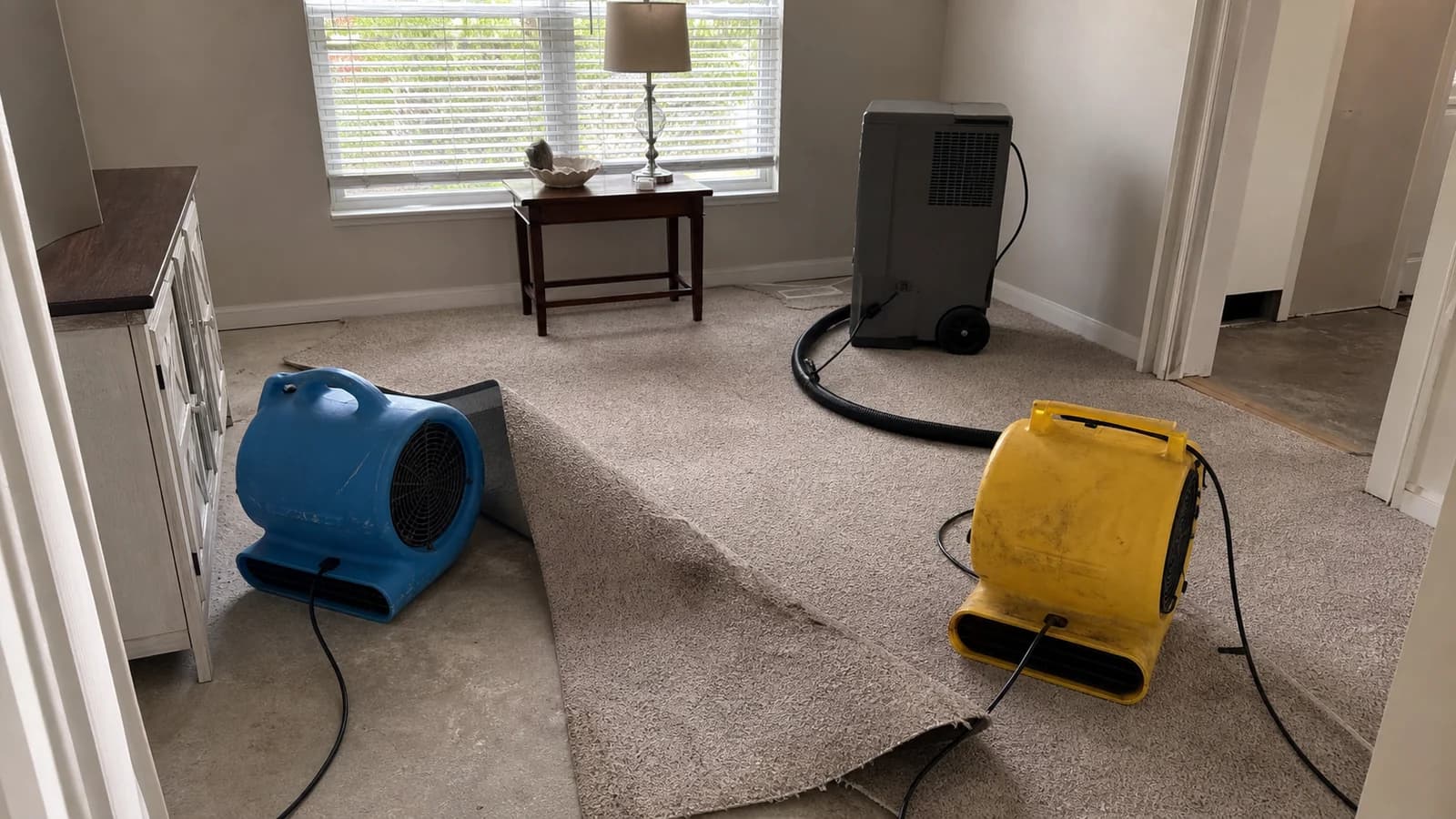
- Dry aggressively. This is the step people underestimate. Household box fans and open windows on a humid day are not enough. You want commercial dehumidifiers and air movers running continuously, and the AC on to pull humidity down. The EPA recommends keeping indoor relative humidity between 30 and 60 percent, and getting it under 50 percent is the target that actually stops mold. The goal is a moisture reading, not a surface that feels dry.
- Watch the hidden spaces. Water wicks up inside walls, under tile and laminate, into wall cavities where a fan never reaches. Surface-dry does not mean dry. This is where a moisture meter separates a real dry-out from a false one.
The mistake that causes most post-flood mold
Almost every hidden mold problem after a Florida storm traces back to the same error: the house was dried on the surface, declared fine and closed back up while moisture was still trapped inside the walls and subfloor.
It happens constantly. Fans run for a day, the baseboards feel dry to the touch, everything looks handled, and three weeks later a musty smell appears. By then mold has been feeding behind the drywall the whole time. Concrete-block homes on slabs make this worse, because there is no basement to inspect, just wall cavities and subfloor where trapped water sits and feeds mold for months. Surface drying is not drying. Structural drying, verified with moisture readings, is.
Where DIY ends and a pro begins
For a small amount of clean water, caught fast, a homeowner with a wet vac and a dehumidifier can often prevent mold on their own. The line moves quickly, though. Call in a professional when:
- More than one room flooded, or water sat for more than a day
- The water was contaminated, from a storm surge, a river or a sewage backup
- Water reached the HVAC system or traveled through ductwork
- You cannot get moisture readings down within the first day or two
- The flooding came from storm surge or rising water, which is a category of its own
In those cases, professional water damage restoration in Tampa with commercial drying equipment is what actually beats the clock. The difference between a household fan and a truck-mounted drying system is the difference between preventing mold and creating a slow one.
After the dry-out: confirm, do not assume
Prevention is not finished when things look dry. The last step is verification. A moisture check across the affected areas confirms the structure is genuinely below the level mold needs. If readings are still high anywhere, that spot is a future mold problem no matter how dry the surface feels.
If you had significant flooding, it is worth a professional moisture assessment even if you see nothing, precisely because hidden moisture is the whole risk. And if mold has already started despite your efforts, moving to mold remediation in Tampa or your local market promptly keeps a small problem from spreading through the walls and the AC system.
Prevention before the next storm
The best flood-mold prevention happens before the water arrives. Ahead of hurricane season, keep gutters and drainage clear so water moves away from the house, address any known foundation or wall-seal weak spots that let water in, service your AC and clear the condensate line so it is not adding moisture and know where your water shutoff is. A home that sheds water well and dries fast starts every storm ahead of the mold.
FAQ
How long do I have to prevent mold after a flood? Roughly 24 to 48 hours from when materials get wet. In Florida humidity it is on the shorter end. Fast water removal and aggressive structural drying in that window are what prevent mold from forming.
Can I prevent mold with just fans and open windows? For a small, clean-water spill caught immediately, sometimes. For real flooding, no. Household fans and humid outdoor air will not dry a structure fast enough. You need dehumidifiers and air movers, often with commercial drying equipment.
Should I remove wet drywall and carpet right away? Yes, if they soaked up flood water. Porous materials that sat wet grow mold from the inside and rarely dry clean. Document the damage with photos first, then remove them and cut drywall above the waterline.
What kills mold after a flood? Drying kills the conditions mold needs, which matters more than any spray. On hard, salvageable surfaces like studs, concrete and metal, Consumer Reports and state health guidance suggest cleaning with detergent and water or a diluted mix of no more than one cup of bleach per gallon of water. Once the structure is fully dry, a professional mold inhibitor such as Concrobium or Benefect helps prevent regrowth. None of that works on soaked porous materials, which need to come out.
Does bleach prevent mold after a flood? Not reliably, and not on porous materials. Bleach can treat a hard, non-porous surface at about one cup per gallon of water, but preventing mold is mostly about removing moisture and wet materials fast, not spraying chemicals on damp drywall.
Is flood mold covered by insurance in Florida? Usually not under a standard homeowners policy, because flooding is excluded and needs separate flood coverage. Mold from flood water is generally excluded with it. Document everything early to support whatever claim you can make.
When should I call a professional after flooding? When more than one room floods, water was contaminated, it reached the HVAC, it came from storm surge or you cannot get the structure dry within a day or two. Professional drying is what beats the mold clock.
Flooded and racing the clock? A licensed team with commercial drying equipment can dry the structure fast and verify it is truly dry, before mold ever gets started.
Available 24/7 · No obligation · Florida mold license MRSR5565
More from Bullfrog Waterproofing
Mold Remediation
Is Black Mold Dangerous? What Florida Homeowners Should Know
Black mold gets talked about like a death sentence. The real risk is more grounded, and in Florida humidity it is common. Here is what the science says.
Mold Remediation
Does Homeowners Insurance Cover Mold in Florida?
Whether your Florida policy pays for mold comes down to what caused it. Here is how coverage works, what gets denied and how to protect your claim.
Mold Remediation
Mold After a Hurricane in Tampa Bay: What to Check First
Mold can start within 48 hours of a Tampa flood. What to check after a hurricane, the signs to watch for, and when to call a licensed remediator.