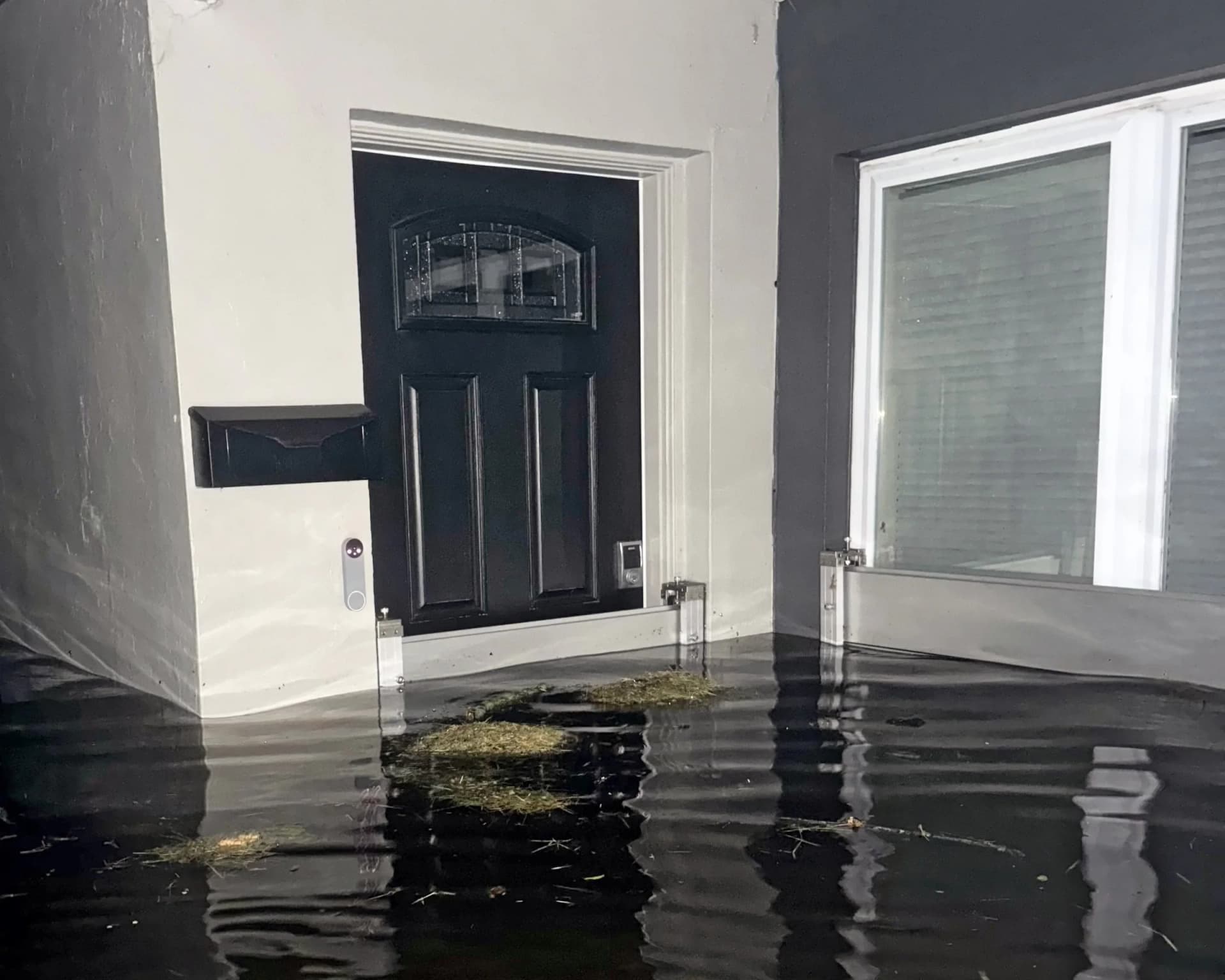
The trouble is that "flood barrier" covers everything from a bag of gel to a permanent engineered panel wall. This guide breaks down the main types, what each one is good for, what they tend to cost and how to pick the right fit for a Florida home.
How to think about flood barriers
Three broad categories, sorted by how they work:
- Deployable systems stay stored until a storm is coming, then go up in minutes and come back down after. Best when you want protection ready but not permanently visible.
- Permanent systems stay installed year round. Best for homes on the water or in repeat-flood zones where you want protection standing before the forecast even turns.
- Passive and temporary barriers (sandbags, water-filled tubes, gel bags) are cheap and simple but labor-heavy and less reliable against moving water.
The right answer is usually a combination, matched to where your specific home takes on water first.
The main flood barrier types compared
| Type | How it works | Best for | Effort | Reusable | Rough cost* |
|---|---|---|---|---|---|
| Deployable plank systems (e.g. Garrison Hammerhead) | Fixed channels at each opening; aluminum planks slot in and lock down before a storm | Doors, garages, specific openings | Low, up in minutes per opening | Yes, many seasons | $$ |
| Direct-mount panel systems (e.g. Garrison YellowFIN) | Panels mount straight onto the opening with no permanently affixed vertical posts, then come off once the storm passes | Doors, sliders, garages and windows where visible hardware is not wanted | Low, deploys in minutes | Yes, years | $$$ |
| Automatic self-rising gates (e.g. Garrison Oyster) | Sit flat for daily use; floodwater fills a cavity and lifts them into a wall, no power needed | Driveways, garage ramps, below-grade entries | None, fully automatic | Yes | $$$ |
| Inflatable / water-filled barriers | Fill or inflate to form a temporary dam or berm | Quick temporary lines, larger areas | Medium, setup and fill time | Sometimes | $$ |
| Sandbags / gel bags | Stacked or water-activated bags block low flow | Very short-term, low-water situations | High, heavy and slow to place | Rarely | $ |
*Cost tiers are relative. Confirm figures during a free assessment. See cost section below.
What flood barriers cost in Florida
Cost depends on how much of the home you are protecting and which system fits. As a rough frame:
- Sandbags and gel bags are the cheapest up front, but they are single-event and labor-heavy, so the "cost" is really time and repeat purchases.
- Deployable plank systems sit in the middle. You pay once to install the fixed channels, then reuse the planks every season.
- Permanent panel and automatic gate systems are the largest investment because they are engineered, installed and always standing by.
The honest answer is that pricing is site-specific. The number of openings, the length of perimeter you want to protect and your elevation all move the figure. A free on-site assessment is the only way to get a real quote, and financing can spread the cost across a season.
Are flood barriers worth it?
Run the math against a single flood. Even a few inches of water inside a home means torn-out drywall, ruined flooring, damaged belongings and mold remediation, often tens of thousands of dollars and weeks of displacement. Standard homeowners insurance does not cover flood damage, and NFIP flood policies still leave you with the deductible, the disruption and anything the policy caps out on.
A barrier that keeps the water outside protects the structure, the contents and the months of your life a gut renovation would eat. For a home that has flooded before or sits in a surge zone, the barrier usually pays for itself the first time it holds.
Barriers are only half the equation
A flood barrier does two jobs. It keeps water from reaching the house, and it seals the openings water would otherwise come straight through: doorways, sliders and garage doors. What it will not do is stop water from below. When the water table climbs, hydrostatic pressure drives it up through the foundation itself. That is a separate problem with a separate fix, and leaving it alone means a heavy rainy season still gets inside.
Pair the barrier with foundation waterproofing and you close all three routes: water surging across the yard, water pushing at the doors and garage, and water rising through the foundation. Read more on foundation waterproofing, and if a storm has already gotten inside, water damage mitigation.
How to choose
Ask these before you buy:
- Where does my home take on water first, at specific openings or across the whole lot?
- Do I want protection that stores away, or one that stands year round?
- Can my household physically deploy a removable system in the time a storm gives us?
- Is my foundation already sealed against groundwater, or does that need to happen too?
- Who installs and stands behind the system locally?
Where Bullfrog fits: Bullfrog is an authorized Garrison Flood dealer and installer serving Florida. We install the Hammerhead plank system and the direct-mount YellowFIN panel system, and because we also waterproof foundations and remediate mold, one company can handle the whole plan. See our flood barrier installation service.
Storm season moves quickly, and a deployable system is only useful if you put it up in time. Florida Storm Watch tracks live conditions across the state so you know when to start.
Worried about the next storm?
Bullfrog installs Garrison flood barrier systems across Florida and can seal the foundation in the same visit.
Available 24/7 · No obligation · Free estimates for homeowners