Mold Remediation & Waterproofing in Delray Beach, FL
In Delray Beach's sandy soil, a downspout can open a crack at the slab edge.
The mold starts on the other side of the wall.
We remove mold and dry out water damage in Delray Beach homes, then seal the block wall or slab joint the water came through, so the same leak does not feed new mold. Homeowners get the inspection free and keep the written findings.
Phone answered 24/7 · Free inspections for homeowners
Trusted, Licensed, and Certified




How urgent is mold remediation?
Deal with it within days, before the next heavy rain. Mold keeps growing while the material under it stays wet. EPA says drying wet materials within 24 to 48 hours keeps mold from growing in most cases. In a Delray house on sandy soil, water can keep coming in at the same slab joint until someone seals it.
Delray Beach & South County
What sits under Delray Beach
The first African-American settlement in Delray Beach, founded in 1894, was known as the Sands for its sandy soil, according to the Delray Beach Historical Society. Much of the old town sits on that same sandy soil. Del-Ida Park was platted in 1923 and most of the Marina District went up between 1922 and 1943, so parts of Delray have had slabs on it for about a century.
January 9, 2014
The flood came in the middle of the dry season. A stalled front, near-record January moisture and storms training over the coast produced rain rates of 3 to 5 inches an hour, according to NWS Miami. Between about 8 p.m. and midnight several spots took more than 12 inches. One gauge west-southwest of Hypoluxo caught 22.21 inches. NWS named Delray Beach, Boynton Beach and Lantana as the worst affected. Lakes and canals overflowed and water got into homes and businesses. At the Boynton Beach gauge, NWS put the rain beyond a 1,000-year recurrence for durations of about 1.5 to 18 hours.
Sandy Soil at the Slab Edge
Sand drains fast, which sounds like good news. Where a downspout or sprinkler soaks the same spot every time, though, the water can carry sand away from the edge of the slab and let the ground beside the wall settle. Cracks open at the joint between block and slab. The next heavy rain finds them.
Cottages and Bungalows From Before Modern Waterproofing
Del-Ida Park's Mediterranean Revival houses and Craftsman bungalows, the Nassau Park cottages built from 1935 to 1941 and the Marina District's mix of styles all predate modern waterproofing membranes. With no membrane on the block, water that gets through the wall reaches the plaster or drywall inside. Mold can start there, behind the baseboard where nobody sees it.
Downspout and sand check
Walk around the house in the next heavy rain or with a garden hose on a dry day. Sealing a crack without moving the water that caused it sets up the next crack, so start here.
Where each downspout empties
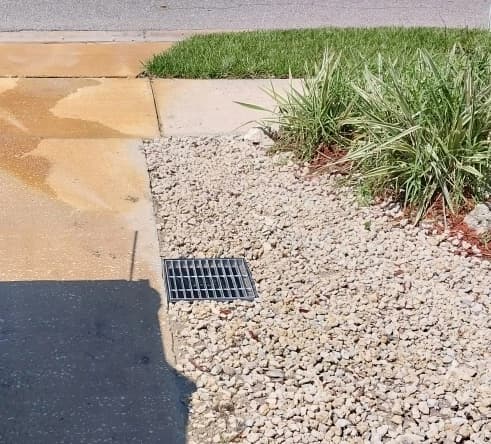
Follow every downspout to the ground. One that empties against the wall pours a whole section of roof onto the same patch of sand every storm. An extension or a buried line carries the water away.
Which way the ground falls
The ground should drop away from the house. For a new home the Florida Building Code asks for a fall of at least 6 inches in the first 10 feet. EPA tells homeowners to make sure the ground slopes away from the foundation.
Sprinkler heads aimed at the wall
A head that sprays the house soaks the same spot a leaking downspout does, on every watering day. Turn it toward the lawn.
Washed-out sand along the slab
Look along the base of the wall for a strip where sand has washed away or sunk below the slab edge. Water has been running there.
Cracks where the wall meets the slab
A crack or crumbling mortar at that joint lets water in at floor level. Sealing it is a waterproofing job.
The inside of the same wall
Check the baseboard and the bottom of the drywall behind any spot you flagged outside. Swelling, peeling paint or a musty smell there means water has already come through and mold may be growing.
Sources: EPA, A Brief Guide to Mold, Moisture and Your Home; Florida Building Code, Residential, 8th edition (2023), section R401.3.
Our Process
Start to finish on a Delray Beach job
- 1
Free Inspection
We walk the house and the lot, take moisture readings on walls that look dry and put what we find in writing. The visit involves no air or lab samples.
- 2
Find the Water
Before anything comes out, we work out where the water came from, whether that is groundwater at the slab edge, rain through a wall or a leak inside the house.
In Delray that means reading the bottom of every exterior wall, because water from washed-out sand comes in at the joint where the block meets the slab.
- 3
Remove and Dry
We remove mold-damaged material under containment and treat what stays. After water damage we extract the water and run drying equipment until the meter readings say the structure is dry.
Water that came in at the slab joint wets the bottom of the drywall first, so that is where we open the wall and check behind the baseboard.
- 4
Seal the Source
Where the foundation let the water in, we waterproof the block. For a failed roof or pipe, we show you where it failed so you know who to call.
What are you seeing in your Delray house?
Peeling paint or a swollen baseboard low on an outside wall
Water is getting in at the joint between the block and the slab, often below a downspout or sprinkler that soaks the sand outside.
Foundation waterproofingBlack or green spots on drywall
That is mold you can see. EPA says a patch under about 10 square feet is usually a job you can clean yourself. Anything larger or anything that keeps coming back needs the water found and the growth removed under containment.
Mold remediationA musty smell with no mold in sight
Mold can grow out of sight, behind drywall, under flooring or in the air handler closet. Moisture readings find the wet wall.
How the free inspection worksWater inside after a heavy rain
The water has to come out and the walls have to dry before mold gets a start.
Water damage restoration

One company for the mold and the water behind it
Bullfrog removes mold and dries out water damage. When the water came through the foundation, we waterproof the block too, so one company handles the whole job.
Our mold work runs under Florida mold remediator license MRSR5565. Our foundation waterproofing carries a lifetime warranty against water coming through the section we treat.
Questions From Delray Beach Homeowners
What kills mold permanently in a house?
Do I need mold testing before remediation?
Do you need a permit for mold remediation in Florida?
Can sandy soil cause foundation cracks?
Can I stay in my house during mold remediation?
MRSR5565
Florida Licensed Mold Remediator
Lifetime
Waterproofing Warranty
24/7
Phone Line
200+
Jobs Completed
5.0
Google Rating
Free
Inspection for Homeowners