What a free mold inspection includes
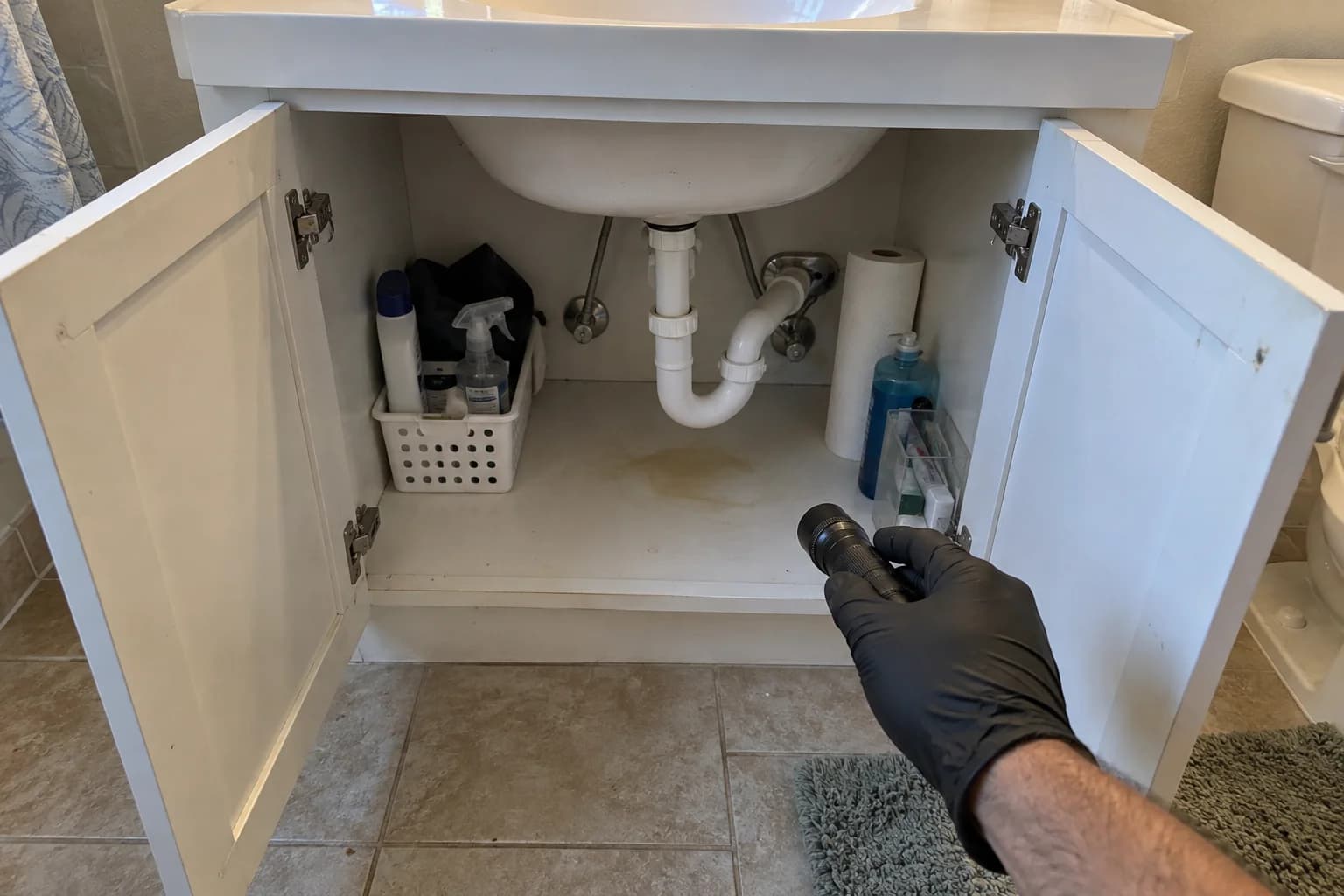
- An experienced inspector evaluates your whole property, not just the area you called about. Water travels, so often where you see stains on your ceiling or around your baseboard is not necessarily where the water intrusion originated.
- Moisture meters help identify areas where elevated moisture has concentrated. This can indicate water trapped within the walls or ceilings from water intrusion, and leads to a high probability that mold has developed within these areas.
- A check for smell. Florida's Department of Health says indoor mold growth can usually be seen or smelled.
- Our free estimate includes a detailed plan on how we can resolve the water intrusion and any potential mold issues found during our inspection.
What a free inspection does not include
Our inspection does not include air samples or laboratory results. A licensed mold assessor is required for that, and those services are never free. But they are valuable and necessary in situations where there is a dispute about the presence of mold, or if mold is suspected but there are no obvious visual signs of mold or water intrusion present, or where someone has a very specific allergy to a particular strain of mold.
The EPA says that in most cases, if visible mold growth is present, sampling is unnecessary. If you can already see it, a lab test is essentially confirming what you already know.
Florida defines an assessment as a process involving physical sampling, so a free visual walk-through is not an assessment. Sampling is where the regulated activity begins, which is why a free inspection and a paid assessment are genuinely different things, rather than the same thing at two prices.
Free mold inspection for renters
Technically, free inspections are only offered to property owners, because after the inspection we will prepare an estimate that only the owner will act on.
This may sound like bad news for tenants. But there is still a path for tenants to benefit from our free inspection by sharing this offer with your landlord or a property manager that represents your landlord to reach out to us. Many landlords will be happy to do so, as our inspection costs the owner nothing.
However, if there is already a disagreement about the presence of mold between the tenant and the landlord, then it is advisable to hire a licensed mold assessor. A mold assessor can perform air quality testing and provide the laboratory results that are often the necessary proof and leverage needed in disputes between tenants and landlords about a potential mold issue. Florida licenses mold assessors and mold remediators separately, and state law (Fla. Stat. 468.8419) bars one company from both assessing and remediating the same property within 12 months. Only a licensed assessor can do that air quality testing, so a remediation company like ours cannot provide the official testing at any point.
But mold assessors and laboratory results are not free. Typically, a tenant will have to pay for those services out of pocket. In some cases, these expenses may be recouped with the help of an attorney if there is indeed a mold issue that the landlord was knowingly neglecting. However, questions of this nature are best suited for your attorney.
Questions to ask before you book
- What is included at no cost and what costs money? Get the boundary before the visit rather than during it.
- If you recommend sampling, will you quote it before collecting anything?
- Who is licensed and what is the number? Florida licenses individuals rather than companies, with separate assessor and remediator licenses. You can check a number on the state register yourself.
- Do I get written findings whether or not I hire you? A report you only see after signing is a quote wearing a lab coat.
- If mold is found, who does the removal? Ask how they handle the twelve-month rule.
A free inspection that tells you where the water is
A walk of the whole property, moisture readings on the walls that look fine and written findings you keep whether or not you hire us.
Available 24/7 · Written findings included
The most important part of our mold inspection is finding the source of the water intrusion. Without properly addressing and resolving the water intrusion, your mold issues will continue coming back again, even after being properly remediated. That's why we take a comprehensive approach and resolve the water intrusion and any mold remediation at the same time, so you can truly put these issues behind you.
See the full mold inspection service, or the local pages for mold inspection in Orlando, mold inspection in Tampa and mold inspection in Sarasota.