
You see it as a white crust along the bottom of a garage wall, a chalky bloom on stucco near the ground or a powdery line where the slab meets the block. People often take it for mold. It is salt, left behind by water on its way through the concrete.
What causes efflorescence
Three things have to happen at once. The concrete masonry industry's technical guide on efflorescence, CMHA TEK 08-03A (formerly published by NCMA), sets them out:
- There are soluble salts in the masonry or concrete.
- Moisture picks the salts up and carries them toward the surface.
- Something moves that moisture, either evaporation or water pressure from behind.
Take away any one of the three and efflorescence does not form. You cannot take the salts out of a wall and you cannot stop Florida air from evaporating water, so the one you can control is the water.
How it works
How efflorescence forms
- Soluble saltsThey are in the masonry or concrete to begin with.
- Moisture carries themWater picks the salts up and moves them toward the surface.
- Something moves the moistureEvaporation, or water pressure from behind. The water leaves and the salt stays on the face as the white powder.
Take away any one of the three and efflorescence does not form. The one you can control is the water.
Is efflorescence a problem?
The deposit is not. The same industry guide says efflorescence will not affect structural performance. A North Dakota State University extension guide notes that the salt deposits are harmless to health. What it tells you is the useful part:
- An even white bloom across new block or concrete usually means the materials are drying out after construction.
- Heavy or local deposits mean water has entered or is entering the wall at that spot or above it.
- Efflorescence near ground level points to ground water as the likely source.
- Efflorescence that keeps coming back after cleaning calls for corrective work, not more cleaning.
Federal building guidance treats it the same way. NIOSH lists efflorescence alongside peeling paint and warping as signs of water damage. The EPA's moisture control guide lists it as a sign of seepage or wicking in foundations.
Efflorescence or mold?
Put a few drops of water on it. Salt usually dissolves in water or vinegar and mold does not. The NDSU extension guide uses exactly this test. It adds that a substance that dissolves in neither water nor vinegar may be mold.
| Efflorescence | Mold | |
|---|---|---|
| Water test | Usually dissolves in water or vinegar | Does not dissolve |
| Color | Usually white | White, but also gray, green, brown or black |
| Grows on | Block, brick, stucco, mortar and concrete | Anything with dust or organic material on it, including dirty concrete |
| What it means | Water is moving through the masonry | A surface is staying damp |
Both point back to moisture and you can find both on the same wall. Mold can grow on the dirt and film that sit on damp concrete, which we cover in can mold grow on concrete.
How to remove efflorescence
Fix the water first. The industry guide is direct about the order: the problem should be repaired before the efflorescence is removed. Then work from the gentlest method up.
- Brush it off dry with a stiff nylon or natural-bristle brush.
- Rinse with clean water and let the wall dry.
- If deposits remain, a dilute muriatic acid solution is the last resort. Wet the wall with clean water first so the acid is not absorbed deep into it, test a small hidden area and rinse thoroughly afterwards.
Skip the wire brush. Steel filings left in the surface rust and leave a new stain.
Can you seal over efflorescence?
Not while the wall still pushes water through it. The industry guide warns that clear coatings on masonry that tends to effloresce, without dealing with what causes it, may lead to surface spalling, where the face of the block flakes off. The salts still travel with the water and now build up behind the coating. Seal a wall once it is clean, dry and no longer taking water.
Efflorescence on Florida block homes
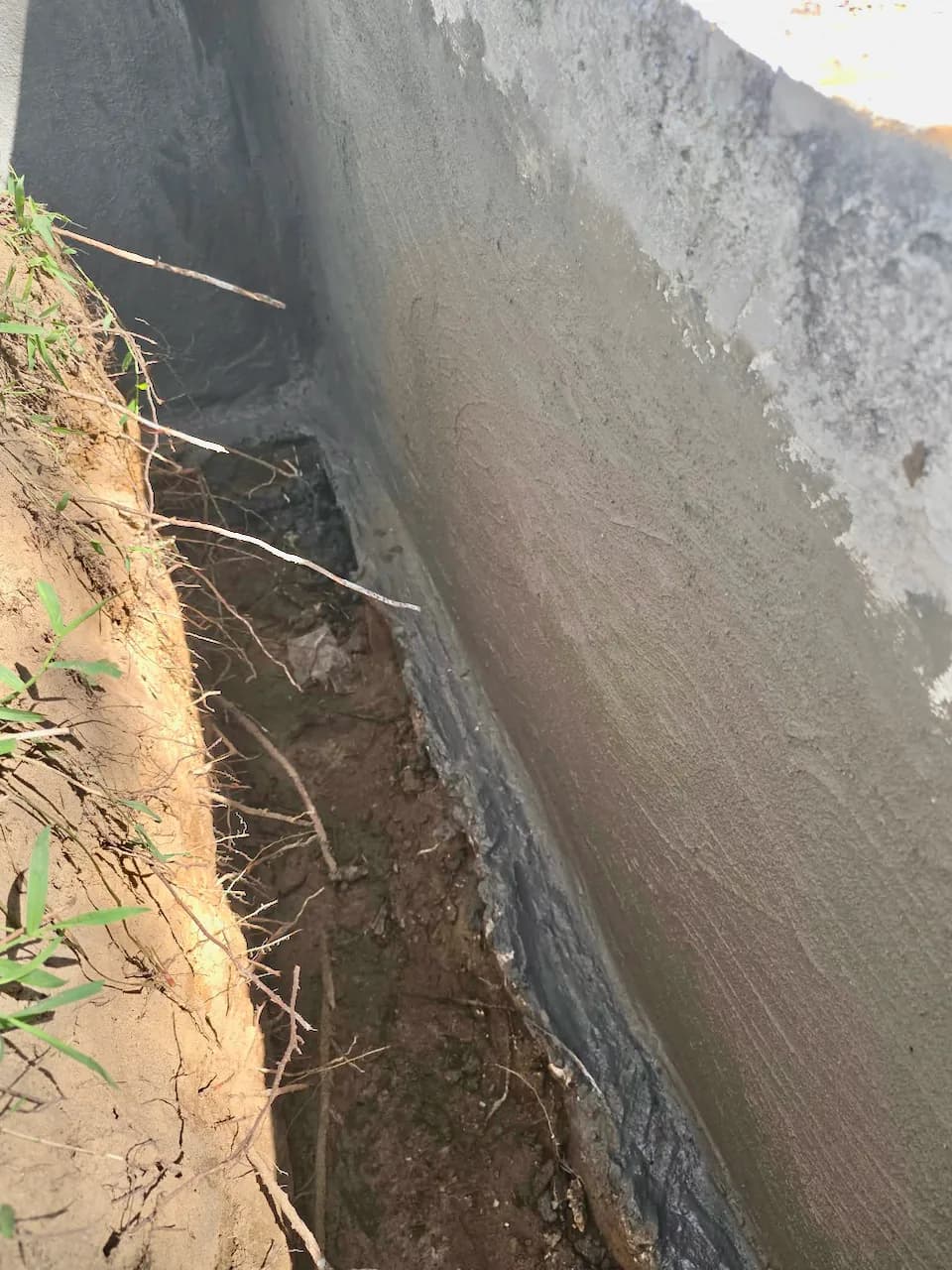
Most Florida homes have concrete block walls on a concrete slab. Efflorescence shows up in the places water reaches them: the base of garage walls, stucco just above the soil or mulch line, the joint where the block meets the slab and walls that a sprinkler soaks every morning.
The outside fixes come first and cost the least effort. Point downspouts away from the house, slope soil and mulch away from the foundation, keep beds below the level of the slab and aim sprinklers away from the walls. When efflorescence keeps returning after that, the water is coming through the block or up at the wall joint. The answer then is foundation waterproofing: sealing the wall and the joint so water stops moving through them. Our work carries a lifetime warranty against water coming through the treated area. See how it applies locally in waterproofing and mold remediation in Orlando and in Melbourne.

White powder that keeps coming back? Get a free inspection.
Available 24/7 · No obligation · Free estimates for homeowners