
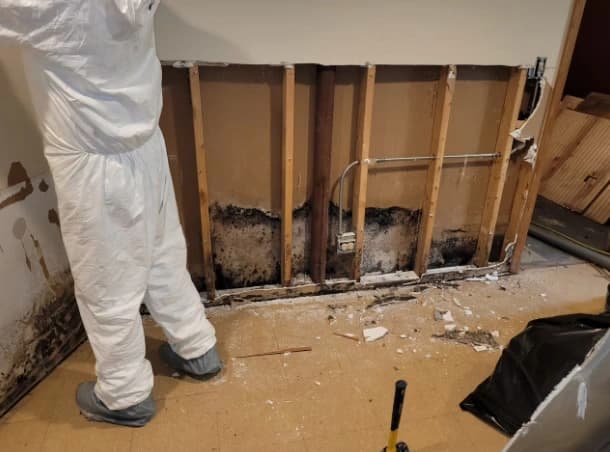
Mold inside a wall grows where you cannot see it, on the back of the drywall, so the first signs are usually indirect.
Signs of mold inside a wall
A musty, earthy smell that stays strongest near one wall is the most common first sign. Other signs:
- a smell that gets stronger after rain or when the air conditioning has been off
- paint that bubbles, peels or looks stained, often low on the wall
- baseboards that swell or get pushed away from the wall
- drywall that feels soft or cool and damp when you press it
- a stain that grows after each storm
- spots of black or green growth along the bottom edge of the drywall when you pull the trim off
Allergy-type symptoms that are worse in one room point the same way. So does a room that always smells musty when you walk back in after a few days away.
What causes mold in walls
Water that reaches the wall cavity and cannot dry out. In most homes that means one of four things:
- a supply line or drain leaking inside the wall
- a roof, window or door leak running down inside the cavity
- condensation from the air conditioning system or on the cold side of an outside wall
- water coming through the outside wall itself
The last one is the Florida version. Most homes here are concrete block on a concrete slab, with the drywall on the inside face of the block. Block is porous. When rain pools against the foundation or the mortar at the joint between wall and slab has worn away, water moves through the block to the back of the drywall. Nothing shows on the painted side while the mold grows behind it. Water damage on baseboards is usually the first thing people see.
How to check for mold inside a wall
Start with moisture, because mold inside a wall needs water to keep growing. A few checks narrow it down before anyone cuts drywall:
- Take moisture meter readings across the wall low and high. Compare them with an inside wall in the same room.
- Pull a short length of baseboard and look at the bottom edge of the drywall and the floor.
- With the power off at the breaker, take the cover off an outlet on that wall and look and smell with a flashlight.
- Check the same spots the morning after heavy rain.
Air tests and lab samples tell you less than people expect. Florida's health department does not recommend routine mold testing. Our guide on how to test for mold explains what to do instead.
Getting mold out of a wall
Cut out what the mold has grown into and dry everything behind it. Drywall and insulation are porous. The EPA notes that moldy porous materials may have to be thrown away because the mold grows into them. Hard materials can be cleaned.
| Material | What happens to it |
|---|---|
| Drywall with mold on the back | Cut out and bagged, usually a band well past the visible edge |
| Insulation | Removed and replaced |
| Wood studs and furring strips | Cleaned and dried if sound, replaced if soft or rotten |
| Concrete block | Cleaned and dried, then sealed where the water came through |
| Baseboard | Replaced if MDF or swollen, reused if solid wood that dried flat |
Under about 10 square feet, the EPA considers cleanup a job most homeowners can do. Wear an N95 respirator, gloves and eye protection, which is the minimum the EPA sets for professionals. Larger patches need containment so spores do not spread through the house while the drywall comes out. So does any mold growing inside the wall rather than on it. Painting over it does not work. The EPA advises against painting or caulking moldy surfaces and warns that paint over mold is likely to peel. Spots on the paint of a firm wall are a different job, covered in how to get rid of mold on walls.
Why the wall has to be dry before it is closed up
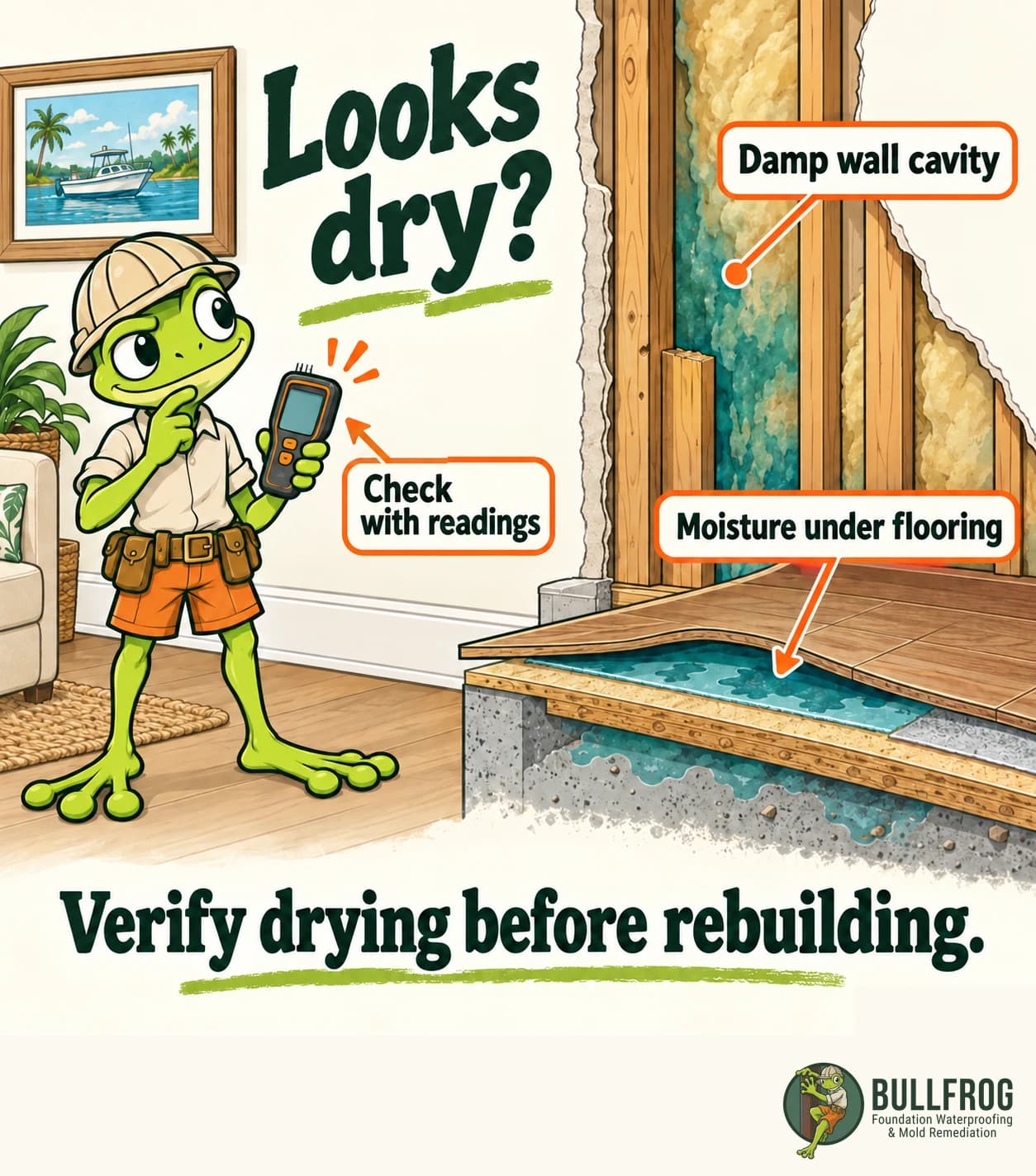
New drywall on a wet wall grows mold again, usually in the same place. The usual failure: the drywall gets replaced and painted while the block behind it still takes water at every storm. Readings on the block and the framing need to come back dry before anything goes back on the wall. When the water came through the block, the wall needs foundation waterproofing as well.
That is the job we do in one project. We hold Florida mold remediator license MRSR5565, remove the mold under containment, treat the air conditioning ducts and seal the wall where the water got in, with a lifetime warranty on the waterproofing. The mold remediation page sets out the process. For local detail, see mold remediation in Orlando and mold remediation in Fort Lauderdale.

Musty wall, no visible mold? Get a free inspection.
Available 24/7 · No obligation · Free estimates for homeowners