Waterproofing
Water Damage on Baseboards: Signs, Causes and Fixes
Swollen, stained or peeling baseboards usually mean water is getting in low on the wall. How to read the signs, find the source and repair or replace.

Water damage on baseboards shows up as swelling, a dark line along the bottom edge, paint that bubbles or peels and trim that starts pulling away from the wall. In a Florida home, water at the baseboard after rain usually means it is getting in through the block or at the slab joint, not from inside the room.
What water damage on baseboards looks like
Check the baseboard and the drywall just above it. These are the signs:
- a dark or yellow-brown line along the bottom edge or the top of the trim
- swelling, where the face of the board bulges or the joints between pieces open up
- paint that bubbles, flakes or peels on the trim or the first few inches of wall
- a gap opening between the baseboard and the wall
- nails working loose
- drywall above the trim that feels soft when you press it
- a musty smell that is strongest near the floor
- black or green spots along the caulk line or behind the board
MDF baseboard, common in newer homes, soaks water up from the bottom edge and swells there first. Solid wood takes longer to show it, then darkens and warps.
Why baseboards get wet after rain
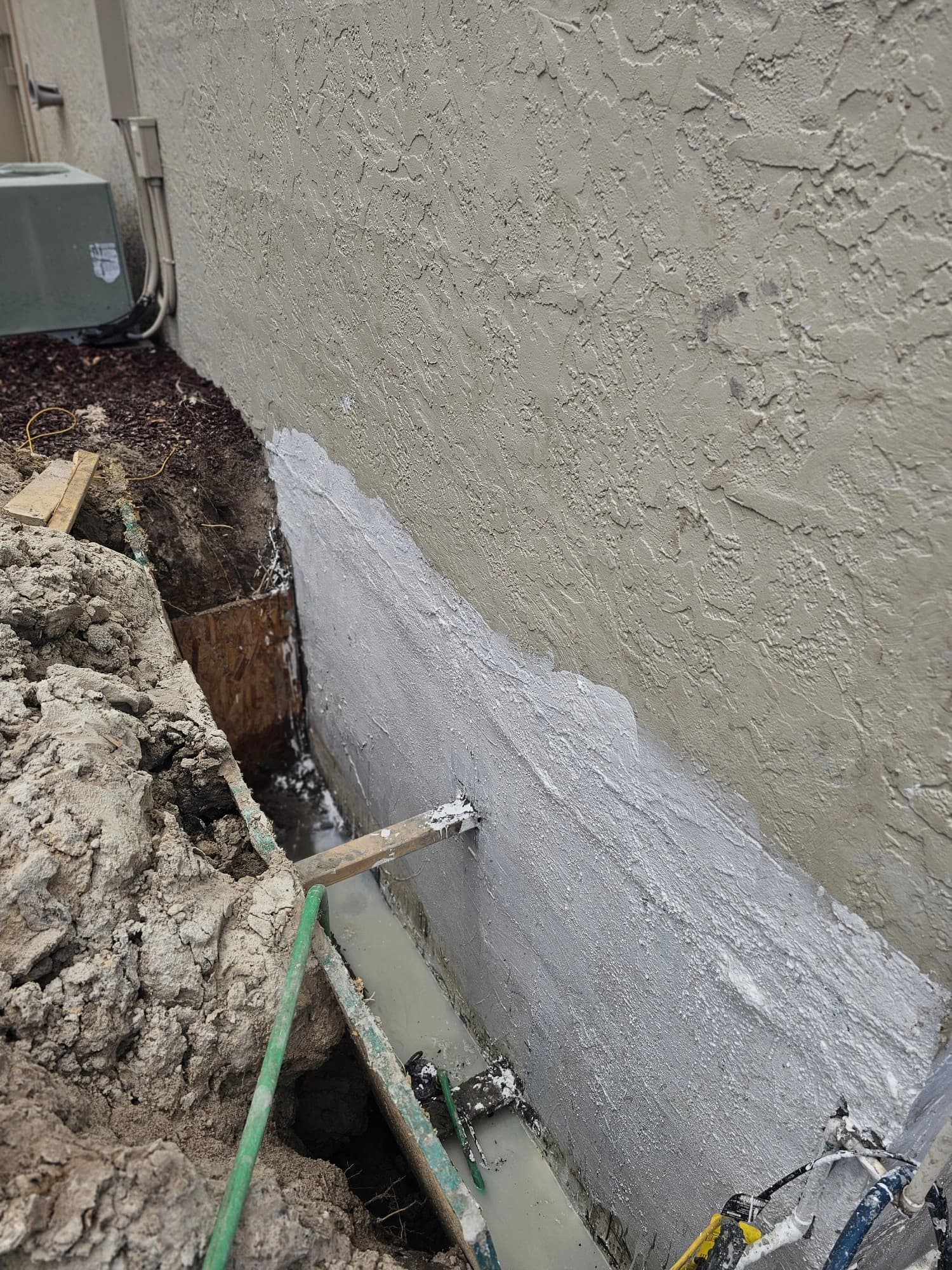
When the damage appears after heavy rain, look outside the house before you look inside it. Most Florida homes have concrete block walls sitting on a concrete slab. The joint where the wall meets the slab is the weak point. The mortar there erodes over the years and the sandy soil settles, so rain that pools against the foundation works its way through the block and into the bottom of the wall. It reaches the baseboard first.
A few things outside make it worse:
- gutters that empty right at the foundation
- soil or mulch that slopes toward the house instead of away from it
- sprinklers that soak the same stretch of wall every day
- planting beds built up above the level of the slab
Other causes to rule out
Not every wet baseboard is a foundation problem. These can all show up at the trim:
- a slow leak from a supply line or drain inside the wall
- an air conditioning condensate line that has backed up
- a window or door above that lets rain in
- water from mopping that runs under the trim
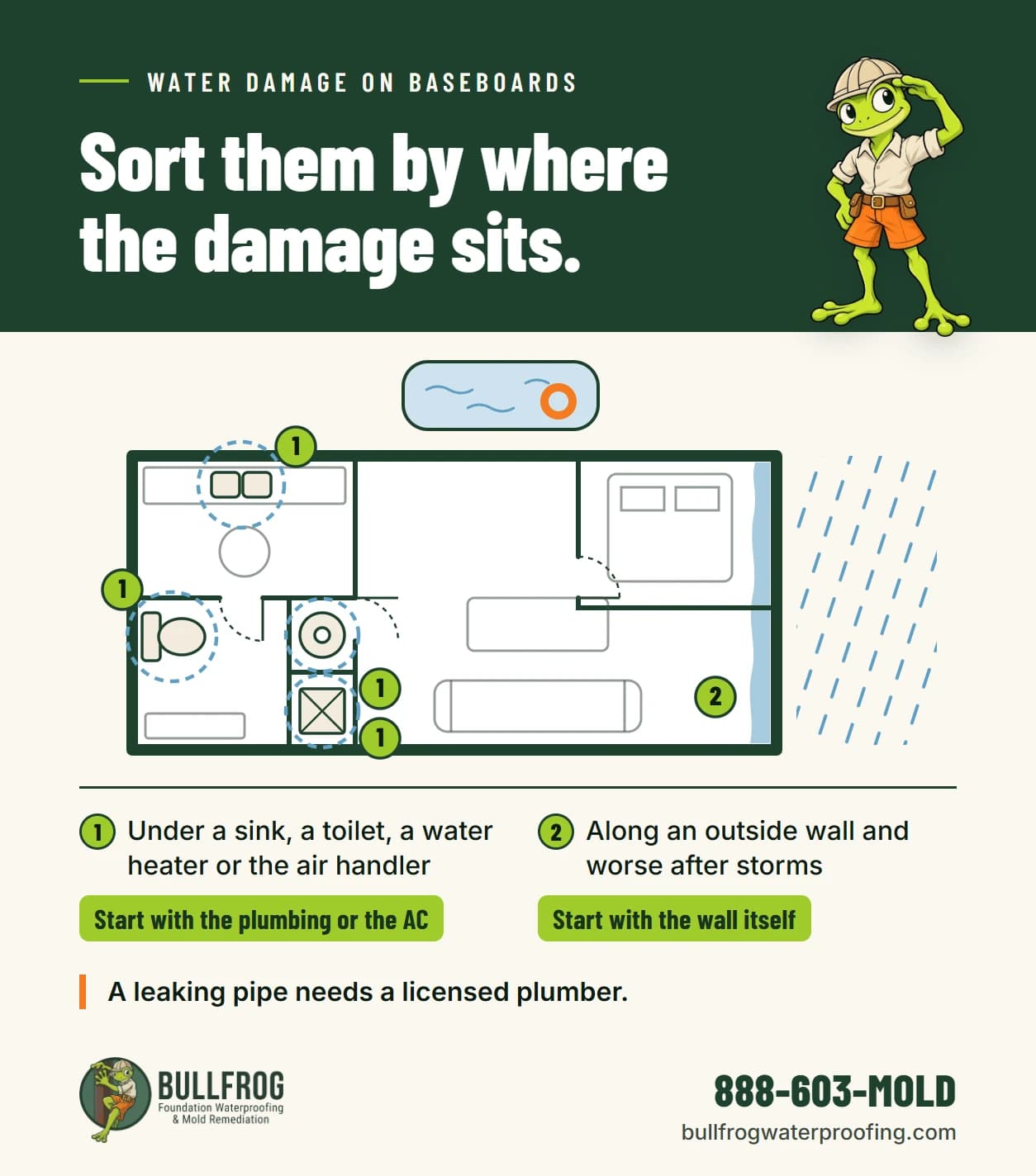
Sort them by where the damage sits. Under a sink, a toilet, a water heater or the air handler, start with the plumbing or the AC. Along an outside wall and worse after storms, start with the wall itself. A leaking pipe needs a licensed plumber. We will tell you if that is what we find.
How to tell if the wall is still wet
Hidden water is the reason baseboard damage comes back after the trim is replaced. Four checks will tell you more than looking at the paint:
- Press the drywall a few inches above the trim. Soft or crumbly drywall has been wet for a while.
- Pry a short length of trim away and check the drywall's cut edge where it meets the floor. Dark staining, a damp edge or spots of growth mean the water is still reaching it.
- Check again the morning after heavy rain. A stain that grows means water is still getting in.
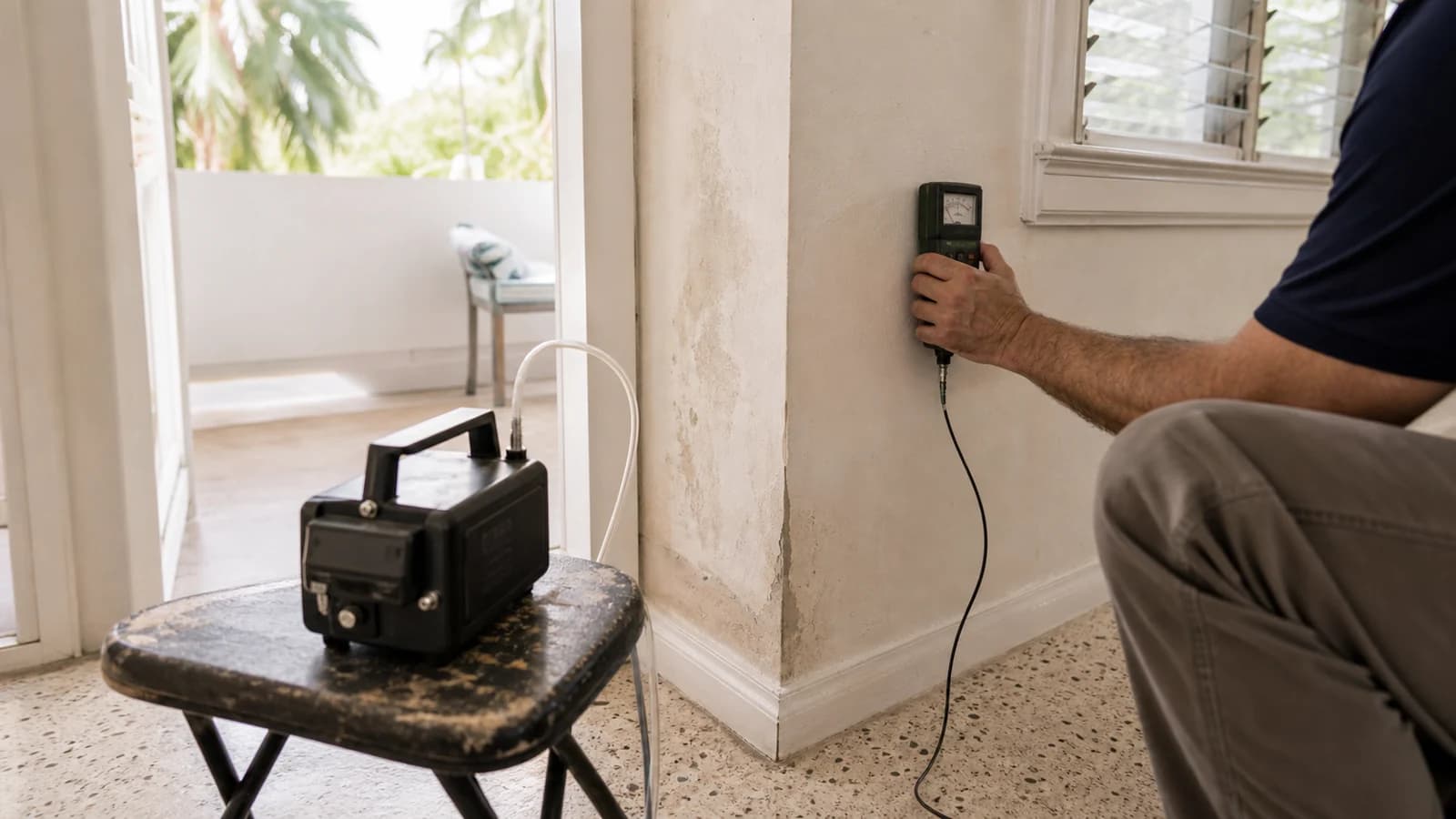
- Use a moisture meter. It turns a guess into a number. We take readings on the block and the drywall during a free inspection.
Repair or replace?
Replace MDF that has swollen, because it will not flatten out as it dries. Solid wood that dried without warping or growing mold can often be sanded, primed and repainted.
The drywall behind the trim is the bigger decision. Wet drywall that grows mold or stays soft has to come out, usually the bottom foot or two, so the wall cavity can dry before new board goes in. Whatever you replace, fix the source first. New trim on a wall that still takes water after every storm fails the same way.
Does homeowners insurance cover it?
It depends on where the water came from. Policies generally cover sudden and accidental water, such as a supply line that bursts. The NAIC notes that a homeowners policy is not a maintenance contract, so slow leaks and wear are generally not covered. Water seeping through a foundation over months can be treated the same way. Flood water needs a separate flood policy. Photograph the damage before you remove anything, read the water and exclusions sections of your policy and report the claim promptly. Our post on whether homeowners insurance covers mold in Florida goes through how claims get decided.
When to call us
Call when the damage runs along an outside wall, comes back after rain or comes with a musty smell. That combination means water is getting in and mold may be growing behind the drywall. Water damage restoration dries the wall out and takes out what cannot be saved. A mold inspection tells you whether anything is growing behind it. Foundation waterproofing seals the block and the slab joint so the next storm does not start it again. We hold Florida mold remediator license MRSR5565, the waterproofing carries a lifetime warranty and the inspection is free for homeowners. For local detail, see water damage restoration in Orlando and Fort Lauderdale.
FAQ
What does water damage on baseboards look like? Swelling, a dark stain line along the bottom or top edge, bubbling or peeling paint and trim that pulls away from the wall. The drywall just above often feels soft. On MDF the bottom edge swells first and the joints between pieces open up.
What causes water damage on baseboards? In Florida homes it is most often water coming through the concrete block wall or the joint where the wall meets the slab after heavy rain. Plumbing leaks, a backed-up air conditioning condensate line and leaking windows or doors above are the other common causes.
How can you tell if water damage is permanent? Swollen MDF is permanent and needs replacing. Solid wood that dried without warping can often be sanded and repainted. Drywall that stays soft, crumbles or has mold on it should be cut out and replaced once the water source is fixed.
How quickly does water damage turn into mold? The EPA gives a drying deadline rather than a growth time: it advises drying water-damaged areas and items within 24 to 48 hours to prevent mold growth. Behind a baseboard, where air barely moves, a wall can stay wet far longer than the surface suggests.
How long does wet baseboard trim take to dry? There is no fixed time. It depends on how much water got in, the humidity in the room and whether the wall behind is still wet. A moisture meter tells you when it is actually dry. Painting or caulking before then seals the water in.
Does homeowners insurance cover water damage in walls? It usually does when the water comes from a sudden and accidental event such as a burst supply line. A slow leak or wear is generally not covered. Seepage through the foundation can fall into the same category. Check your exclusions. Flood damage needs a separate flood policy. Check your policy wording and document the damage before any repair.
Seeing water at the baseboards after every storm? Book a free inspection and find out whether it is the wall, the slab joint or something inside the house.
Available 24/7 · No obligation · Florida mold license MRSR5565

Protect your Florida home
We find the source of water intrusion and handle waterproofing and mold remediation. Start with a free on-site estimate.
Free on-site estimates are for homeowners and property owners. Renting or buying? See your options.
More from Bullfrog Waterproofing
Waterproofing
Foundation Waterproofing Cost in Florida: What Drives the Price
Foundation waterproofing costs vary by method and water intrusion level. Here is what drives a Florida quote up or down, and what to check before you sign.
· 7 min read
Read article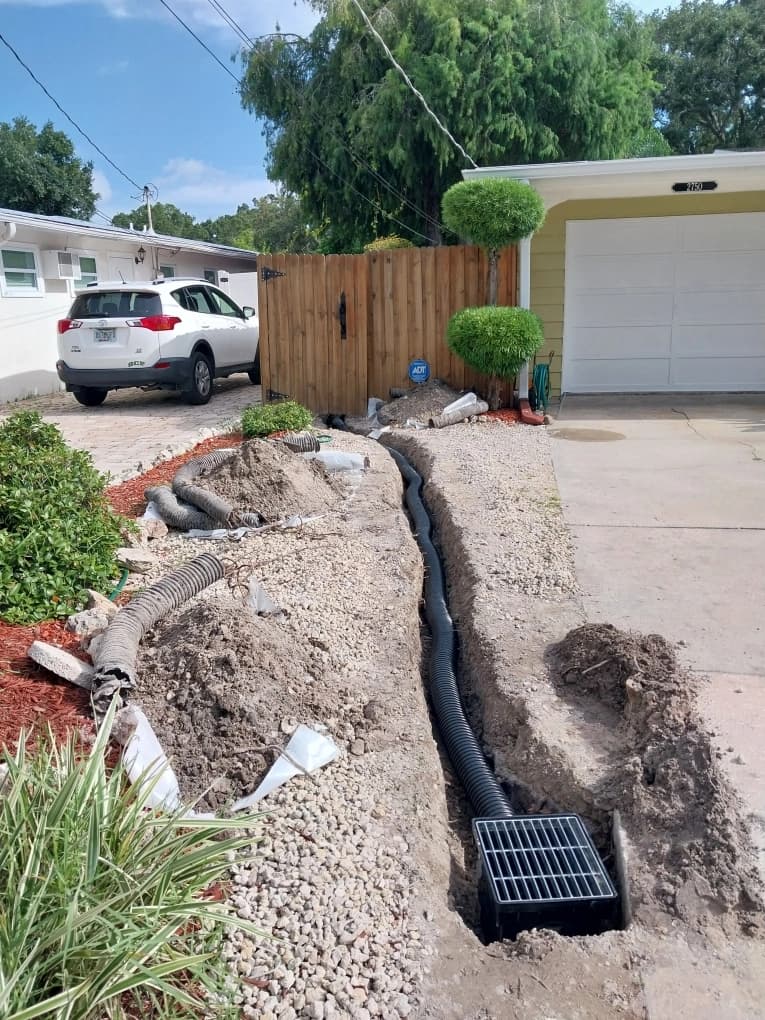
Waterproofing
French Drain vs Sump Pump: Which One Does Your Florida Home Need?
French drains and sump pumps both manage water but solve different problems. Here is how to figure out which one a Florida home actually needs.
· 8 min read
Read article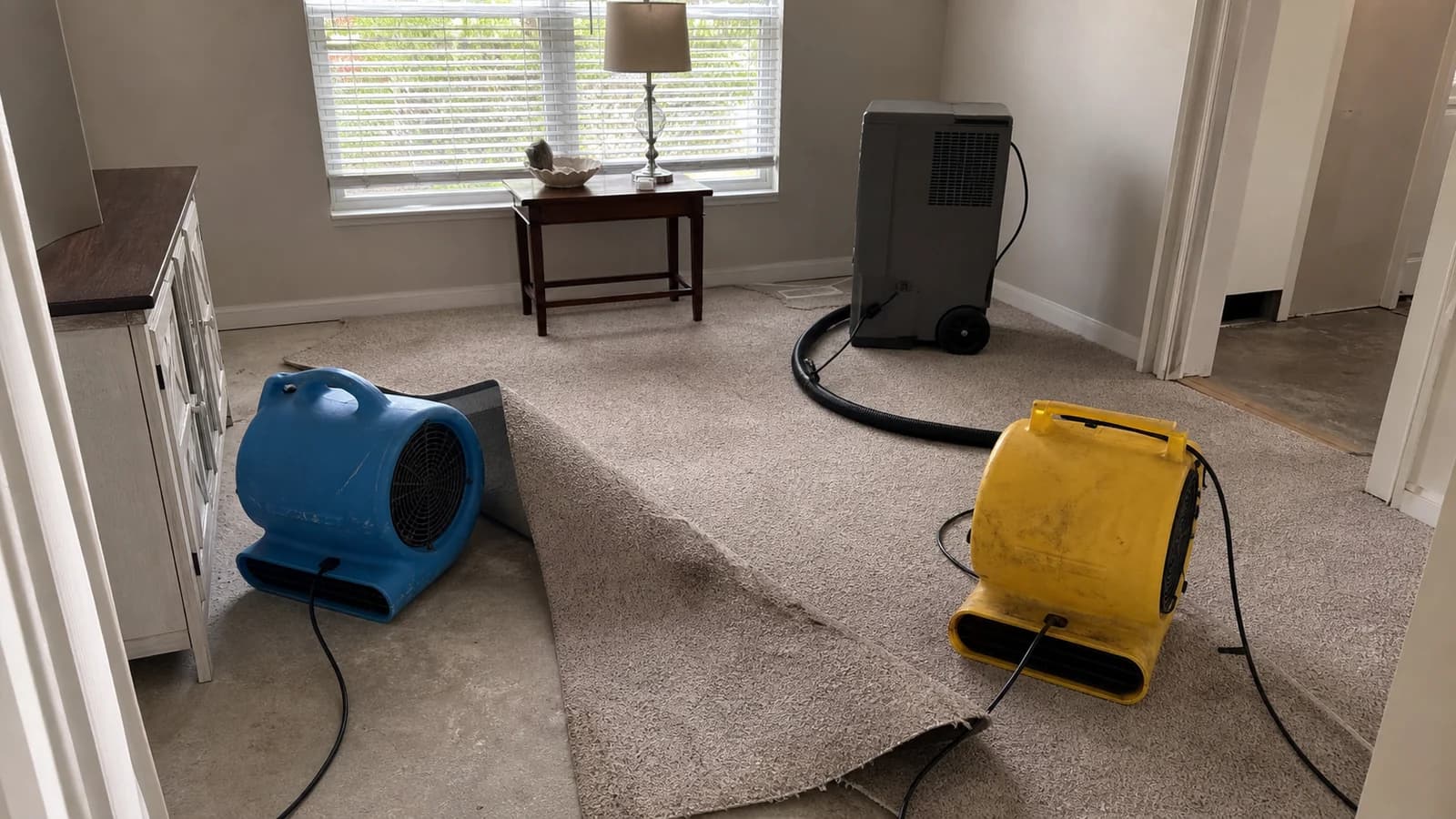
Mold Remediation
How to Prevent Mold After a Flood in Florida
Mold can start within 24 to 48 hours of a Florida flood. What you do in the first two days decides whether you get mold at all. Here is the playbook.
· 8 min read
Read article