Ask five sources and you get five answers. Summer, spring and fall, late summer, winter, July through September. Two of the pages currently answering this question are written for Ontario. The reason nobody agrees is that the question has a false premise built into it.
Florida does not really have a mold season
Mold needs four things: spores, a surface to eat, a temperature between about 40°F and 100°F and moisture. Three of those are permanently available in a Florida house.
Temperature is the one people assume matters and it mostly does not. The EPA puts it plainly: in most cases temperature is not an issue, since some molds grow in warm areas while others prefer cool ones. Orlando's coldest month has an average low well above 40°F, so the bottom of that range is never reached here. Nothing about a Florida winter stops mold.
That leaves moisture, which the EPA calls the most important factor influencing mold growth indoors. Not much of it is required either. A little condensation around a window sill can be enough.
So the useful question is not when mold season starts. It is which source of moisture is active right now.
The wet season and when it actually starts
There is no single statewide date, which is part of why the internet disagrees. The National Weather Service defines it separately by region.
- South Florida and Southwest Florida: 15 May to 15 October
- The rest of West Central Florida, including Tampa: 25 May to 10 October
- Orlando: median onset 27 May, with the dry season arriving around 15 October
In South Florida that window delivers 60 to 70% of the year's rainfall. The weather service also warns that the edges are soft, with a transition period at each end that can last two weeks or more, so a wet week in April does not mean the season came early.
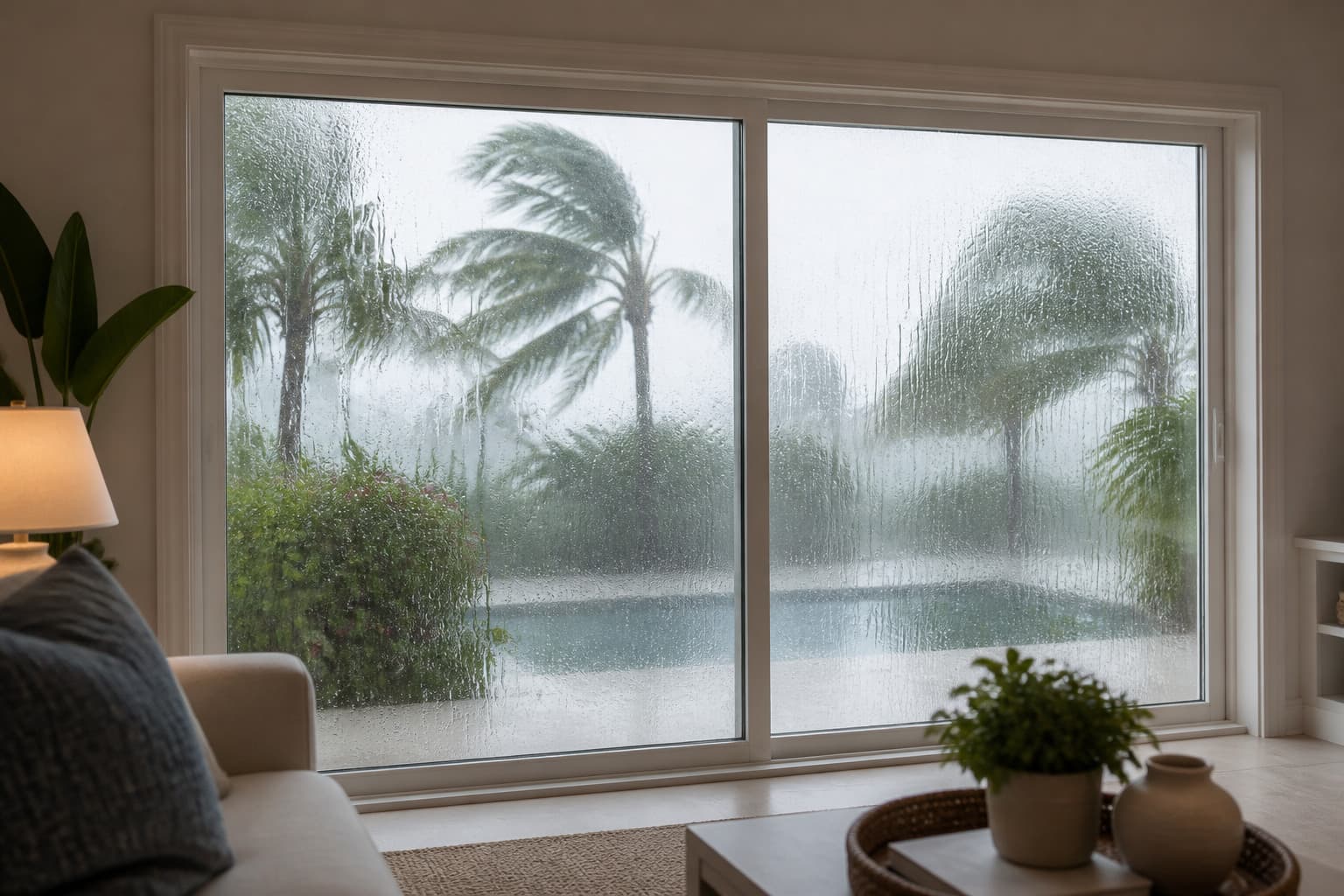
Through those months the air itself is the problem. Orlando runs at 90% relative humidity in the mornings through July, August and September and afternoons sit around 60%. Add the Atlantic hurricane season, which runs 1 June to 30 November and peaks on 10 September and you get the summer mechanism: water arriving from outside, through roofs, windows and foundations, into a house that is already humid. Our Orlando storm watch tracks what is heading for Central Florida.
The dry season is not a break
This is where every page that names a single season goes wrong. Rainfall drops after mid-October. Indoor moisture does not follow it down.
Three things keep the dry season productive. Cool nights against warm humid days put condensation on windows, on cold water pipes and on any surface below the dew point. Houses get closed up, so the ventilation that carried moisture out in November is gone. And the air conditioner runs less, which matters more than most people realise, because a Florida AC unit is also the house dehumidifier. When it stops running, the drying stops with it.
The dry season problem is quieter than the wet season one. Nothing floods. A window sill just stays damp for four months.
Does keeping the AC on prevent mold?
Partly. The cooling coil pulls water out of the air, so a system that runs is removing humidity. Leaving the house at 80°F while you travel, or shutting the system off entirely, takes that away.
Running it is not sufficient on its own and one detail matters more than thermostat setting. An oversized unit cools the house fast then shuts off before it has dehumidified anything. The EPA notes that a unit which is too big cycles on and off frequently, producing poor moisture removal particularly in areas with high humidity. A house on an oversized system can be cold and damp at the same time.
What actually prevents mold is the humidity number rather than the temperature one. The EPA recommends keeping indoor humidity below 60%, ideally between 30 and 50%. A hygrometer costs less than a filter and tells you whether the system is winning.
Same spot, every season? Something is wet year-round.
We walk the whole property, take moisture readings on the walls that look fine and give you written findings you keep whether or not you hire us.
Available 24/7 · Orlando, Tampa and Sarasota · Free for homeowners
What to do in each season
Through the wet season, watch for water arriving:
- Check the roof line, window frames and the exterior grade after heavy rain
- Flush the condensate line before the season starts, because a blocked one puts standing water under the coil
- Dry anything that gets wet quickly. The EPA advises drying water-damaged areas within 24 to 48 hours, because in most cases mold will not grow if they are dried inside that window
Through the dry season, watch for water condensing:
- Keep the humidity reading under 60% even when the house does not feel hot
- Run bathroom and kitchen extraction and open the house up on mild days
- Watch the cold surfaces: window glass, exterior wall corners, pipes in cabinets
If mold keeps returning to the same place in both seasons, the calendar is not the problem. Something is wet year-round and that is usually water entering at the foundation or a failed vapor barrier underneath the house. Bullfrog Waterproofing holds Florida Mold Remediator License MRSR5565 and fixes both.