Mold Inspection
Mold Inspection Cost in Florida: What Sets the Price
What sets the cost of a Florida mold inspection: free visual inspections versus paid lab sampling, what an assessor prices on, and how to avoid overpaying.

Mold Inspection Cost in Florida: What Sets the Price
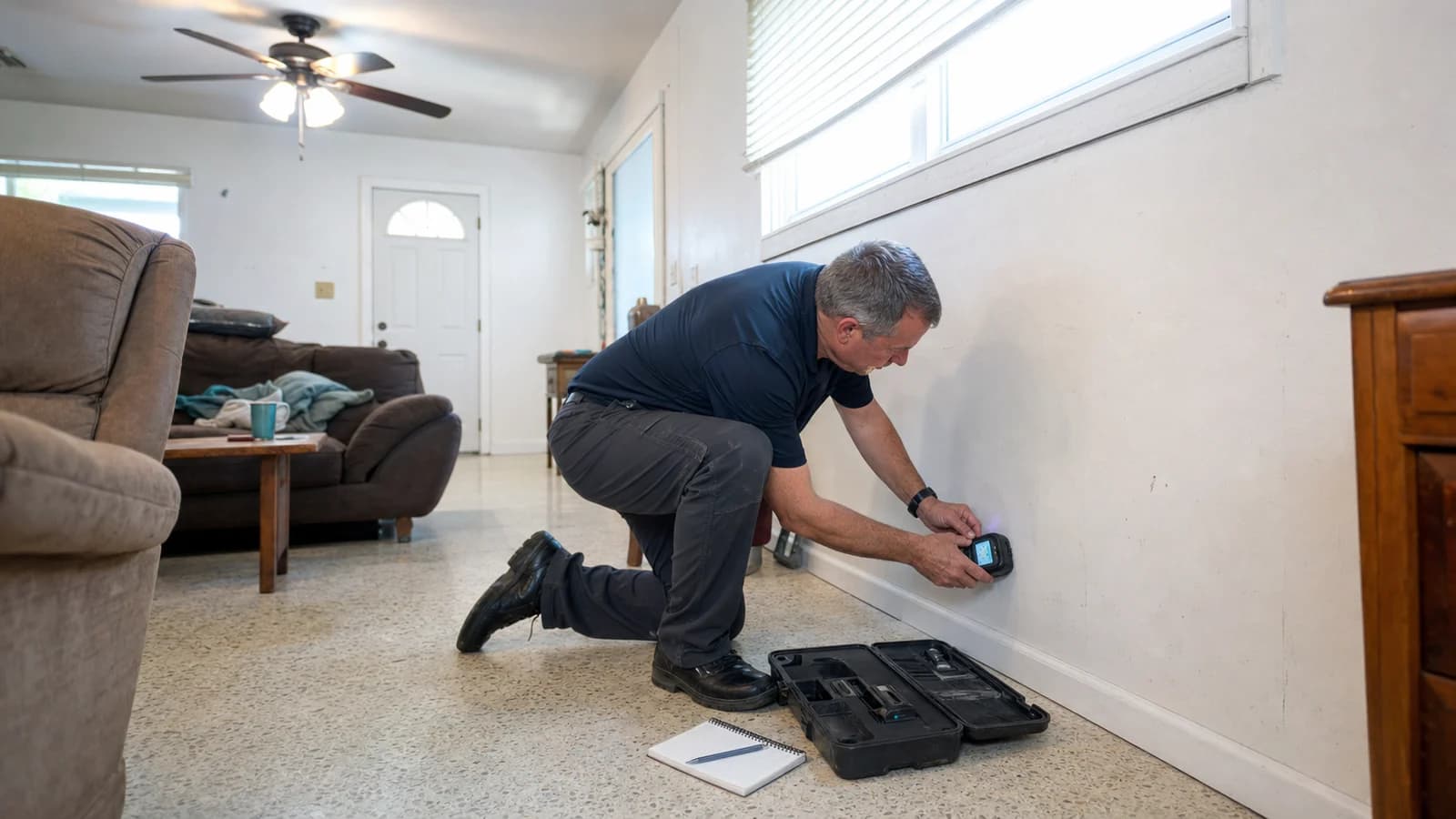
If you can smell something musty but cannot see it, a mold inspection is how you find out what is really going on before it turns into a much larger bill. The good news is that inspection is the small part of this process. What it costs depends first on which kind you mean: a visual inspection with moisture readings and a lab-sampling assessment are two different services in Florida. After that, the size of your home, how many samples get taken and whether anyone has to open a wall to find the source all move the number.
How mold inspection pricing works in Florida
Most of the gap between two quotes comes from what is actually being quoted. This is the usual split:
- Visual inspection. A trained inspector walks the home, uses moisture meters and sometimes a thermal camera, and gives you written findings. No lab samples. Remediation companies often do this free, because it is how they scope the work.
- Inspection with air or surface sampling. In Florida this is a mold assessment, done by a licensed mold assessor under Fla. Stat. 468.8411, and it is paid. Samples go to a lab to identify the mold type and spore counts.
- Condos and small apartments. Less square footage to cover, and usually fewer samples if any are taken.
- Larger homes. More square footage means more surfaces and usually more samples.
- Each additional lab sample. Every sample carries its own lab fee. Most jobs take two to five samples, including one outdoor control sample for comparison.
National cost aggregators publish very wide ranges because the same two words cover a quick visual check and a full assessment of a large home. Before any sampling happens, ask the assessor for a written quote listing the number of samples, the lab turnaround and whether a written protocol is included.
Some companies advertise a free mold inspection. That can be genuine, especially when the company also does remediation and rolls the visit into the estimate, but read what "free" includes. A free visual check with moisture readings and written findings is useful. It will not include air samples or lab results. Florida licenses assessors and remediators separately, and Fla. Stat. 468.8419 bars one company from doing both on the same property within 12 months, so a remediation company cannot do the official testing on a home it will remediate. A free "inspection" that is really a sales visit with no report and no moisture readings is worth exactly what you paid.
What drives the price up or down
Two houses in the same Orlando neighborhood can get very different quotes. These are the factors that move the number:
- Square footage. More house, more to inspect, more samples.
- Lab testing. Sampling and lab fees are the single biggest add-on. A visual-only inspection is far cheaper than a full sampling report.
- Accessibility. Crawl spaces, attics and tight mechanical rooms take longer and sometimes cost more. Florida homes on slabs skip the crawl space but still hide moisture in wall cavities and under flooring.
- Suspected hidden mold. If the inspector has to use a borescope or open a small section of drywall to trace a source, that is more labor.
- Lab turnaround. Faster results usually cost more than standard turnaround.
- A written protocol. If the assessor writes a remediation protocol for the contractor to follow, that is extra work and often its own line.
- Post-remediation clearance. A clearance test after a mold job, to confirm the work passed, is usually priced separately from the initial inspection.
Do you actually need lab testing?
This is where homeowners overspend. Lab sampling tells you the species and the spore count, which sounds important, but for most homes it does not change what you do next. If you can see mold, you already know you need it removed. Paying a lab to confirm that mold is mold does not add much.
Sampling earns its cost in a few specific situations: when you smell mold but cannot find it and need to confirm it is present, when someone in the home has a respiratory condition and the species matters medically, when you are in a real estate transaction and need documentation or when you want a clearance test after remediation to prove the job worked. Outside of those, a strong visual inspection with moisture mapping usually gives you what you need to make a decision.
Why a Florida-specific inspection matters
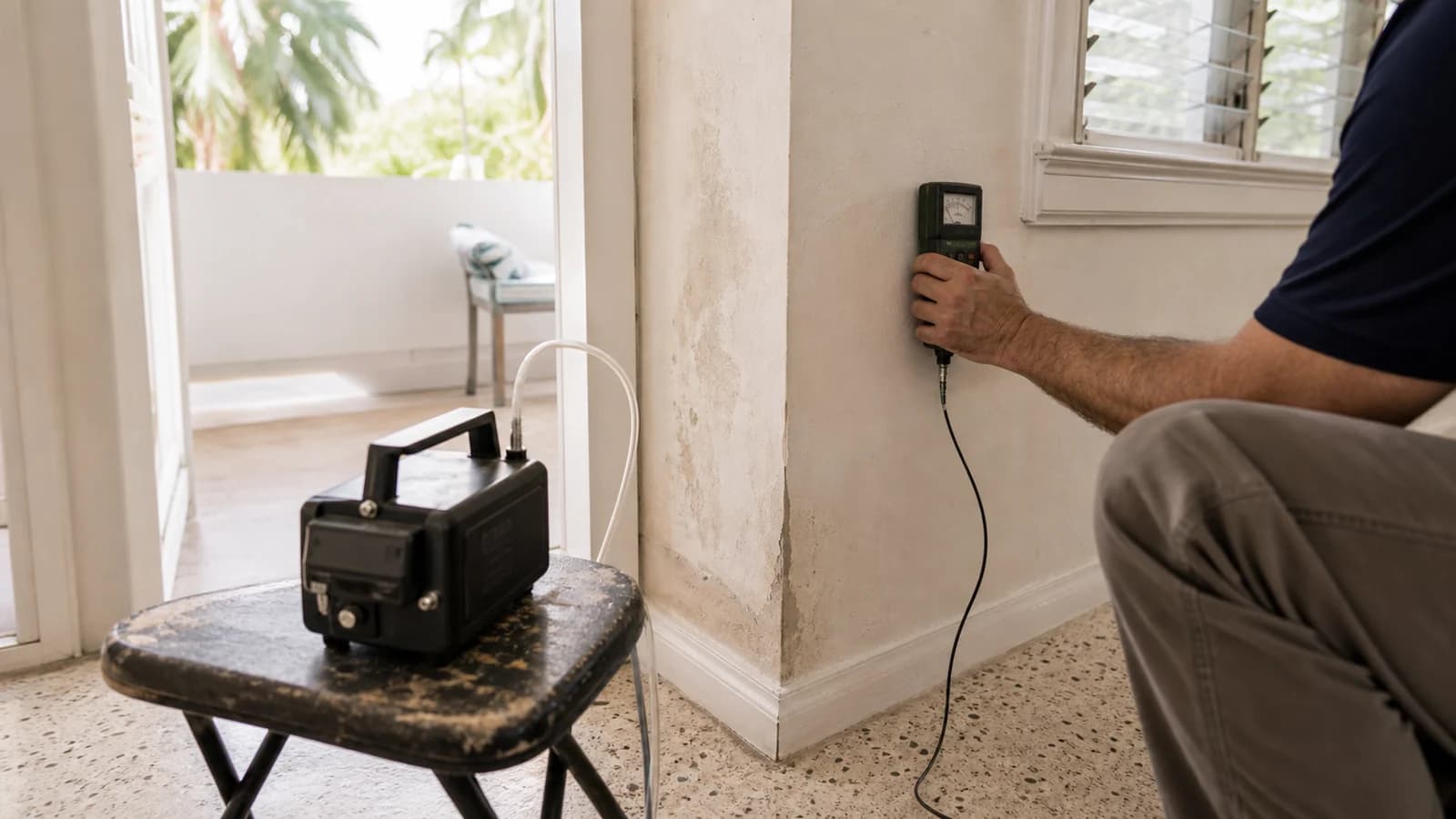
Mold inspection is not the same everywhere, and Florida is close to the extreme end. Our year-round humidity means spores are always present and always looking for a damp surface. A good Florida inspector looks past visible growth to the moisture that feeds it: AC systems that run cold and sweat inside the ductwork, condensation lines that back up, wall cavities behind exterior stucco and subfloors under tile that trap water you would never see from above.
An inspector who works Florida homes knows that concrete-block-on-slab construction hides moisture differently than a northern basement, and that a coastal home in Sarasota faces salt-air and storm exposure a landlocked home does not. That local knowledge is the difference between a report that finds the real problem and one that misses it.
Inspection cost versus the cost of waiting
The reason an inspection is worth booking is simple. The inspection is a small, fixed piece of work. Ignoring the problem is not. Mold spreads through wall cavities and into HVAC systems, and a small contained spot that would have been a quick fix becomes a whole-house remediation job with a far larger scope. Our Florida mold remediation cost guide shows how quickly that scope grows once mold gets into framing and ductwork.
Catching it early, at the inspection stage, is what keeps the job small. That is the entire argument for paying for an inspection now instead of waiting to see if the smell goes away.
What a good inspection report should include
Before you pay, ask what you get. A proper report should give you moisture readings by location, photos of any visible growth, an assessment of the likely source, lab results if you sampled and a clear recommendation for what to do next. If a company cannot tell you what the deliverable is, that is your answer.
If you are in Central Florida, a mold inspection in Orlando should come with all of that documentation. On the Gulf Coast, the same standard applies to a mold inspection in Sarasota, where coastal moisture and storm history make a thorough moisture map even more important. For how testing works on the Gulf Coast, see our Sarasota mold inspection cost guide.
FAQ
How much does a mold inspection cost in Florida? It depends on which kind of inspection you need. A visual inspection with moisture readings is the simpler service, and remediation companies often do it free when they are scoping work. Air or surface sampling is a paid mold assessment by a licensed assessor, priced on the size of the home, the number of samples including an outdoor control, lab turnaround and whether a written protocol is needed. Get a written quote before any sampling happens.
Is a free mold inspection legitimate? It can be, especially when a remediation company includes the visit with an estimate. Just confirm what you receive. A genuine free visual inspection with moisture readings has value, while a sales visit with no report does not.
Do I need lab testing during a mold inspection? Not always. Lab sampling helps when you cannot locate the mold, when a resident has a health condition, during a home sale or for post-remediation clearance. If you can already see mold, a visual inspection with moisture mapping is often enough.
How long does a mold inspection take? A typical home takes one to three hours depending on size and how much sampling is involved. Larger homes and hard-to-reach areas like attics take longer.
Should I get an inspection before buying a Florida home? Yes, especially in coastal and flood-prone areas. A pre-purchase inspection with documentation protects you from inheriting a hidden moisture problem and gives you leverage in negotiations.
Does homeowners insurance cover a mold inspection? Sometimes, when the inspection is tied to a covered loss like a burst pipe, testing can fall under the same claim as the remediation. Most Florida policies cap mold coverage and exclude it when the cause is gradual or flood-related. Our guide on whether homeowners insurance covers mold in Florida covers what qualifies.
What is a clearance test? A test performed after mold remediation to confirm the work succeeded and spore levels are back to normal. It is usually priced separately from the initial inspection and is worth it to verify the job was done right.

Book a Free Inspection
Smelling something musty and not sure where it is coming from? A licensed inspection with full moisture mapping will find the source and tell you exactly what you are dealing with.
Available 24/7 · No obligation · Florida mold license MRSR5565
Free on-site estimates are for homeowners and property owners. Renting or buying? See your options.
More from Bullfrog Waterproofing
Mold Inspection
How Much Does a Mold Inspection Cost in Sarasota? (2026)
What sets the cost of a mold inspection in Sarasota, when it should be free, and how to avoid paying twice. What's included and what to watch for.
· 6 min read
Read article
Mold Remediation
How to Prevent Mold After a Flood in Florida
Mold can start within 24 to 48 hours of a Florida flood. What you do in the first two days decides whether you get mold at all. Here is the playbook.
· 8 min read
Read article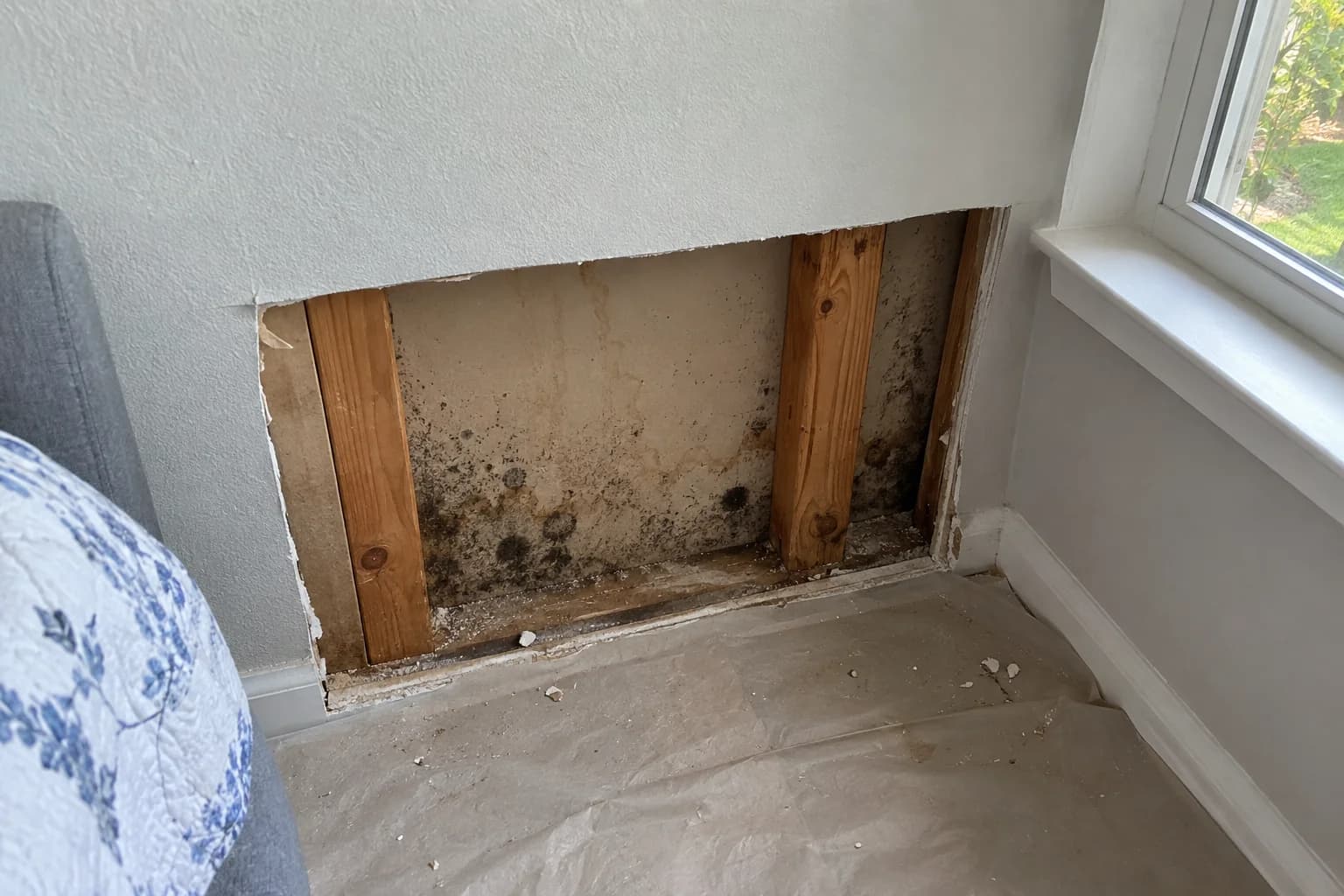
Mold Remediation
Is Black Mold Dangerous? What Florida Homeowners Should Know
Black mold gets talked about like a death sentence. The real risk is more grounded, and in Florida humidity it is common. Here is what the science says.
· 8 min read
Read article