
What black mold looks like
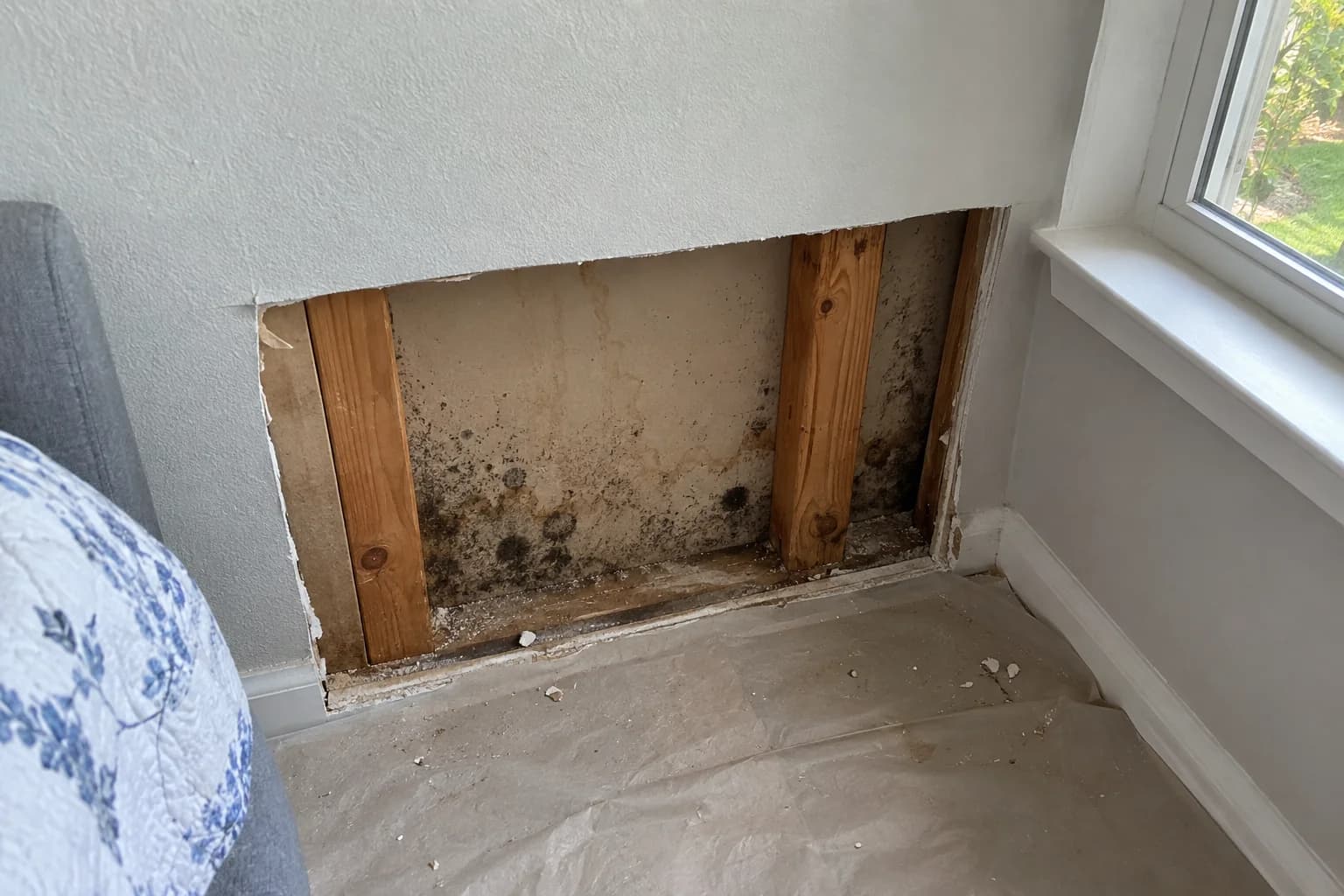
The CDC describes Stachybotrys chartarum as a greenish-black mold that grows on material with a high cellulose content, such as fiberboard, gypsum board and paper. In a house that means the paper face of drywall, the back of baseboards, ceiling tiles and cardboard that sat on a damp floor.
NIOSH, the federal workplace safety agency, describes indoor mold in general terms that fit it well:
- patches or spots in a different color from the material under them, typically gray, brown or black
- growth that can look fuzzy
- a musty or earthy smell around it
It usually appears where water has sat for a while: low on a wall that took on water, around a slow leak under a sink, on the ceiling under a dripping air conditioning line or on drywall behind furniture pushed against a damp outside wall.
Can you tell black mold from other mold?
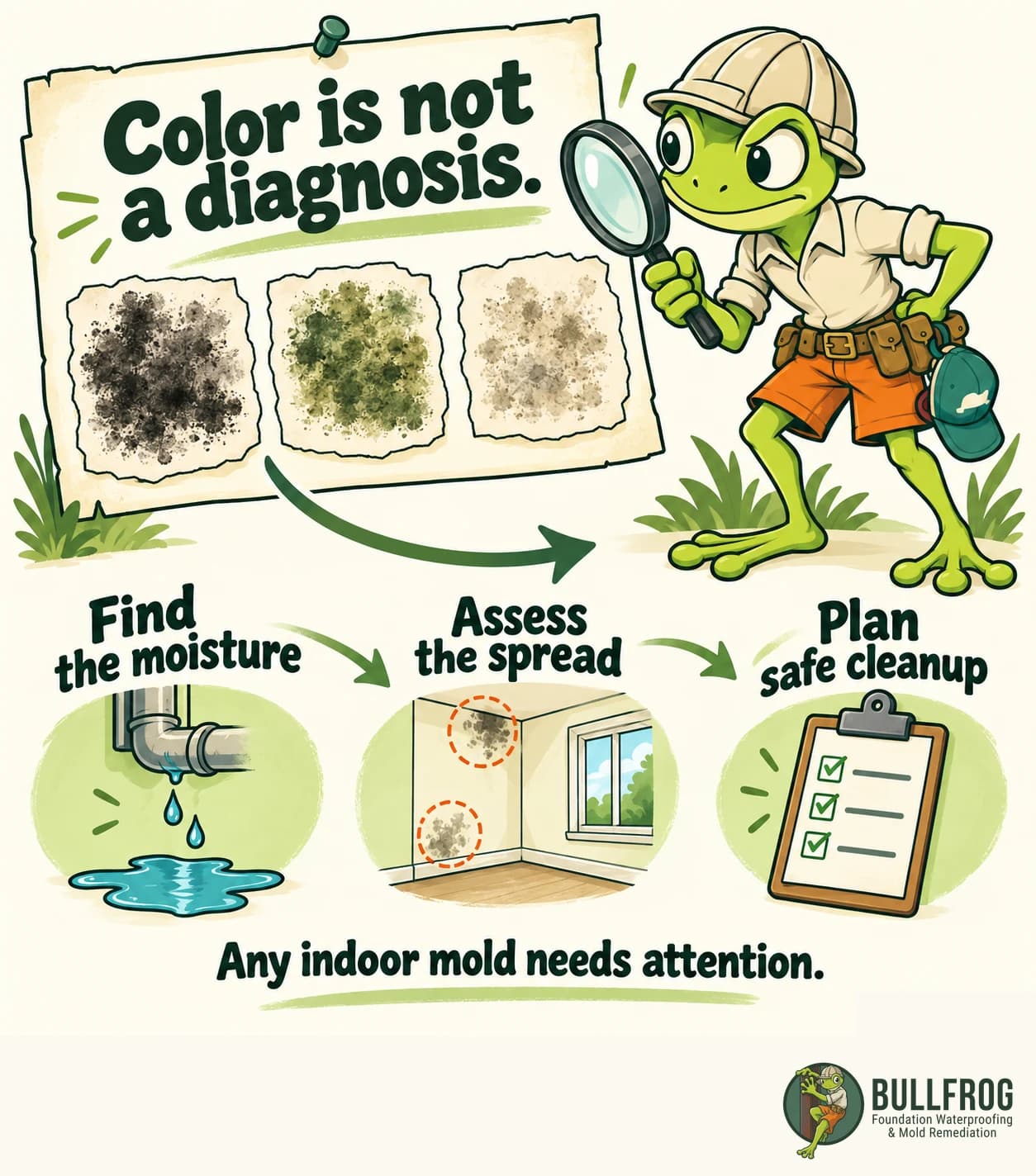
No. You do not need to, either. Molds come in many colors, black and white included. Several are dark enough to pass for black mold. The CDC says it is not necessary to determine what type of mold is growing in your home and that all molds should be treated the same with respect to health risks and removal.
Testing does not change that. The EPA says that when mold is visible, sampling is in most cases unnecessary. Florida's health department does not recommend testing to find out what kind of mold is growing either. How to test for mold covers when a test is worth paying for.
Is black mold more dangerous than other mold?
Not in any way a test can show. The CDC says no test exists that proves an association between Stachybotrys chartarum and particular health symptoms. What the CDC does say about mold in general applies to it. Sensitive people can react with nasal congestion, wheezing or irritated eyes and skin. Asthma and mold allergies raise the odds of a severe reaction. The CDC's advice is the same for every species. If it is found in a building, remove it.
What to do when you find it
Deal with it by size and by surface and look for the water in every case.
- The EPA puts the do-it-yourself limit at roughly 10 square feet. Scrub with detergent and water and dry the area completely. Wear gloves, eye protection and an N95 respirator.
- Mold on drywall, ceiling tiles or other porous material is different. Florida's health department notes that material which cannot be cleaned easily, such as drywall, may need removal and replacement.
- Growth larger than about 10 square feet, inside a wall or back again after cleaning is a job for a professional, who will seal the area off before any drywall is cut.
Painting over it does not work. Bleach is not the answer the label suggests either. How to get rid of black mold walks through safe small-scale removal and mold in walls covers growth you cannot see. If you are not sure whether it is mold at all, mold vs mildew helps sort it out.
Why it keeps showing up in the same place
Because the material is still getting wet. Black mold needs a surface that stays damp, which is why it turns up on the bottom foot of drywall in Florida homes where water comes through the block wall or up at the slab joint after rain. Cleaning the patch and repainting leaves that water in place and the mold returns to the same spot.
A free mold inspection finds where the water is coming from. We go room by room with a moisture meter and give you written findings, with no air sampling, because the mold you can see already tells us what we need. We hold Florida mold remediator license MRSR5565 and waterproof the source in the same project. See how the visit works in mold inspection in Boca Raton and mold inspection in Sarasota.

Dark growth on a wall? Find out what is feeding it.
Available 24/7 · No obligation · Free estimates for homeowners