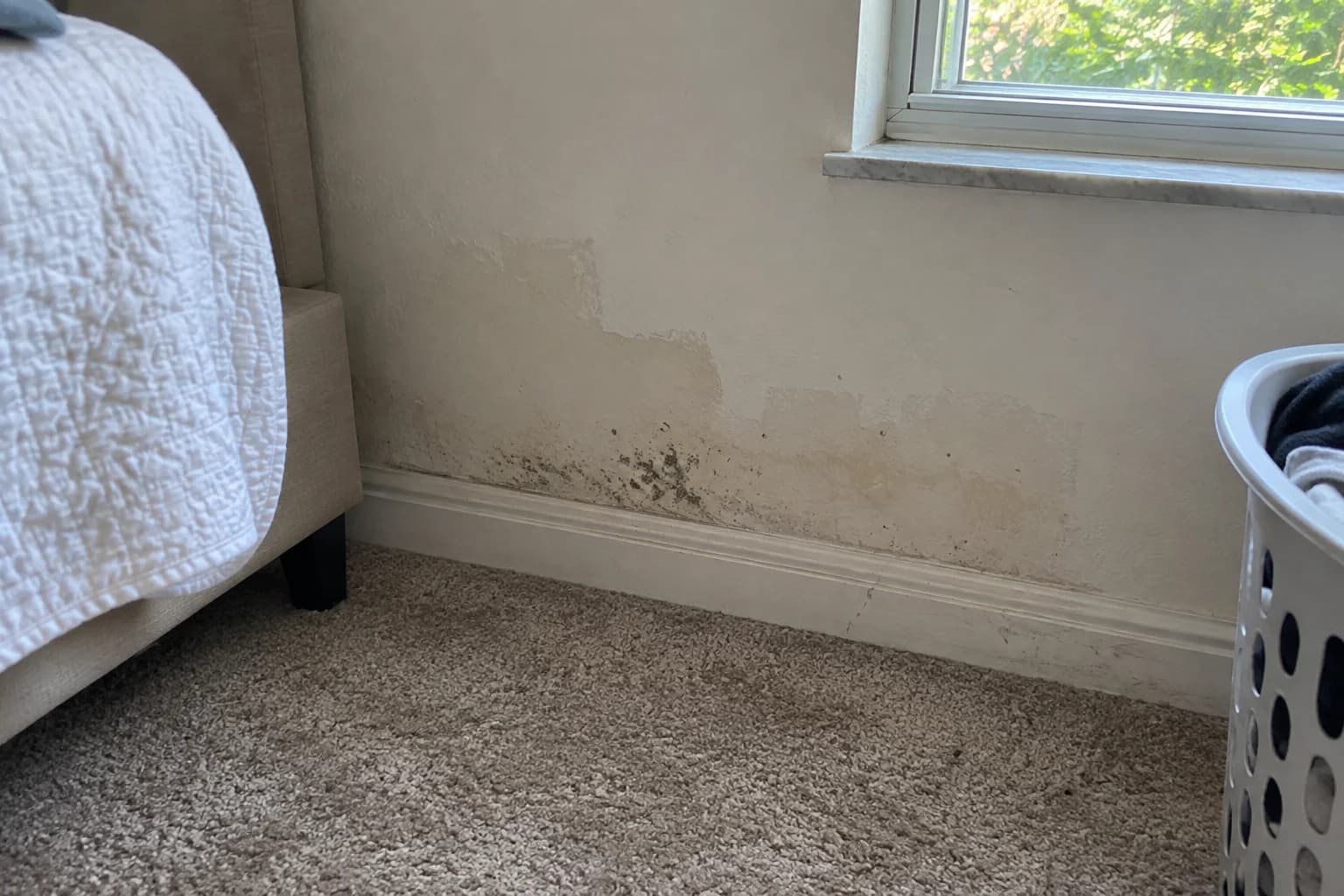
You scrubbed the wall, it looked clean for a month and now the same dark patch is back in the same corner. That is not a failure of effort or of the product you used. It means the wall is still getting wet.
Why mold keeps coming back
The EPA states it in one sentence: if you clean up the mold but do not fix the water problem, then most likely the mold problem will come back.
Mold is not dirt. It is a living thing that needs water and it grows into whatever it is living on rather than sitting on top of it. On a hard surface like tile or metal, wiping actually removes it. On anything porous, the visible growth is the part above the surface. The EPA describes mold growing on or filling in the empty spaces and crevices of porous materials, which makes it difficult or impossible to remove completely.
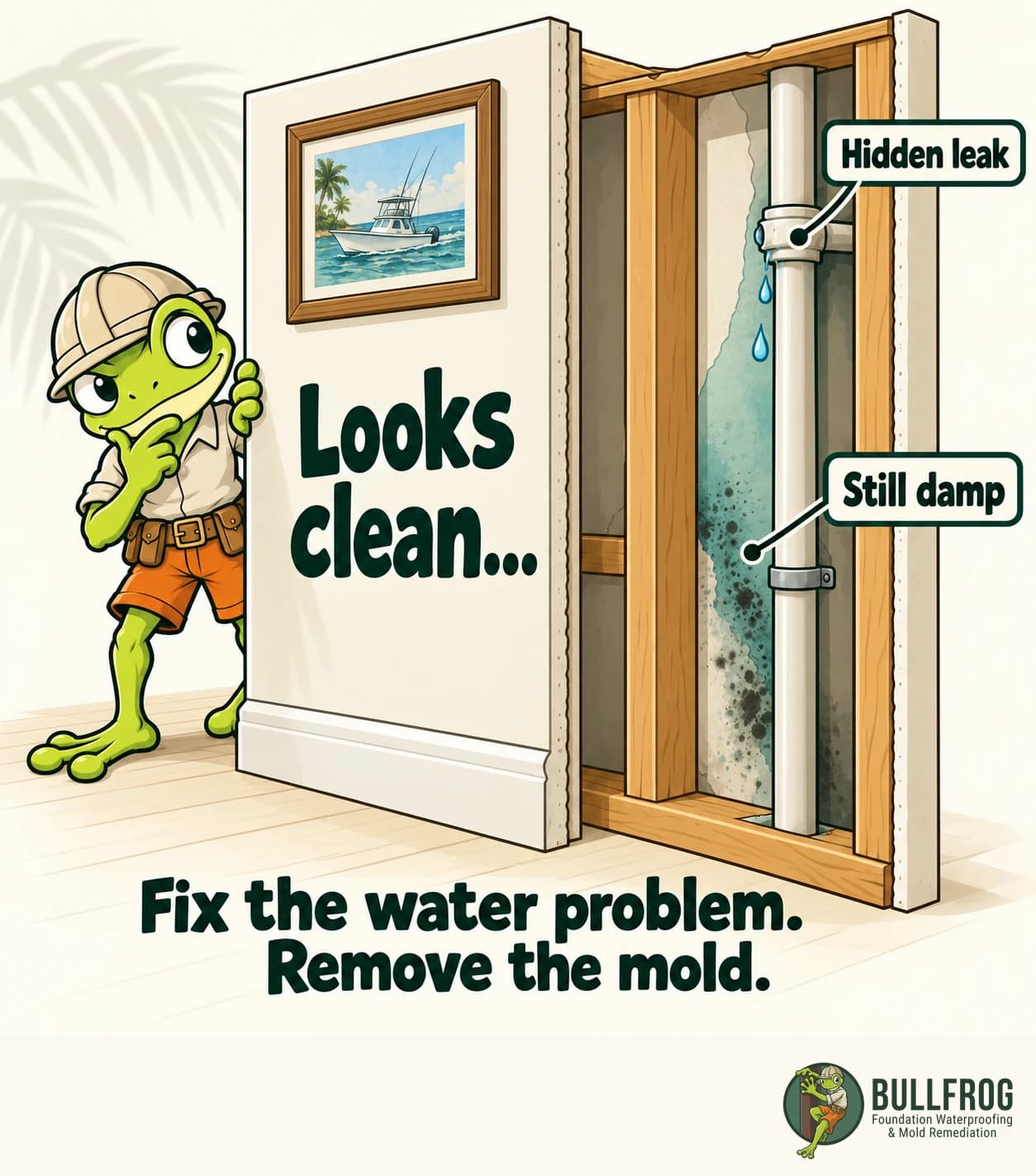
So when it returns in the same spot, one of two things happened. Either material was left in place that still had growth inside it, or the moisture never stopped. In Florida it is usually both.
Killing mold is not the same as fixing it
This is the part most advice gets backwards. People reach for something that kills mold and assume that ends it.
The EPA does not recommend chlorine bleach or other biocides as a routine practice during mold cleanup. Its reasoning is worth reading twice. Dead mold may still cause allergic reactions in some people, so it is not enough to simply kill the mold, it must also be removed. A killed patch that stays in the wall is still there.
The EPA also points out that sterilising is neither possible nor the goal. A background level of spores will always remain in every building. Those spores will not grow if the moisture problem has been resolved. That single clause is the whole strategy. You are not trying to reach zero mold. You are trying to reach a house where spores land on dry material and nothing happens.
One safety note, since bleach comes up constantly. Never mix chlorine bleach with other cleaning solutions or detergents containing ammonia, because toxic fumes can be produced.
How to get rid of mold permanently
Permanently is the right word to aim at and it takes three steps rather than one.
- Find the water. Not the mold, the water. Put a moisture meter on the wall around the patch, look at what is above and behind it and check anything that runs wet nearby: a condensate line, a supply pipe, a roof penetration, the grade outside.
- Fix the source and dry the structure. The EPA advises drying water-damaged areas within 24 to 48 hours, because in most cases mold will not grow if they are dried inside that window. On an ongoing leak, drying is pointless until the leak stops.
- Remove what cannot be cleaned, clean what can. Hard non-porous surfaces clean up with detergent and water. Porous materials that have been wet and moldy usually come out.
Skip step one and you will repeat steps two and three every year.
Does painting over mold stop it?
No and the EPA says so directly: do not paint or caulk moldy surfaces. Clean up the mold and dry the surfaces before painting. Paint applied over moldy surfaces is likely to peel.
Mold-resistant and stain-blocking paints have a genuine use on a clean dry surface that is prone to humidity, like a bathroom ceiling with good ventilation. They are a preventative coating rather than a treatment. Over live growth on a damp wall, the paint is a lid. The growth continues underneath, the film loses adhesion and within a season you have a bubbling patch that is worse than what you covered.
Third time in the same corner? Find the water.
We remediate the mold and fix the water source in the same project, under one warranty. Free visit, moisture readings, written findings you keep.
License MRSR5565 · Orlando, Tampa and Sarasota · Free for homeowners
What has to be thrown away
This is the step people resist and it is the one that decides whether the problem comes back.
The EPA names ceiling tiles and carpet as materials that may have to be thrown away once moldy, because mold fills the crevices in porous material and cannot be reliably removed. The same logic applies to soft insulation, cavity materials that stayed wet and anything fibrous.
Hard surfaces are the opposite case, and the step-by-step removal method starts there. Tile, glass, metal, sealed concrete and finished wood can be cleaned with detergent and water and reused, provided they are dried properly afterwards.
The EPA also notes that mold damages what it grows on and the longer it grows the more damage it causes. Material that has been wet for a season is often a structural question rather than a cleaning one, which is where professional remediation starts.
Where the water is usually coming from in Florida
Most recurring mold in a Florida house traces back to a small number of sources. Condensation at the air handler or on uninsulated ductwork in a hot attic. A blocked condensate line putting standing water under the coil. Humidity that never drops below 60% indoors. A crawl space with a failed vapor barrier breathing damp air up through the floor. And water entering at the foundation, which is the one people rule out because the floor looks dry, while the block wall wicks it up into the drywall from below. For homes on the Gulf Coast, see mold remediation in Tampa.
That last one is why mold recurs in the same corner of the same room after three separate cleanups. Cleaning a wall that is being fed from the slab is maintenance rather than repair. Bullfrog Waterproofing holds Florida Mold Remediator License MRSR5565 and handles the remediation and the water source in one project.